Executive Dossier
“Channels do interfere a lot…”

|
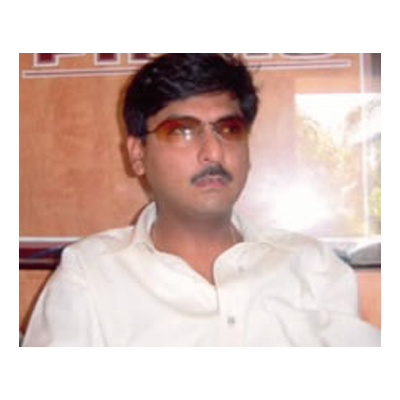
To say that Rajesh Chaddha, Head of Mumbai operations of B.A.G.Films, is a man of steel would be an understatement. The production house’s game show Hai Na Bolo Bolo recently went through a really rough patch, but Chaddha has weathered the storm. The show, launched early this year, did not start off on a promising note. The TRPs were as low as 1.78. Chaddha went in for a risky revamp, one that saw the replacement of host Karan Oberoi with Ravi Behl. The trick worked and Chaddha is now hoping for greater things for the show. “I have done my homework. I am sure Hai Na Bolo Bolo will pick up,” he says, rocking back and forth in his chair, almost suggesting that ups and downs are a part of every business. Clearly, this man believes in the ‘when the going gets tough, the tough get going’ adage. He has faced challenges before, only to emerge triumphant.  Into his ninth year with B.A.G.Films, he has no plans to shift loyalties. In fact, he has chalked out big, ambitious plans for the company. Taking time off from his busy schedule at his office, he spoke to Vickey Lalwani.Excerpts: |
|||
|
Of late, you have revamped your show ‘Hai Na Bolo Bolo’. What went wrong? I personally designed Hai Na Bolo Bolo right from its look to the content. Star was mighty impressed. But we had a hitch. We wanted a good-looking singer who could anchor well. We could not get anybody who had all the three qualities- looks, ‘sur’ and style. Realising that, we thought of Karan Oberoi and Nausheen Ali Sardar. We had done a lot of surveys, including many mock shows. A large section of the society wanted Kkusum, sorry, Nausheen. We were excited about the idea of software driven shows on television- the first of its kind. We planned only six episodes. We had decided that we’d go by the feedback. It was a trial-n-error exercise. |
|||
|
Were there errors? |
|||
|
But why did Ravi Behl step into Karan Oberoi’s shoes? |
|||
|
|||
|
If Karan had not been booked for Jakarta, would he have remained? |
|||
|
Rewind. How did you get into production in television? |
|||
|
Why? |
|||
|
So you took up Rajeev Shukla’s offer? |
|||
|
Then? |
|||
|
Interesting. Please continue… Initially, Anurradha Prasad and I were doing the spade work for the launching of Channel 9 in India. During that exercise, we realised that it was imperative to have an office in Mumbai. The television and film people we met were under the impression that we were a Delhi-based set-up, heavily into political, infotech and cookery shows, despite the fact that we had done lots of fiction in the past. We were not being taken as a complete production house. Imagine, we had done Chalti Ka Naam Antakshri, Do Aur Do Paanch and Tum Pukar Lo by that time! Yet… Anyway, clearly, we had missed out on a large chunk. Enough was enough. We decided to set up our own thing in Mumbai. Anurradha entrusted me with the challenging task of setting the ball rolling in Mumbai. |
|||
|
As a producer, what difficulties do you encounter? |
|||
|
|||
|
What is the job of an EP? At the end of the day, is he really an asset? Last week, a director told me that the EP department often messes up the whole show. Coming to our structure. We have an in-house creative department, programming department, finance department and a news bureau. Extensive research and debate is done on every decision taken. Every staff member here is a professional. The pros and cons of every aspect are dwelt upon. The requirement of the director and the technicality which varies from project to project is never compromised upon. Like, when we start off on a serial, we first go deep into the story. We ensure that there are enough twists and turns in the plot so as to keep the viewers’ interest alive. Importantly, we safeguard the viewers’ sensibilities. Then, we sit and decide upon the director. He/she has to be the best one for handling the genre of that project. If we are coming out with a thriller, it would be foolish to take someone who specialises in socials. Going back to the EP aspect. At least in our set-up, we have a production manager and a scheduler who work in tandem with the EP. This reduces the load of our EP, which in turn, promises better output. Like it happens in some productions houses, our EPs don’t have to monitor petty things like availability of lights, time-setting with the artistes, etc. Our EPs are rather focused on the requirements expressed by the directors on sets and taking care that the scenes are executed exactly in the manner written. We allow the lines to be changed here and there, but not the gist of the scene. |
|||
|
If memory serves me right, you dropped Indranil Goswami who was directing your serial ‘Haqeeqat’. Why? |
|||
|
Does PR with channels help in getting a programme passed? |
|||
|
Do channels pressurise the production houses? |
|||
|
A learning experience! With so much of intervening, don’t you guys feel like puppets? |
|||
|
What next? We have two scripts up our sleeve. One is a cross-over project, to be shot 25 per cent in France. The other one is a comedy thriller. A formal announcement in this regard is in the offing. And before I forget, let me tell you that we are broadening our news set-up. We are very serious about news and current affairs. We are coming up with a big set up in Delhi in this regard in terms of studio, and will probably have an uplinking facility there. Who knows, we might even come out with a news channel of our own! |
|||



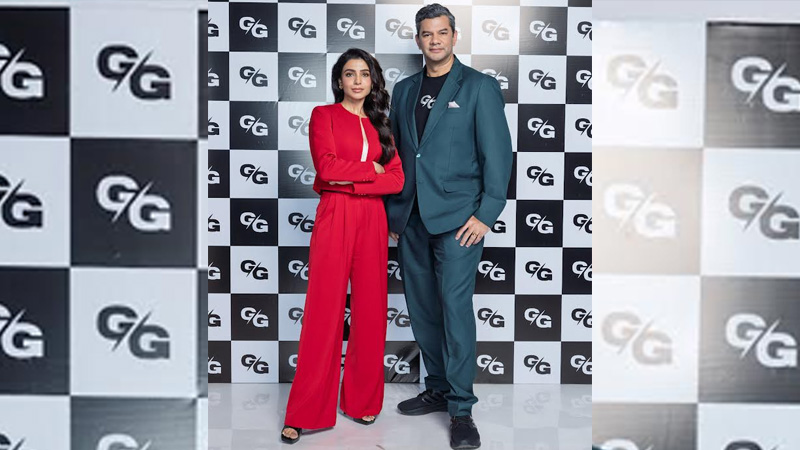
MUMBAI: Game faces on, pressure high India’s gaming ambitions are levelling up. Good Game, billed as the world’s first as-live global gaming reality show, has officially launched in India with a bold mission: to crown the country’s first Global Gaming Superstar.
Blending esports with mainstream entertainment, the show brings together competitive gaming, creativity and on-camera performance in a format that tests more than just joystick skills. Contestants will be judged on gameplay, screen presence and their ability to perform under pressure, reflecting how gaming has evolved from pastime to profession and pop culture currency.
Fronting the show are three high-profile ambassadors: actor and entrepreneur Samantha Ruth Prabhu, Indian cricket star Rishabh Pant, and gaming creator Ujjwal Chaurasia. The winner will take home Rs 1 crore ($100,000) among the largest prize pools for any Indian reality show along with the chance to represent India on a global stage.
Backed by a planned annual investment of up to Rs 100 crore, Good Game is also courting brand partners, promising a minimum reach of 500 million among India’s core youth audience. The creators position the show as a bridge between entertainment and interactive culture, offering long-format content, community engagement and commercial scale.
Auditions are now open to Indian citizens aged 18 and above, inviting amateur and professional gamers, creators and performers alike. Shortlisted candidates will be called for in-person auditions in Mumbai on 14 and 15 February, and in Delhi on 28 February and 1 March 2026.
With big money, big names and even bigger ambition, Good Game signals a shift in how India views gaming not just as play, but as performance, profession and prime-time spectacle.








