Cable TV
Slow CAS is the only practical route: Seven Star


A slow deployment of set-top boxes (STBs) will suit a small cable network like Seven Star.
Which is why Nadir Ali, one of the founder-promoters, is in support of the Telecom Regulatory Authority of India‘s (Trai) suggestion that all new channels after a notified date should come through an STB. He rules out as being impractical the regulator‘s other two models – TRAPS and mandated CAS.
“TRAPS is no solution as it can be pirated. And it is not practical to introduce CAS at a broad level as so many boxes are not available. It also won‘t be easy to deploy them in such a short period,” he says.

By allowing new channels to be available through the STBs, CAS can only pace up gradually. This will give Seven Star time to gather resources and scale up its digital cable TV service.
“The only way out is to mandate the new channels through the STBs. Our existing revenue model will be protected. And we can have additional revenue through the new channels. Slow CAS will be best for us,” says Ali.
As a business model, big multi system operators (MSOs) Hathway and IndusInd Media & Communications Ltd. will not find comfort in this. They will want CAS to move in fast as they have individually invested Rs 1 billion and have close to 200,000 digital STBs each. Compare this with Seven Star which has invested around Rs 50 million and has 5,000 STBs, though Ali would not comment on these figures.
Seven Star has been offering its STBs with a 130-strong channel package, but has only been able to sell a few hundred boxes. The menu includes new channels like Hungama TV. The company is also trying to get exclusive content to push the sale of its boxes.
For Seven Star, which operates in Mumbai, the rate freeze came much before the Trai ordinance. “We had our last increase in July, 2002. That is the problem with us. We have an annual subscription rate hike in July. But CAS was supposed to be implemented first in July and then in September, 2003. So we didn‘t go for an increase. We had to also fight against public interest litigations. Then came the price freeze by Trai with effect from December 26, 2003,” says Ali.
Unlike other MSOs, the price freeze has had no impact on improving recovery from bill collections. “It is not applicable to us. We do not have a franchise model,” says Ali.
Seven Star has been trying hard to protect its turf in the broadband Internet business. The focus has been on competing at low-end pricing. The network offers Internet only through ethernet, at prices as low as Rs 250. The access speed is 64 kbps and 128 kbps.
“We stopped offering Internet through cable modems almost two years back. Ethernet is more cost-effective,” says Ali. There is danger, however, of not attracting the high-end subscribers.
Competitive offerings have come from several players including Pacenet. “But nobody is able to invade our network. We don‘t want our cable TV subscribers to take the broadband service from our rivals,” says Ali. Somehow, subscribers have not been allowed to move away. But in future Seven Star will have to compete on better service and better rate.
Six years ago, Seven Star pushed for addressability on analogue boxes much before other cable networks even thought of it. The attraction was a bunch of exclusive channels it offered. With less than five per cent of its cable TV subscribers taking to this service, it was subsequently scrapped. The analogue system was also growing obsolete. Now with digital STBs in, the dream of moving into an addressable regime can well be on.






Cable TV
Hathway Cable appoints Gurjeev Singh Kapoor as CEO
Leadership change comes as cable TV faces shrinking subscriber base and modest earnings pressure
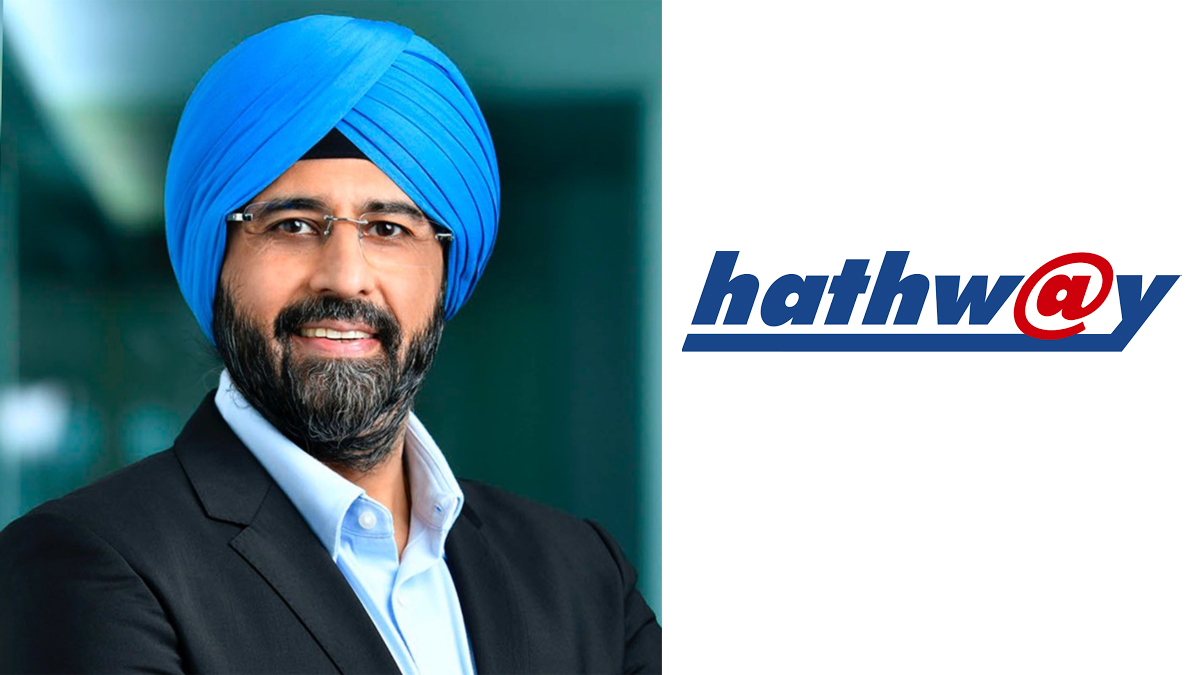
MUMBAI: Hathway Cable and Datacom has tapped industry veteran Gurjeev Singh Kapoor as chief executive officer, marking a leadership pivot at a time when India’s cable television business is under mounting strain.
Kapoor will take over from Tavinderjit Singh Panesar, who is set to retire in August after a long innings with the company. Panesar, chief executive since 2023, has held multiple leadership roles at Hathway, including his latest stint beginning in 2022.
Kapoor brings more than three decades of experience in media and entertainment. He most recently led distribution at The Walt Disney Company’s Star India business, now part of JioStar. His career spans television distribution and affiliate partnerships, with stints at Sony Pictures Networks India, Discovery Communications and Zee Entertainment.
Panesar, with over three decades in the industry, has worked across strategic planning, distribution and business development in media, broadcasting and manufacturing. His past associations include ESPN Star Sports, Star India, Apollo Tyres and JK Industries.
The transition lands as the cable sector grapples with structural disruption. Traditional operators are losing ground to streaming platforms, while telecom and broadband players tighten the squeeze with bundled offerings.
An EY report estimates India’s pay-TV base could shrink by a further 30 to 40 million households by 2030, taking the total down to 71 to 81 million. The slide follows a loss of nearly 40 million homes between 2018 and 2024, a contraction that has already wiped out more than 37,000 jobs in the local cable operator ecosystem.
Hathway’s numbers reflect the strain. The company reported a consolidated net profit of Rs 93 crore for FY25, down from Rs 99 crore a year earlier. Revenue inched up to Rs 2,040 crore from Rs 1,981 crore. As of December 2025, it had about 4.7 million cable TV subscribers and roughly 1.02 million broadband users.
Kapoor steps in with a familiar brief but a shrinking playbook. In a market where viewers are cutting cords faster than companies can reinvent them, the new chief executive inherits a business fighting to stay plugged in.






