Cable TV
Once we move to gross billing, revenue will increase three-fold: V D Wadhwa

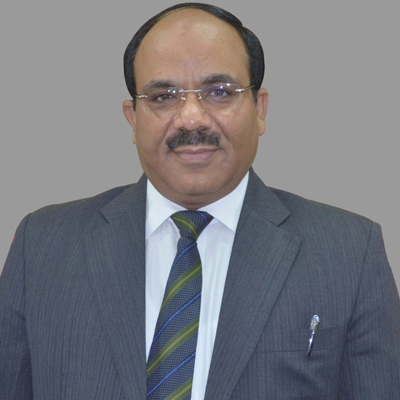
These are changing times for the Indian cable TV industry, what with gross (consumer) billing starting in phase I cities and 27 January being the last date for submission of duly-filled Consumer Application Forms (CAF), following which, multi system operators (MSOs) will need to start major switch-off of signals.
In all of this, Essel Group-owned SitiCable Network, earlier known as Wire and Wireless (India) Ltd, has proved to be a game changer of sorts. Under the leadership of chief executive officer V D Wadhwa, the company has been at the forefront of change; whether it is giving access to the Subscriber Management System (SMS) to local cable operators (LCOs), launching local cable TV channels or the latest plan to launch a service on iOS and Android for consumers to view TV content on their Apple devices and smart phones.

An alumnus of Harvard Business School and a fellow member of the Institute of Company Secretaries of India, Wadhwa served as managing director and CEO for business operations in India and SAARC countries with the Timex Group before taking charge as the CEO of SitiCable Network in May 2013.
An avid squash player who dabbles in adventure sports, travelling and driving, Wadhwa took some time out from his busy schedule to speak to Seema Singh of indiantelevision.com on gross billing, setting up of cooperatives and the road ahead for SitiCable.
How has phase I and II of digitisation been for SitiCable? How much has been invested and what have been the returns?
We have approximately 10 million subscribers in the analogue universe. Of these, we have seeded 3.6 million Set Top Boxes (STB) in phase I and II of digitisation. The total investment so far has been to the tune of more than Rs 500 crore.
As far as the returns are concerned, the investment has been done with a payback period of four years. Expecting anything in the short term is not a realistic scenario. No one gets returns on investments immediately.
How many set top boxes will be needed for completing phase III and IV? What is the proposed investment for these phases? How are you looking at generating investment in the company?
Phases III and IV of digitisation has a total universe of about 90 million. Of these, we are targeting 6-7 million homes. At a gross level, we will require an investment of Rs 1200 crore. On a net basis, we are expecting an investment to the tune of Rs 600 crore.
The funding of Phase III will be largely done through warrants’ funding of Rs 243 crore, which is likely to be invested by promoters before March 2014. Balance funding requirement will be met through internal accruals and raising of further equity, as may be required.
By when do you think you will be able to reap the benefits of digitisation? By what percentage do you see the revenue going up?
The benefits of digitisation have already started trickling in and the full benefits will be visible from FY16.
Once we move to gross billing, the revenue will increase over threefold of what it is currently. Right now, whatever revenue is booked in the books of accounts is on net and not gross basis. Last year for the year ended March 2013, our top line was Rs 483 crore. In the last two quarters, we have achieved revenue of over Rs 300 crore and this growth trend in the current quarter continues. Once gross billing starts, the revenue will increase to over three-fold.
Have you come to any consensus on revenue share and billing with Last Mile Owners (LMOs) in Maharashtra? Are you going to allow LMOs to bill in Mumbai? By when do you see billing starting in Mumbai?
We have a 33 per cent revenue share with all our local cable operators (LCOs) and we do share 25 per cent of the carriage revenue with them, which is not the case with other Multi System Operators (MSOs). So, we are not facing any problem anywhere in the country. We have also given access to the Subscriber Management System to LCOs. Our approach is to consider the LCO as an integral part of the business and both the MSO and LCO have to co-exist. We, therefore, believe in empowering the LCOs by training them and providing them the backend support to enable them provide better customer services. This is the biggest advantage for SitiCable and this is helping us to significantly improve our subscription revenues as compared to other MSOs.
Now that billing has started in Phase I cities, how has the response been? Do you think billing has succeeded in bringing in greater transparency? How is it helping the MSOs?
It is too early to comment. The LCOs are not habituated to the system of gross billing. According to me, it will take at least two to three months for billing and collection to stabilise as per package. But there is gradual acceptance among the LCOs for the gross billing regime. .
Also, I would like to add that in Delhi, between Hathway Cable & Datacom, DEN Networks and SitiCable, we have engaged Mckinsey to help us stabilise the gross billing and gross collection. They will ensure that all MSOs follow the common policy of billing, collection and dunning. Since gross billing started in December, it is expected to stabilise in the current quarter.
The Telecom Regulatory Authority of India (TRAI) had given 27 January as the deadline to MSOs for collection of all Consumer Application Forms (CAFs) and feeding of details in the SMS for phase II cities. Are you switching off signals or is the process complete?
We received 94-95 per cent CAFs in phase I cities and for the remaining, the signals have been switched off. So in that way, we have completed 100 per cent CAF in phase I and submitted the compliance report to the TRAI. For phase II, 91 per cent of CAF has been completed. The regulator for all these months has been patient in giving us extensions. And, I personally believe if the deadline goes on getting postponed, the work will never be completed. The ultimate solution for these problems is to switch off signals for those who have not filled the forms and that is what we are doing, which is in complete compliance with TRAI’s order. In fact, in the last one week, we have switched off 50,000 subscribers nationally. This is to ensure that compliance as per TRAI regulation is achieved.
Where do you see entertainment tax headed? What led to taking the matter to court? Do you think the ruling will be passed in your favour? Do you believe that entertainment tax should be reduced?
As per the law, the MSO is responsible for entertainment tax. We approached the Delhi High Court, since we have always been collecting and depositing entertainment tax, and we did not want to face any coercive action being taken by the tax authorities. As per our information and inputs received from the market, other MSOs are also collecting tax from LCOs regularly. While the H’ble high court has asked SitiCable to keep submitting the entertainment tax, the high court has given the stay against any coercive action being taken by the Tax Department against other MSOs since they have taken the plea that they are not invoicing and collecting tax so far. No decision has been taken on who will be responsible for collecting and paying the entertainment tax as yet.
In SitiCable, we firmly believe that the payment of entertainment tax should be with the MSOs. Since the invoice is being raised by the MSO and the LCO is collecting the subscriber fee, I feel the power of collecting and depositing entertainment tax should be with the MSOs.
I have a very different view on entertainment tax. I do not understand why a consumer needs to pay both service tax and entertainment tax. When we provide them with cable TV, what is it? Is it a service or entertainment? Even for movies, consumers pay only entertainment tax, then why is it that the consumer has to pay entertainment tax and service tax for cable TV. We have raised this issue on several occasions to both the Information and Broadcasting Ministry and the TRAI, but without any heed.
The tax rate has to rationalise across the country. In UP, the monthly entertainment tax is 25 per cent of the subscription fee, while in Maharashtra, it is Rs 45; Delhi – Rs 20; Bengaluru – 6 per cent of the total subscription fee; and Kolkata, it is Rs 10. This differential tax structure will not allow the industry and gross billing to stabilise in these respective states.
I am hopeful that the tax will come down once the process of digitisation is complete. Currently, the tax department is unable to gain significantly due to digitisation. With complete digitisation, there will be transparency and hence, more tax collection. Then there will be rationalisation of tax.
By when do you think the process of digitisation will be complete?
There is no reason why digitisation will get delayed. The I&B Ministry is dedicated and so is the TRAI. Even the MSOs are gearing up for funding, getting STBs and seeding them. So I don’t see any delay in completion of digitisation.
Is the cable TV industry prepared to offer consumer service as available internationally?
I think there is a long way to go for that. We are taking one thing at a time. Currently, the Indian consumer is not even habituated to gross billing and taxation. The Indian cable TV market has not matured enough to be able to offer services like those internationally. Once gross billing is stabilised and every one becomes habituated with the system, only then we can move forward.
However, from the Value Added Services (VAS) point of view, we have started broadband service in the east and soon, we will be starting in the north. Also, we will be providing content on multiple screens to our subscribers.
Is broadband a key play in your revenues going forward? How will it be delivered?
Of course, broadband will play a key role. We will also soon introduce Docsis 3.0, which is the future. Besides broadband, by the end of this quarter, the content available on TV will also be available on iOS and Android platforms. The technical team is working on it and if there are no glitches, we will be launching the service on both the platforms together. We are the first cable TV operator to have thought of this service.
Do you believe building local cable TV channels is the way forward? How much will you invest in this? And what is the monetisation opportunity?
Local cable TV channels help in connecting with the consumers. We plan to launch four to five channels in each geography. While we have seven channels in central India, seven in Jaipur and four in Delhi, we plan to continue with this in other parts as well.
Launching local cable TV channels does not cost much since we already have a studio facility in areas where we have a presence. Such endeavours give a competitive edge over the Direct-to-home operator, since they cannot operate a local channel with local content and the MSO, as they do not have the facility for launching a local channel or have a rather small presence.
A local channel helps in giving out local news in local languages and most people prefer this. Then, advertisements help in generating revenue. So commercially launching such channels makes sense for the MSO.
How do we see the national landscape panning out: will there be a few key national MSOs? Who will these be?
Like in phase I and II of digitisation, the market will be dominated by four national MSOs: Hathway, DEN, SitiCable and InCable. It is only after complete digitisation that the country can expect foreign players to enter the market. These foreign players will bring better technology, transparency and competition. This will prove beneficial for the national players as well.
How do you see the MSOs coping with phase III and phase IV? Will DTH benefit? Or will we see new local players emerging?
While in phase III, the existing MSOs will play a major role and benefit, phase IV will witness DTH playing a major role. In phase IV, with towns having 5,000-10,000 households, it will not be commercially viable for cable TV operators unlike DTH players.
Local players may emerge in some markets, but as seen in phase I and II, the industry has been going through consolidation since digitisation requires huge Capex. The local players emerge since they can manage initial investments. But, they are not technology ready to serve consumers. Also, this is a highly regulated industry, which will be difficult for them to cope with. Considering they do not get placement fee from broadcasters, they can operate for a maximum of one to two years.
What challenges do you anticipate in Phase III and Phase IV?
Content is the biggest challenge. Currently, the ARPUs for phase I and II cities is not more than Rs 150. If it remains the same for phase III and IV, it will be difficult for us to operate in these towns. Broadcasters need to have differential pricing for these markets.





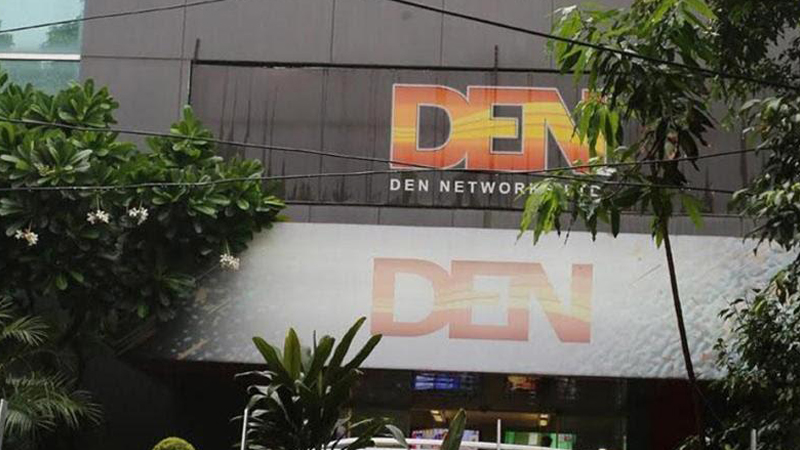
MUMBAI: When margins wobble, liquidity talks and in Q3 FY25-26, cash did most of the talking. Den Networks Limited closed the December quarter with consolidated revenue of Rs.251 crore, marginally higher than the previous quarter but down 4 per cent year-on-year, even as profitability stayed resilient on the back of strong cash reserves and disciplined cost control.
Subscription income softened to Rs.98 crore, slipping 3 per cent sequentially and 14 per cent from last year, while placement and marketing income offered some cheer, rising 15 per cent quarter-on-quarter to Rs.148 crore. Total costs climbed faster than revenue, up 7 per cent QoQ to Rs.238 crore, driven largely by higher content costs and operating expenses. As a result, EBITDA dropped sharply to Rs.13 crore from Rs.19 crore in Q2 and Rs.28 crore a year ago, pulling margins down to 5 per cent.
Yet, the bottom line refused to blink. Profit after tax stood at Rs.40 crore, up 15 per cent sequentially and only marginally lower than last year’s Rs.42 crore. A healthy Rs.57 crore in other income helped cushion operating pressure, keeping profit before tax at Rs.48 crore, broadly stable quarter-on-quarter despite the tougher cost environment.
The real headline-grabber, however, sits on the balance sheet. The company remains debt-free, with cash and cash equivalents swelling to Rs.3,279 crore as of December 31, 2025. Net worth rose to Rs.3,748 crore, while online collections accounted for 97 per cent of total receipts, underscoring strong cash discipline across operations, including subsidiaries.
In short, while Q3 showed signs of operating strain, the financial backbone remains solid. With zero gross debt, steady profits and a formidable cash war chest, the company enters the next quarter with flexibility firmly on its side proving that in uncertain markets, balance sheet strength can be the best growth strategy.






