Cable TV
Indiantelevision.com’s interview with You Telecom CEO EVS Chakravarthy


Citi Venture Capital International-owned You Telecom India has resized its investment plan amid the economic downturn.
The trimmed-down plan will mean a fresh investment of Rs 2.5 billion over two years, instead of Rs 4 billion as earmarked earlier.
Narrowing down the spread, the expansion plan will focus on depth and consolidation of the business in the cities where You Telecom runs operations.

The redrawn map will mean that You Telecom stays as a niche player in the market for at least two years, shunning away from a frenzy among many multi-system operators (MSOs) to land grab and build scale.
You Telecom is in talks to rope in Indian investors for Digital Outsourcing, its cable TV arm. Tulsi R Tanti and his family members, promoters of wind power company Suzlon Energy Ltd, hold 49 per cent stake in the company. You Telecom has 36 per cent stake while the balance is held by high net worth Indian individuals.
In an interview with Indiantelevision.com‘s Sibabrata Das, You Telecom CEO EVS Chakravarthy talks about how important it is for cable TV companies to work on their business models, stay away from reckless acquisitions, conserve capital and penetrate deeper into last mile services.
Excerpts:
Two MSOs are in the process of tapping the capital market. Do you think the cable TV sector has reached a stage of maturity for listing?
The two preliminary draft prospectus filings are the first in the cable TV sector of significance for raising money from the capital market. The outcome of these two IPOs will send strong signals for the future. Investors will watch carefully the pricing of the issues, the intrinsic value of the business it captures and the sustainability of it. Hathway Cable & Datacom and Den Networks need to do everything to make sure that the sector becomes attractive for current and future investors.
How does this impact companies like yours?
We are not in a hurry to capitalise on the high valuations in the market today. We want to see if this is sustainable. We prefer to go to the market as a profitable company with a strong business model and management bandwidth. We want to time the IPO appropriately.
Are you saying that Hathway and Den are in a hurry to raise money via the IPO route?
Both the MSOs expanded aggressively through acquisition of cable networks. They need further capital to fuel their growth.
Will these two listings aid digitisation?
Consolidation will happen faster than digitisation. As a process of consolidation, I wouldn‘t be surprised if Hathway buys Den – or the other way round. Besides, more and more cable companies will get listed.
Will the climate be favourable for foreign strategic investors like Comcast?
Foreign strategic players will still stay away because no single Indian cable TV company has built that scale. Post consolidations, they will show interest. For Comcast and others to come, it is 3-5 years away.
‘Post listing of the two MSOs, consolidation will happen faster than digitisation. As a process of consolidation, I wouldn‘t be surprised if Hathway buys Den – or the other way round‘
Since the IPO is throwing open early exit options for private equity firms, won‘t they find the cable TV sector attractive?
Some of them came into the sector with the hope that the government-mandated Cas (conditional access system) will spread to other cities. That has not happened. Still the sector attracted further private equity investments as everybody saw an opportunity in the distribution business. New PE players will wait to see if the market price of the listed companies is sustainable. The calls that they will take now will be more informed due to the last two years of collective experience of the industry.
You Telecom had plans to expand in the bull phase and had decided to invest Rs 4 billion over two years. What made you scale back your investment plans?
We have decided to pump in Rs 2.5 billion over the next two years to boost our cable TV and broadband business (the investments for cable TV are made through a subsidiary company, Digital Outsourcing). Our focus will be on depth and consolidation of the business in the cities where we run operations. We had earlier planned to expand into 15 new cities, including 10 for cable TV services. But in a capital scarce scenario, we will go to six more cities in the first phase. For cable service, we will be adding 2-3 cities to our existing operations in Mumbai, Bangalore and Vizag. After that, we will rework on our fund requirement.
So you plan to stay as a niche player in the market for at least two years?
We have seen how some MSOs have been pursuing a high-growth subscriber universe by recklessly acquiring cable networks. Having a large universe can become a liability. The capital has dried up for them and there is no change in their business models. It is important to be consistent, strong, stable and profitable.
We are looking at an optimum size of 4-5 million in the first phase, up from our current reach of two million. You can‘t just focus on the reach universe when there is just a 20 per cent revenue share (due to under-reporting). Our focus will be to penetrate deeper into last mile services.
But if government announces a policy for HITS (Headend-In-The-Sky), will you scale up?
When the regulation comes, we will be one of the applicants. We are ready as far as the rest of the infrastructure is concerned. We will partner with Cisco on technology; we already have an existing head-end infrastructure with them. We have also signed an MoU for the transponder. We plan to invest an additional amount of Rs 1.5 billion for HITS.
Will Tulsi R Tanti and his family members (Suzlon promoters) commit investments for such expansions?
They currently hold 49 per cent stake in Digital Outsourcing and stand committed. We might also bring in other Indian investors.
You Telecom acquired a majority stake in Scod18 Networking to have a cable TV presence in Mumbai. What are the expansion plans under this entity?
Scod18 has been a Mumbai-centric MSO. We will continue to be a significant player with a significant market share in Mumbai. We will expand in areas around Mumbai and in parts of Maharashtra along with them, if and when we get the right opportunities. Our focus will be on digitisation and other value-added services like on-demand and TV-commerce.
And for Bangalore?
We acquired a 50 per cent stake in Digital Infotainment, a small-sized local cable network, and our investments in this venture so far has been Rs 500 million (out of a total investment of Rs 5.5 billion). We will expand in Bangalore and other areas in Karnataka through this joint venture.
Will acquisition be the only growth route for you?
Yes, that is how we will grow. We are planning to offer stock in lieu of last mile acquisition. This is how Cisco grew from a $2 billion to a $22 billion company – by offering stock. Pragmatic cable companies, after all, have to start a trend. But for this listing is important.
Having taken the position of a niche player, how important is it for you to launch premium products to drive in higher ARPUs (average revenue per user) as a strategy?
The market today is not matured for premium products. The content cost is exorbitant and pricing is a big issue. The MSO that could have monetised on value-added services is Hathway Cable & Datacom as it has a million digital subscribers. But as this has not been a focus area for them, there must be compelling reasons for this.
What will the focus area for MSOs this year?
MSOs will have to make sure that they have enough capital with them.





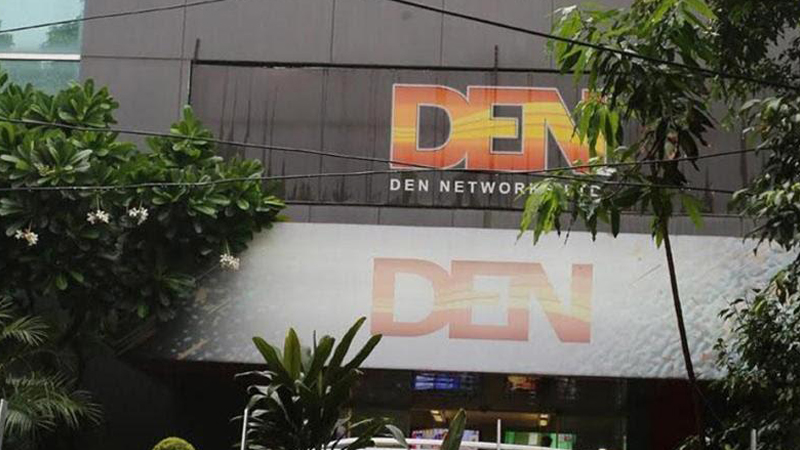
MUMBAI: When margins wobble, liquidity talks and in Q3 FY25-26, cash did most of the talking. Den Networks Limited closed the December quarter with consolidated revenue of Rs.251 crore, marginally higher than the previous quarter but down 4 per cent year-on-year, even as profitability stayed resilient on the back of strong cash reserves and disciplined cost control.
Subscription income softened to Rs.98 crore, slipping 3 per cent sequentially and 14 per cent from last year, while placement and marketing income offered some cheer, rising 15 per cent quarter-on-quarter to Rs.148 crore. Total costs climbed faster than revenue, up 7 per cent QoQ to Rs.238 crore, driven largely by higher content costs and operating expenses. As a result, EBITDA dropped sharply to Rs.13 crore from Rs.19 crore in Q2 and Rs.28 crore a year ago, pulling margins down to 5 per cent.
Yet, the bottom line refused to blink. Profit after tax stood at Rs.40 crore, up 15 per cent sequentially and only marginally lower than last year’s Rs.42 crore. A healthy Rs.57 crore in other income helped cushion operating pressure, keeping profit before tax at Rs.48 crore, broadly stable quarter-on-quarter despite the tougher cost environment.
The real headline-grabber, however, sits on the balance sheet. The company remains debt-free, with cash and cash equivalents swelling to Rs.3,279 crore as of December 31, 2025. Net worth rose to Rs.3,748 crore, while online collections accounted for 97 per cent of total receipts, underscoring strong cash discipline across operations, including subsidiaries.
In short, while Q3 showed signs of operating strain, the financial backbone remains solid. With zero gross debt, steady profits and a formidable cash war chest, the company enters the next quarter with flexibility firmly on its side proving that in uncertain markets, balance sheet strength can be the best growth strategy.






