Cable TV
Impact of DAS on Sports Ecosystem


DAS (digital addressable system) is here to stay. Despite the shortcomings, the hiccups in the implementation of the first two phases, the government has announced that it will not extend the deadlines of December 31, 2015 for phase III areas and December 31, 2016 for phase IV, when the entire country is expected to be digitised. After complete switchover, cable TV services will be available only through set top boxes in India.
We, at the Indiantelevision.com are starting a new section – ‘The Impact of DAS’ through which thought leaders, experts from the television ecosystem will share their thoughts, ideas, and say their piece on the subject. We are beginning with the impact of DAS on the sports broadcasting ecosystem.

Our first expert for the section is Sony Six and Sony Kix Business Head Prasana Krishnan. Sony Six and Sony Kix are a part of the Sony Pictures Network (earlier known as Multi Screen Media Network.)
Excerpts:
How big an impact has phase I and II digitisation made when it comes to subscription revenues?
Digitisation is a very significant and essential step for unlocking the true subscription potential. It is designed to benefit all stakeholders including content owners, broadcasters, distributors and consumers as it brings addressability and transparency into the system. We are still in early stages of this and full addressability is still some time away but the overall impact on subscription revenues has been very positive.
From a sports broadcaster’s point of view are you happy with the two phases of digitisation?
The first two phases of digitisation have primarily focused toward catering to the change in the 4 metro’s and households in cities with over 1 million in population. The experience and progress has been quite positive as the consumer in India is today getting unprecedented access to sports content. The analog regime had some capacity limitations which often meant prioritisation of sports and ignoring niche interests. Digitisation has been a key factor behind the growth of non-cricket sports viewership in the country as it has enabled access to such content on a consistent basis. While the overall progress in these markets is very positive, the full potential is still to be unlocked and a lot still remains to be done in terms of full addressability, channel packages, etc.
Is the sports broadcasting industry in a subscription positive scenario? Or we are still ad dependent?
Globally, sports broadcasting is primarily driven by subscription and in some cases, it can be even as high as 90 per cent of total revenues. In India, dependence on ad spends is still very high and I think it will continue to be so in the foreseeable future. But the share of subscription revenues has seen a good increase in recent years with the advent of DTH sector and digitisation and will hopefully continue to grow.
Are sports like Football, Badminton which are hugely popular but attract limited advertising profitable assets for a sports broadcaster?
With spur in economic developments and maturing viewership preferences, sports viewership in the country has moved from a single sport to a multi-sport consumption. Compelling alternate sports have now taken a step ahead, and we are seeing their popularity permeate down amongst the Indian audiences leading to increased overall demand for alternate sports. While certain sports like cricket are extremely advertiser friendly due to their format, others like football, badminton, etc have higher limitations in terms of advertising. But these sports can be profitable especially with the advent of digitisation and the improving subscription market.
With phase III and IV scheduled do you see a substantial upward growth in subscription revenues?
Digitisation is clearly beneficial for sports broadcasting and some of the benefits are already visible from the first two phases. Phase III and phase IV will help in continuing this growth and would be clearly positive for the industry.
How can a non-cricket sport or a sport with limited ad room turn profitable for broadcasters?
We are currently in a very exciting decade for sports consumption with viewership patterns and preferences showing a particular change over the previous years. Non-cricket sports have been at the forefront of growth in the country and fans are increasingly connecting with these sports. Eventually, profitability is clearly a factor dependent on viewer acceptance besides costs. It is not possible to have a generic answer that applies for all non-cricket sports as it would be a case specific. If a particular sport has found strong viewer acceptance, profitability will definitely follow irrespective of advertising inventory constraints.







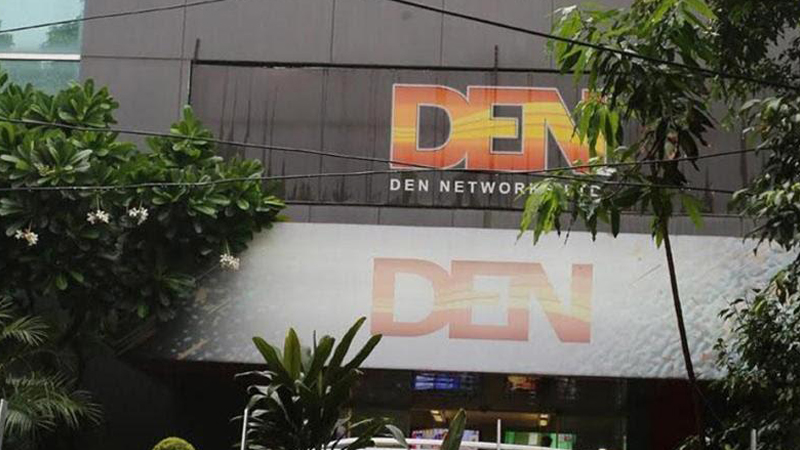
MUMBAI: When margins wobble, liquidity talks and in Q3 FY25-26, cash did most of the talking. Den Networks Limited closed the December quarter with consolidated revenue of Rs.251 crore, marginally higher than the previous quarter but down 4 per cent year-on-year, even as profitability stayed resilient on the back of strong cash reserves and disciplined cost control.
Subscription income softened to Rs.98 crore, slipping 3 per cent sequentially and 14 per cent from last year, while placement and marketing income offered some cheer, rising 15 per cent quarter-on-quarter to Rs.148 crore. Total costs climbed faster than revenue, up 7 per cent QoQ to Rs.238 crore, driven largely by higher content costs and operating expenses. As a result, EBITDA dropped sharply to Rs.13 crore from Rs.19 crore in Q2 and Rs.28 crore a year ago, pulling margins down to 5 per cent.
Yet, the bottom line refused to blink. Profit after tax stood at Rs.40 crore, up 15 per cent sequentially and only marginally lower than last year’s Rs.42 crore. A healthy Rs.57 crore in other income helped cushion operating pressure, keeping profit before tax at Rs.48 crore, broadly stable quarter-on-quarter despite the tougher cost environment.
The real headline-grabber, however, sits on the balance sheet. The company remains debt-free, with cash and cash equivalents swelling to Rs.3,279 crore as of December 31, 2025. Net worth rose to Rs.3,748 crore, while online collections accounted for 97 per cent of total receipts, underscoring strong cash discipline across operations, including subsidiaries.
In short, while Q3 showed signs of operating strain, the financial backbone remains solid. With zero gross debt, steady profits and a formidable cash war chest, the company enters the next quarter with flexibility firmly on its side proving that in uncertain markets, balance sheet strength can be the best growth strategy.






