Cable TV
HSBC raises Hathway’s target price to Rs 432


MUMBAI: HSBC Securities and Capital Markets’ latest report on multi system operator (MSO) Hathway Cable & Datacom has improved its rating from ‘normal’ to ‘overweight’.
While it continues to value Hathway using a DCF based approach, it has raised the target price from Rs 276 to Rs 432. This is on the assumption of 12.5 per cent WACC, cost of equity of 13.5 per cent and cost of debt of 11 per cent.

One of the main reasons for this is the expectation of increase in Average Revenue Per User (ARPU). HSBC expects gross billing to increase in phase I markets by around 15 per cent and phase II by around 10 per cent over the next two quarters. Gross ARPU is estimated to grow at 16 per cent CAGR from its earlier 8 per cent.
Increase in ARPU would mean a near 10 to 20 per cent rise in cost, despite the incentives that are being offered by Star’s new RIO deals. The report also says that moving to prepaid would be necessary, even if it is restricted to Star channels for now as in the long run it would allow MSOs to scale up to full prepaid gradually over the next 18-24 months.
“LMOs will need to move to a prepay backend. Both these factors are positive for the sector and in our view build a long-term case for ARPU improvement, fewer bad debts, reducing friction between MSO and LMO relations, improving the industry structure and allowing the industry to benefit from sector consolidation,” it states.
The report also highlights that if Star is successful in reaping benefits out of its new RIO policy, other big networks may follow suit, though not in the immediate 12 months.
This apart, HSBC also sees broadband ARPUs increasing with a more robust DOCSIS 3.0 platform but with a slight concern on the slow pace of subscriber net addition. The delay in digitisation is positive for cable TV industry to consolidate market share in the first two phases. Side by side, issues such as revenue share and prepaid billing can be sorted and easily applied in phases III and IV.
HSBC has raised its medium- term EBITDA estimates by 11 per cent (FY16e-21e CAGR of 13.5 per cent), cable TV ARPU assumptions by 12 per cent (FY16e-21e CAGR of 11 per cent) and broadband ARPU by 8 per cent for the same period.






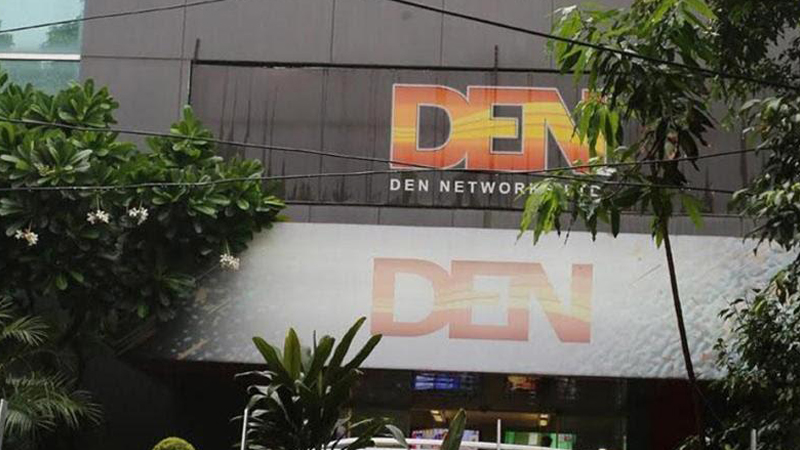
MUMBAI: When margins wobble, liquidity talks and in Q3 FY25-26, cash did most of the talking. Den Networks Limited closed the December quarter with consolidated revenue of Rs.251 crore, marginally higher than the previous quarter but down 4 per cent year-on-year, even as profitability stayed resilient on the back of strong cash reserves and disciplined cost control.
Subscription income softened to Rs.98 crore, slipping 3 per cent sequentially and 14 per cent from last year, while placement and marketing income offered some cheer, rising 15 per cent quarter-on-quarter to Rs.148 crore. Total costs climbed faster than revenue, up 7 per cent QoQ to Rs.238 crore, driven largely by higher content costs and operating expenses. As a result, EBITDA dropped sharply to Rs.13 crore from Rs.19 crore in Q2 and Rs.28 crore a year ago, pulling margins down to 5 per cent.
Yet, the bottom line refused to blink. Profit after tax stood at Rs.40 crore, up 15 per cent sequentially and only marginally lower than last year’s Rs.42 crore. A healthy Rs.57 crore in other income helped cushion operating pressure, keeping profit before tax at Rs.48 crore, broadly stable quarter-on-quarter despite the tougher cost environment.
The real headline-grabber, however, sits on the balance sheet. The company remains debt-free, with cash and cash equivalents swelling to Rs.3,279 crore as of December 31, 2025. Net worth rose to Rs.3,748 crore, while online collections accounted for 97 per cent of total receipts, underscoring strong cash discipline across operations, including subsidiaries.
In short, while Q3 showed signs of operating strain, the financial backbone remains solid. With zero gross debt, steady profits and a formidable cash war chest, the company enters the next quarter with flexibility firmly on its side proving that in uncertain markets, balance sheet strength can be the best growth strategy.






