iWorld
Social media access can be blocked under specific conditions


NEW DELHI: The Government has said that Section 69A of the Information Technology Act 2000 provides for blocking access to information under specific conditions.
Answering a question about censoring new platforms for publication and broadcasting of media content like social networks and online video services, the minister of state for information and broadcasting Rajyavardhan Rathore told the Parliament that the Act has provisions for removal of objectionable online content.
The Information Technology (Intermediary Guidelines) rules 2011 require that the Intermediaries shall observe due diligence while discharging their duties and shall inform the users of computer resources not to host, display, upload, modify, publish, transmit, update or share any information that is harmful, objectionable, affects minors and is unlawful in any way.

With regard to the use of social media by the Government, he said social media platforms are used to disseminate/ publicise information pertaining to Government policies and programmes.
The government has set up myGov as a social media platform for enabling greater people participation in matters relating to public policy.
Meanwhile, the ministry has categorically said it is not contemplating any regulatory framework for censorship of content appearing on the internet.
As far as OTT was concerned, sources in the ministry told indiantelevision.com that this was still a new subject, and the government would take action in the event of any complaints from viewers and subscribers.
At present, the government does not certify any programmes coming on television, but the sources reiterated that programming has to be in accordance with the guidelines of the Programme and Advertising Code apart from the Uplink and Downlink Guidelines.
The information and broadcasting ministry, sources said, has no control over films appearing online as this falls in the ambit of the IT Act which is administered by IT Ministry.







e-commerce
Amazon unveils first Trustworthy Shopping Experience Report
32,000 bad actors targeted, 15 million fake products removed in 2025.
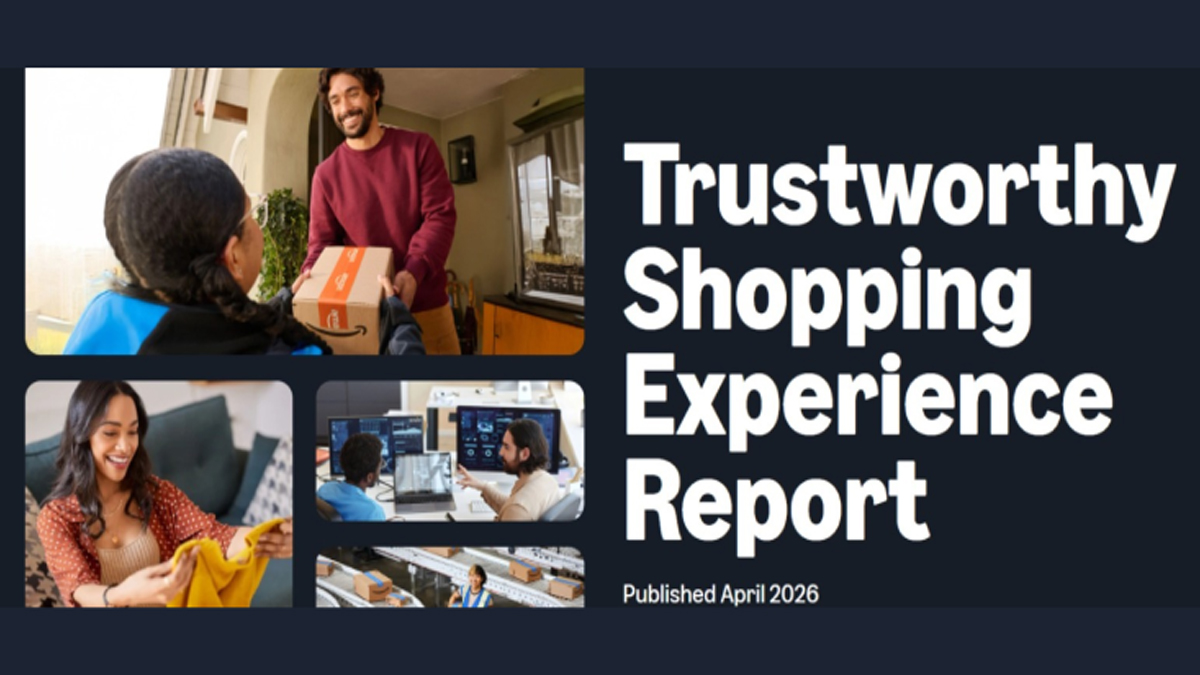
MUMBAI: In a marketplace where trust is the real currency, Amazon is showing its receipts. Amazon has released its first-ever Trustworthy Shopping Experience Report, offering a detailed look at how it polices its vast digital shelves from counterfeit crackdowns to scam detection and review authenticity. At the heart of the report is a four-pronged strategy, proactive controls, risk anticipation, enforcement against bad actors, and consumer protection. The scale is staggering. Since 2020, Amazon’s Counterfeit Crimes Unit has pursued over 32,000 bad actors globally through litigation and criminal referrals spanning 14 countries.
The clean-up drive accelerated in 2025, with the company identifying and disposing of more than 15 million counterfeit products worldwide. Legal action also led to the takedown of over 100 websites linked to fake reviews and scams, an ongoing battle in the age of algorithmic manipulation.
Behind the scenes, artificial intelligence and machine learning are doing the heavy lifting. Amazon says it monitors billions of daily interactions across listings, reviews, and seller activity to spot trouble before it surfaces. Its predictive systems can even flag potentially infringing listings for trending products before brands raise the alarm.
Tools like Omniscan, which verifies product safety information at scale, and SENTRIX, designed to detect and eliminate phishing websites, are part of this expanding tech arsenal. Together, they aim to reduce risk while keeping the platform usable for legitimate sellers.
That balance between protection and friction is a tightrope Amazon acknowledges. Rohan Oommen, Vice President of Worldwide Customer and Partner Trust, noted that while safeguards are critical, they must not stifle genuine businesses. Features like the Account Health Dashboard are meant to give sellers clearer visibility into compliance and performance.
Consumer-facing measures are also getting sharper. From direct safety alerts to recall notifications and refund guidance, Amazon is leaning into transparency, backed by partnerships with consumer organisations to raise awareness.
The report’s release follows the expansion of Amazon’s Counterfeit Crimes Unit into India, signalling a deeper push into one of its fastest-growing markets, with closer coordination planned between brands, sellers, and law enforcement.
In short, as online shopping grows more complex, Amazon is betting that trust built through data, enforcement, and a fair bit of algorithmic vigilance will be its most valuable product yet.