MAM
Lowe Lintas appoints Naveen Gaur as COO

MUMBAI: MullenLowe Lintas Group has announced the elevation of Naveen Gaur as the chief operating officer, Lowe Lintas. He was until now the president of Lowe Lintas in charge of the New Delhi (NCR) operations.
Effective immediately, Naveen would oversee Lowe Lintas’ offices in New Delhi (NCR), Bangalore, Chennai, Hyderabad and Kolkata. He continues to be based in New Delhi and will report to Raj Gupta, whose elevation to CEO, Lowe Lintas was announced a few days back.
Commenting on the appointment, MullenLowe Lintas Group chairman & CEO Joseph George said: “Naveen has played a significant role in strengthening Lowe Lintas’ operations of New Delhi (NCR) and has had an incredibly successful run the past 5 years. His proven track record of driving growth and creative excellence makes him a very strong support for the Lowe Lintas leadership of Arun Iyer and Raj Gupta as we put in place an ambitious and futuristic roadmap for the agency.”

Commenting on his appointment, Naveen Gaur said: “It’s a great opportunity and a privilege to further strengthen this great agency, as we move into this ever changing dynamic business environment. I look forward to partnering with Arun and Raj to drive this agenda.”
Naveen joined Lowe Lintas in 2010 as Branch Head, Delhi. Over the years, he has built a strong team of professionals and encouraged an entrepreneurial culture of growth and creative excellence. Under his leadership, the Delhi office added clients like OLX, Sun Pharma, Pernod Ricard, Cargill Foods, Google among others over the past few years. He even led his team to win major accolades across effectiveness award shows each year over the past seven years.
In a career spanning over two decades, Naveen has built a startup health and wellness, been the Chief Growth Officer at McCann Worldgroup India, and Business Director (at McCann) for clients such as Coca-Cola, Mastercard, Microsoft, Reckitt & Colman, General Motors, Bacardi, Dabur amongst others.







MAM
Bob Iger joins Thrive Capital as adviser after Disney exit
Former Disney CEO returns to VC firm, stays on as Disney adviser till 2026.
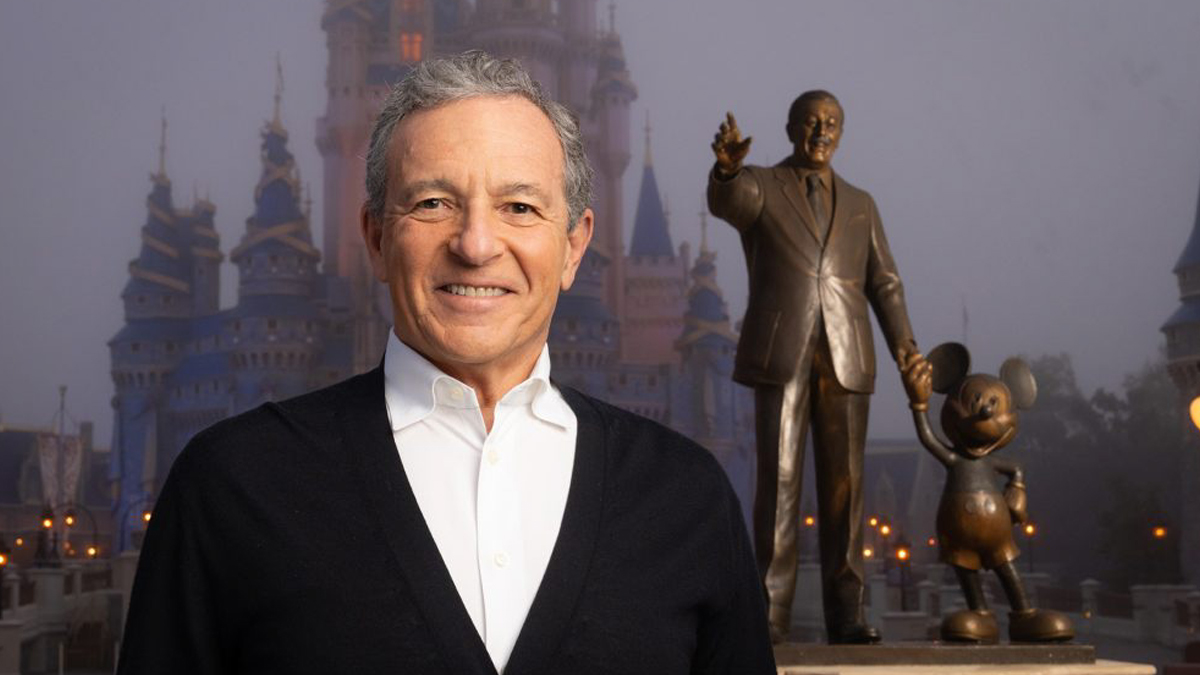
MUMBAI: From castles to capital, Bob Iger isn’t done building just changing the blueprint. Bob Iger has taken on an advisory role at Thrive Capital, marking a return to the New York-based venture firm he briefly joined in 2022. Founded in 2009 by Josh Kushner, Thrive Capital has been positioning itself at the intersection of technology and long-term value creation, an area where Iger’s experience in scaling global entertainment businesses is expected to add weight. Kushner, 40, welcomed Iger back, highlighting his ability to blend technology with human-centric storytelling, particularly in an era increasingly shaped by artificial intelligence.
Iger is no stranger to Thrive. He had earlier joined the firm as a venture partner in September 2022, after stepping down as CEO of The Walt Disney Company and concluding his tenure as executive chairman in 2021. That stint, however, was short-lived. In November 2022, Disney’s board brought him back to steady the ship, replacing Bob Chapek following a turbulent period for the company.
Now, with his latest exit from Disney’s top job last month, Iger appears to be revisiting the venture world, this time with a clearer runway. Still, the Disney chapter isn’t entirely closed. Under his agreement with the company, he will remain until the end of 2026 as a senior adviser to new CEO Josh D’Amaro and will continue to serve on the board for his current term.
The move comes as venture firms increasingly seek operators with deep industry experience to navigate what Kushner described as “the most consequential technology shift” of the era, driven by AI. For Iger, whose career has hinged on blending creativity with scale, the transition from Hollywood to high-growth investing seems less like a pivot and more like a plot twist.