Components
Shift towards Lazor/LED, projector market expanding at 22% CAGR
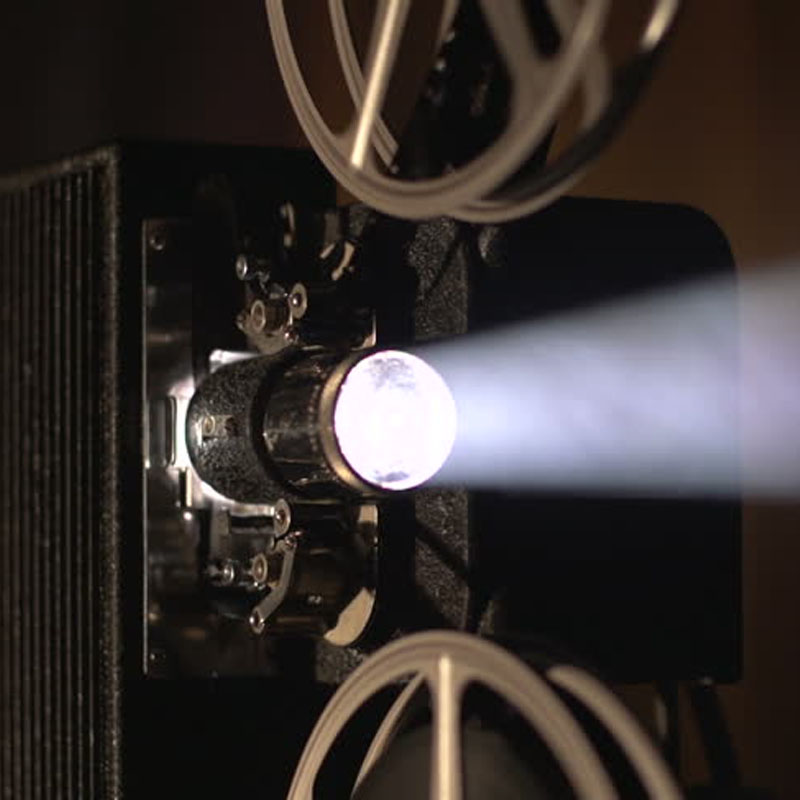
MUMBAI: Projectors are one of the fastest growing product lines in India due to the booming education market. Changing lifestyles, decrease in price and rising spending on electronics has led to an upsurge in demand for high-end products including projectors.
Various emerging segments such as Education and Audio Video System Integration in commercial segment are booming with demand for projectors. India’s education sector is moving towards the digital age. Educational system integrators are thriving in India and helping to cater to the growing requirement of audio-visual equipment. Further, the market is expected to grow at a faster pace due to the revival of delayed projects affected by the Indian general election of 2014.
According to “India Projector Market Outlook, 2019”, India’s projector market was growing with a CAGR of 21.74% by volume over past four years. IT, corporate, media, entertainment, rental, BPO and education sectors were the major industries driving the sales of projectors.
The education sector is reportedly the biggest segment of digital projector sales in 2014 followed by mid-size and small business segments. Beyond this, development in the home entertainment and gaming segment is also being scaled up with the arrival of 3D, HD and Wi-Fi support features within current projector models. These days the projection technology is more sought after in homes with spectacular increase in availability of full HD and 3D content in form and availability by HD DTH and Blu Ray discs.
The technology used in projectors can generally be broken down into two types: DLP and LCD. Both the technologies LCD and DLP have an almost equal market share in 2014 with DLP technology slightly ahead. However, in future the trend is expected to reverse with LCD technology to dominate the market heavily. Moreover, the market will continue its shift towards new technologies like Lazor Interactive/LED Interactive Android due to the low maintenance cost and superior technology. High-Definition (HD) projectors are replacing the Standard-Definition (SD) projectors due to increasing popularity among consumers.
Out of the total shipment, almost one-third market is captured by 1024×768 display resolutions, followed by 800×800 resolutions. Higher resolution projectors are less likely to require signal compression and its associated loss in quality. Hence, High-Definition will be the most popular display resolution in future with highest market share by 2019.
In this crowded market, BenQ is the No. 1 brand in India followed by Epson, InFocus, Hitachi, Panasonic and many others. “Apart from all these flagship players, Canon which has recently entered the category is expected to emerge as a big player in future,” said a research analyst.
The company, which has launched nine LV and XEED series projectors, is targeting Rs. 100 Crore revenue by 2017. It has tied up with Ingram Micro as the national distributor for its mass products and will partner with AV integrated solution providers for high-end projectors. Moreover, the company will also be using its own retail stores ‘Canon Image Square’ to sell its projectors. Aggressive marketing and distribution strategy coupled with a well-know brand image will push the sales of these projectors.
The metro markets dominate the consumption but new demand is expected from tier II and tier III cities with rapid urbanization of these towns. The vendors are targeting more than 30 Indian towns beyond the top eight metropolitan centers for projectors.

Components
CES 2026: LG Display stripes ahead with a gaming and design monitor that means business
SEOUL: In the eternal battle between gamers demanding lightning-fast refresh rates and professionals craving pixel-perfect clarity, LG Display reckons it has found détente. The South Korean display titan is unveiling the world’s first 27-inch 4K OLED monitor panel that marries an RGB stripe structure with a blistering 240Hz refresh rate—a combination previously thought incompatible, like oil and water or fashion and function.
The breakthrough lies in how the pixels are arranged. RGB stripe structure lines up red, green and blue subpixels in neat rows, banishing the colour bleeding and fringing that plague lesser screens when you park your nose close to the display. It is the difference between reading crisp text and squinting at a rainbow-tinged mess. OLED panels using this method existed before, but they topped out at a sluggish 60Hz—fine for spreadsheets, useless for fragging opponents in first-person shooters.
LG Display’s engineering wizardry changes the game. By cranking the refresh rate to 240Hz whilst maintaining that pristine RGB stripe layout, the company has produced a panel that works equally well for colour-critical design work and twitchy gaming sessions. Better still, the panel incorporates Dynamic Frequency & Resolution technology, letting users toggle between ultra-high-definition at 240Hz and full-HD at a frankly ludicrous 480Hz. That is fast enough to make your eyeballs sweat.
The specs are suitably impressive: 160 pixels per inch for exceptional detail, optimised performance for Windows and font-rendering engines, and colour accuracy that should please the Photoshop brigade. LG Display achieved this by boosting the aperture ratio—the percentage of each pixel that actually emits light—and applying what it coyly describes as “various new technologies.” Translation: years of R&D and probably some sleepless nights.
Existing high-end gaming OLED monitors have relied on RGWB structures (which add a white subpixel) or triangular RGB arrangements. Both work, but neither delivers the sharpness that professionals demand. LG Display’s new stripe pattern is tailored specifically for monitor use, a recognition that staring at a screen from two feet away demands different engineering than watching telly from across the room.
The company is betting big on this technology, targeting the high-end monitor market where it already commands roughly 30 per cent of global OLED panel production. Among gaming OLED panels in mass production, LG Display claims world-leading specs across refresh rate, response time and resolution—a trifecta that sounds like marketing bluster until you check the numbers.
“Technology is the foundation of leadership in the rapidly growing OLED monitor market,” says LG Display head of the large display business unit Lee Hyun-woo. He promises to keep pushing “differentiated technologies compared to competitors”—corporate-speak for staying ahead of Chinese rivals snapping at LG’s heels.
The new panel will debut at CES 2026 in Las Vegas, where LG Display plans to woo customers and expand its lineup. Initial rollout targets high-end gaming and professional monitors, the sweet spot where people actually pay premiums for superior screens rather than settling for whatever came with their laptop.
Whether this technology reshapes the monitor market or remains a niche luxury depends on two things: pricing and production scale. But for now, LG Display has pulled off something rare—a genuine technical leap that solves a real problem. Gamers get their speed, designers get their clarity, and LG gets bragging rights. In the cutthroat world of display tech, that counts as a win.