eNews
Inkspell launches ‘Drivers of Digital Awards & Summit’ 2017

MUMBAI: Popularly known as DOD Awards, this year’s event will also include Keynote Addresses, Panel Discussions and Fireside Chats among the Who’s Who of the Digital fraternity as well as professionals from the Brands which are leading the digital practices in the country.
‘Drivers of Digital’ is a flagship event of the digital industry in India and is organised annually by Inkspell Media – a New Delhi based B2B marketing enterprise. While the previous edition of this event was organised in the national capital, this year it is being hosted in Mumbai on 26 October. “Taking DOD Awards to Mumbai is a welcome move, and the digital fraternity is quite upbeat about it”, said one of the officials from Inkspell Media.
The organisers have very recently launched the website (www.dodawards.in) and have declared the entry submissions open. The last day for agencies and brands to nominate their caste studies, campaigns, products, services, and professionals for the DOD Awards is 20 September, while the Regular Entry Slots close on 31 August.

Nominations are invited across several categories including Digital Marketing, Website, Mobile, Digital Financial, Content Marketing and Special Awards.
This year’s programme shall be a blend of awards and interactive sessions addressed by the industry experts and veterans as well as leaders from some of the most renowned global brands and agencies. Some of the topics that shall be discussed at the event through Keynote Addresses, Panel Sessions, Fireside Chats, etc. include:
• Digital content is now representing your Brand’s Reputation!
• Social Media’s New Mantras
• #DigitalAdvertising: Getting the Pounds for your pennies.
• Artificial Intelligence – Mastering the monster we have created!
• Will physical banks exist 5 years from now?
• #Fintech






eNews
AI could replace half of entry-level white-collar work: Anthropic study
Hiring in AI-exposed occupations fell 14 per cent post-ChatGPT
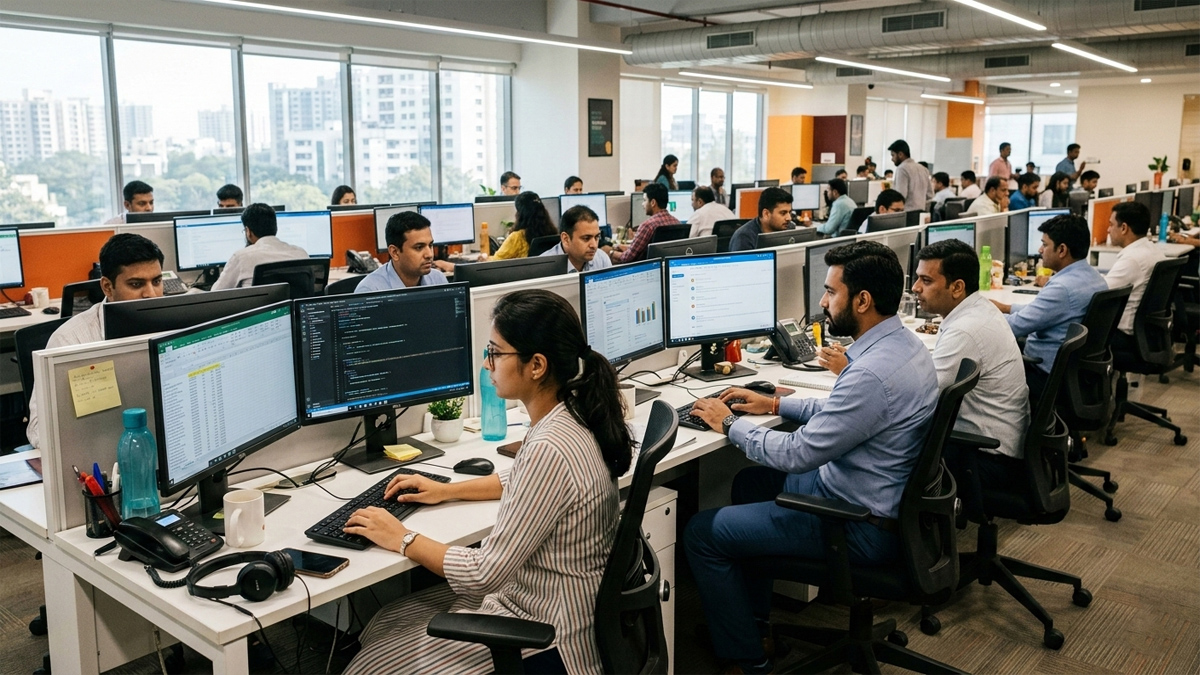
SAN FRANCISCO: From lamplighters to elevator operators, waves of technology have repeatedly erased once-common jobs. Now artificial intelligence may be poised to do the same for large swathes of professional work.
A new study by Anthropic suggests that while AI tools are technically capable of performing many knowledge-economy tasks, real-world adoption lags far behind that potential, at least for now.
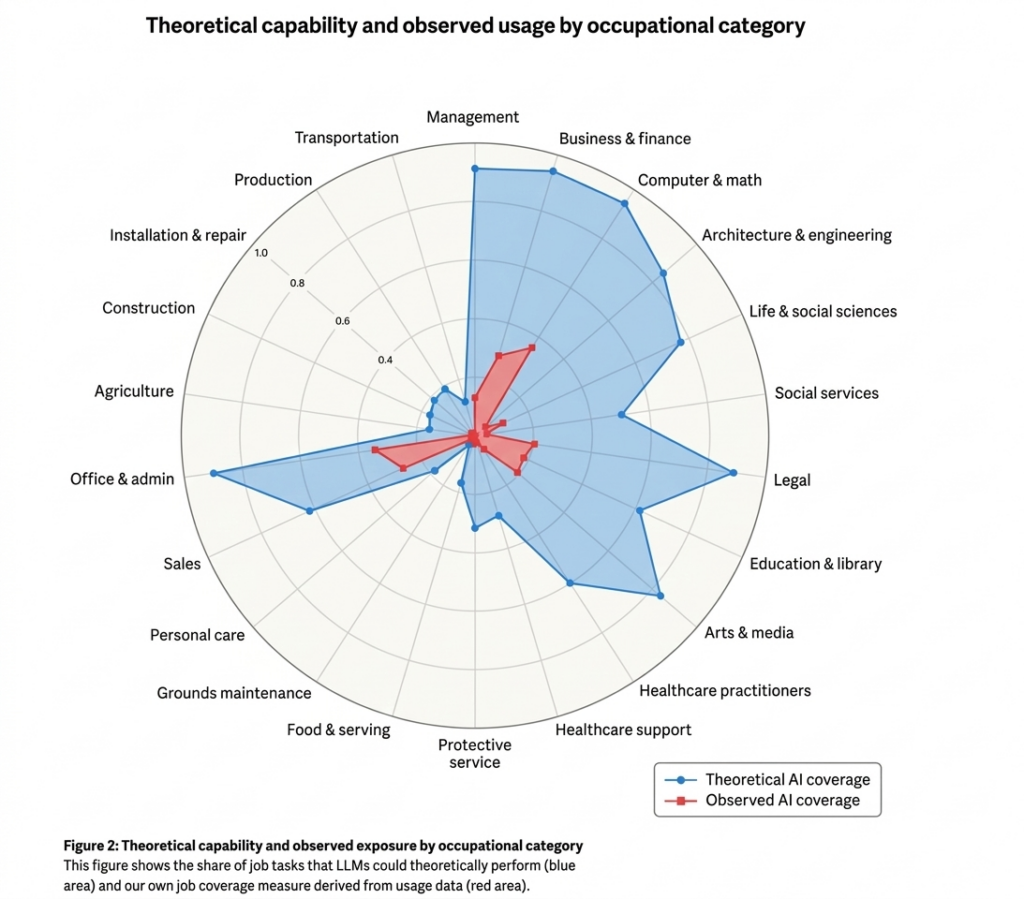
The report, Labor market impacts of AI: A new measure and early evidence, by Maxim Massenkoff and Peter McCrory, introduces a new metric called “observed exposure,” which compares what AI systems could theoretically perform with what they are actually doing in workplaces.
Using professional interaction data from Anthropic’s Claude model, the researchers found that AI could theoretically cover a wide share of tasks in business, finance, management, computing, mathematics, legal services and office administration. Yet current adoption represents only a small fraction of those capabilities.
That gap between potential and reality reflects a mix of legal barriers, technical limitations and the continued need for human oversight, the study said. But the authors suggest those constraints may prove temporary as the technology matures.
Warnings about AI’s impact on white-collar employment have been growing. CEO Dario Amodei has previously argued that AI could disrupt as much as half of entry-level professional work, while Microsoft AI CEO Mustafa Suleyman has suggested that most professional tasks could eventually be automated within 12 to 18 months.
Highly educated workers most exposed
Contrary to common assumptions, the study finds that workers most exposed to AI are not those in manual labour but highly educated professionals. The most exposed group is 16 percentage points more likely to be female, earns on average 47 per cent more than the least exposed group and is nearly four times as likely to hold a graduate degree.
Occupations including computer programmers, customer service representatives and data entry clerks are among the most vulnerable to automation.
Yet even in highly exposed fields, AI is not yet replacing jobs at scale. The researchers cite routine medical tasks, such as authorising prescription refills, as examples that AI could technically perform but is not widely observed doing in practice.
In the report’s visual framework, actual AI usage (the “red area”) remains far smaller than the theoretical “blue area” of possible tasks. Over time, the researchers expect the red area to expand as adoption deepens.
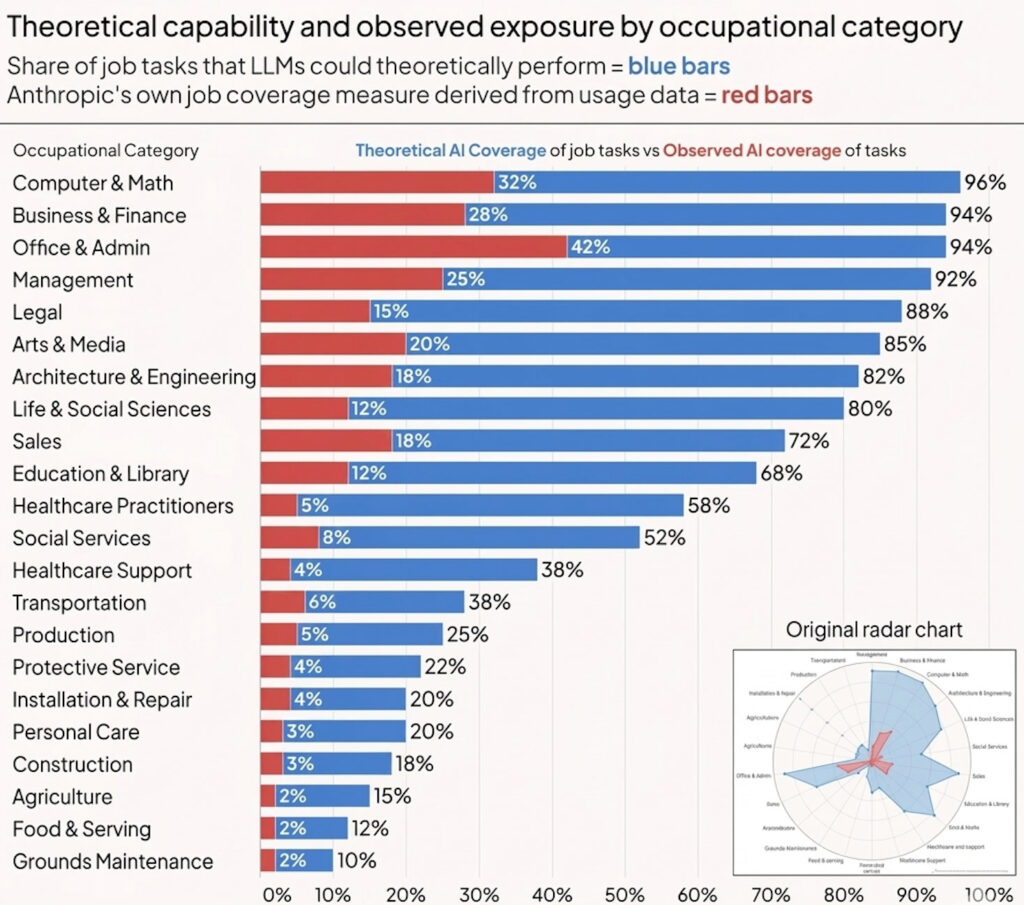
At the other end of the labour market, roughly 30 per cent of occupations show virtually no AI exposure. Roles such as cooks, mechanics, bartenders and dishwashers still depend heavily on physical presence and manual work that large language models cannot replicate.
Hiring slowdown rather than layoffs
So far the clearest labour-market signal is not mass layoffs but a slowdown in hiring within AI-exposed occupations.
According to the study, job-finding rates in those sectors have fallen about 14 per cent since the arrival of generative AI tools such as ChatGPT compared with 2022 levels. A separate study cited by the authors found a 16 per cent drop in employment among workers aged 22 to 25 in AI-exposed roles.
Recent labour data from the US Bureau of Labor Statistics also point to softer hiring conditions, with employers shedding 92,000 jobs in February and unemployment rising to 4.4 per cent.
Some companies have already linked layoffs to automation. Jack Dorsey said his payments firm Block recently cut nearly half its workforce in part because AI tools allow smaller teams to operate more efficiently.
Not everyone is convinced the technology is solely responsible. Critics such as Marc Benioff have accused some firms of “AI washing”, using automation as a convenient explanation for cost-cutting measures.
Still, the researchers warn that the longer-term risk is a potential “white-collar recession”. If unemployment in the most AI-exposed occupations were to double, from about 3 per cent to 6 per cent, it would mirror the scale of labour-market disruption seen during the Global Financial Crisis.
For now, the shift may simply mean fewer entry-level openings. Some young workers are staying longer in existing roles, switching sectors or returning to education rather than entering AI-exposed fields.