News Headline
TRAI workshop on interoperable STBs later this month


NEW DELHI: Following the issuance of a consultation paper by it on 11 August, the Telecom Regulatory Authority of India has now organised a workshop on solution architecture for technical interoperable set top box on 26 September in the capital. The paper had been issued after responses to a pre-consultation paper issued on 4 April this year.
TRAI says it had suo moto taken up the issue of STB interoperability in the broadcasting TV sector. Presently, the Distribution Platform Operator (DPO) provides STB, which is compatible with his network to provide services to a subscriber.
Over a period of time, variety of technologies has been deployed by DPOs into the networks. It has led to a situation where STBs provided by one operator are not compatible with the system of the other operator. This impedes portability of a subscriber from one operator to another in case he wishes to do so.

In the perspective of subscribers, provision of switch-over from one operator to another without replacing the STB is known as technical interoperability, whereby the same STB can be used by the subscriber for availing the services of any other operator after authorisation form that operator.
Recognising the significance of choice to the subscribers to change their service provider, TRAI also approached various academia & research organisations to collaborate with them to find solutions for interoperability of STB.
In response, IIT-Bombay came onboard and has been working on the issue. IIT Bombay was independently charged with studying the feasibility of open STBs and suggest possible paths towards its implementation. This study concluded that open STBs are indeed feasible and recommended that a programme towards its implementation should be undertaken. They suggested an open STB architecture consisting of a secure communication channel between the open STB and the operator dependent CAS module based on asymmetric cryptography. The keys for such a system are to be managed by a central trusted authority.
The telecom technology development Centre for Development of Telematics (C-DOT) came up with a framework for interoperable STBs based on Smart Card. Approaches suggested independently by IIT Bombay, and the architecture independently developed by C-DOT have strong similarities.
A total of 19 comments have been received.
TRAI’s objective is to chalk out a framework to facilitate consumer choice, innovation, orderly growth and healthy competition in the industry. The framework should enable an ecosystem to give the market a chance to evolve at its own pace and independently respond to consumer demands.
This workshop has been organised to deliberate on the proposed architecture solution. TRAI has also contemplated launching a pilot project with a short-term objective of development of a prototype of the interoperable STB & compatible Smart cards. The TRAI notice also contains the technical details of the interoperability framework.
The workshop has been organised to discuss the feasibility of this pilot with the stakeholders. Objectives of the pilot are:
1. Demonstrate that separation of STB & operator specific CAS functionality is possible in a secure manner.
2. Frame out & test the specifications for interoperable STBs & SCs in real life conditions, and suggest improvements.
3. Jointly develop a business model that fairly allocates value to each provider.
4. Fine tune the architecture proposed by C-DOT and finalize the specifications based on pilot.
5. Test out integrated and swapping of SCs with STBs in a fully secure manner.
Also read :
TRAI starts process of STBs’ interoperability, issues consultation note







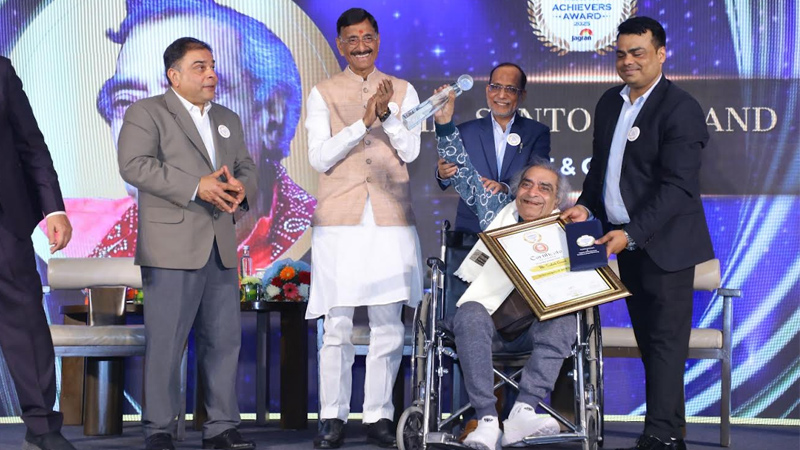
NEW DELHI: Hamdard Laboratories gathered a cross-section of India’s achievers in New Delhi on Friday, handing out the Hakeem Abdul Hameed Excellence Awards to figures who have left their mark across healthcare, education, sport, public service and the arts.
The ceremony, attended by minister of state for defence Sanjay Seth and senior officials from the ministry of Ayush, celebrated individuals whose work blends professional success with a sense of public purpose. It was as much a roll call of achievement as it was a reminder that influence is not measured only in profits or podiums, but in people reached and lives improved.
Among the headline awardees was Alakh Pandey, founder and chief executive of PhysicsWallah, recognised for turning affordable digital learning into a mass movement. On the sporting front, Arjuna Awardee and kabaddi player Sakshi Puniya was honoured for her contribution to the game and for pushing women’s participation onto bigger stages.
The cultural spotlight fell on veteran lyricist and poet Santosh Anand, whose songs have echoed across generations of Hindi cinema. At 97, Anand accepted the honour with characteristic humility, reflecting on a life shaped by perseverance and hope.
Healthcare honours spanned both modern and traditional systems. Manoj N. Nesari was recognised for strengthening Ayurveda’s place in national and global health frameworks. Padma shri Mohammed Abdul Waheed was honoured for his research-backed work in Unani medicine, while padma shri Mohsin Wali received recognition for his long-standing contribution to patient-centred care.
Education and social development also featured prominently. Padma shri Zahir Ishaq Kazi was honoured for decades of work in education, while former Meghalaya superintendent of Police T. C. Chacko was recognised for public service. Goonj founder Anshu Gupta received an award for his dignity-centred rural development initiatives, and the Hunar Shakti Foundation was honoured for empowering women and young girls through skill development.
The Lifetime Achievement Award went to former IAS officer Shailaja Chandra for her long career in public healthcare and governance, particularly in the traditional systems under Ayush.
Speaking at the event, Hamdard chairman Abdul Majeed said the awards were a tribute to those who combine excellence with empathy. “These awardees reflect Hakeem Sahib’s belief that healthcare, education and public service must ultimately serve humanity,” he said.
Minister Seth struck a forward-looking note, saying India’s young population gives the country a unique opportunity to become a global destination for learning, health and wellness by 2047.
The ceremony also featured the trailer launch of Unani Ki Kahaani, an upcoming documentary starring actor Jim Sarbh, set to premiere on Discovery on 11 February.
Instituted in memory of Unani scholar and educationist Hakeem Abdul Hameed, the awards have grown into a national platform that celebrates those building a more inclusive and resilient India. For one evening at least, the spotlight was not just on success, but on service with substance.