News Broadcasting
46% say social media easiest to spread fake news:Chrome Study


BENGALURU: It is easiest to spread fake news through social media says a Chrome Data Analytics & Media (Chrome) study – on the query ‘platform versus trust’.Moreover, 46 percent of 389 respondents felt that social media platforms were the easiest way to spread fake news against four percent that felt social media could be a trusted platform. However, the platform that earned the lowest trust quotient – just three percent, was magazines, as opposed to 6 percent that felt that fake news was easy to spread through magazines. Newsprint with a 27 percent trust quotient was the most trusted medium, but, thirteen percent of the respondents felt that it was a medium through which fake news could be spread. The medium least likely to be used for spread of fake news was said to be radio – just 5 percent of the respondents felt that it could be a medium that was easiest to spread fake news through. At the same time, just 7 percent voted for radio as a trusted source.
Please refer to the figure below:

Chrome undertook a study on fake news by interviewing 847 respondents comprising 46 percent females and 54 percent males. The age groups of the respondents were 18 to 24 years – 21 percent; 25 to 34 years – 24 percent; 35 to 44 years – 28 percent; 45 to 54 years – 15 percent and 55+ years 12 percent.

Television was the most preferred platform for news consumption with 84 percent of the respondents using it. 61 percent used social media as a source of news, 58 percent used mobile apps; 47 percent newsprint and 13 percent radio for news.

How do you identify fake news:Less than half the respondents – just 46 percent or 389 were aware of the term ‘fake news’. Of these 389 respondents,34 percent checked the source of the information to identify fake news; 26 percent decided on the basis of her/his knowledge; 21 percent searched for the related topic or headlines; 14 percent asked family members or friends; while just 10 percent asked experts/individuals who had knowledge of that domain.
23 percent of the 389 respondents felt that Bollywood category contained the maximum fake news, while 10 percent felt that it was the spiritual category.

59 percent of the 389 respondents said that they stopped following the page or any such groups where they encountered fake news, while 3 percent said that they drafted a complaint directly to the editor or the publisher.

The top recall fake news, recalled by 44 percent of the 389 respondents was about the GPS chip in the new Rs 500 and Rs 2000 currency notes. Only 8 percent had a recall of the fake news claims about the real GurmeetRam Rahim being abroad and the fake one being inside the Rohtak jail.

Chrome founder and CEO Pankaj Krishna said through a presentation, “Fake news, a type of yellow journalism, is like a plague and immunisation through education can help. The main challenge for consumers is to understand that fake and biased news are ubiquitous and further to be vigilant in detecting and then avoiding them. My advice is to consume news from multiple sources especially from those having a good track record of credibility and reliable reporting.”

News Broadcasting
Kamlesh Singh receives Haldi Ghati Award from MMCF
India Today Group editor honoured for three decades of journalism at Udaipur ceremony.
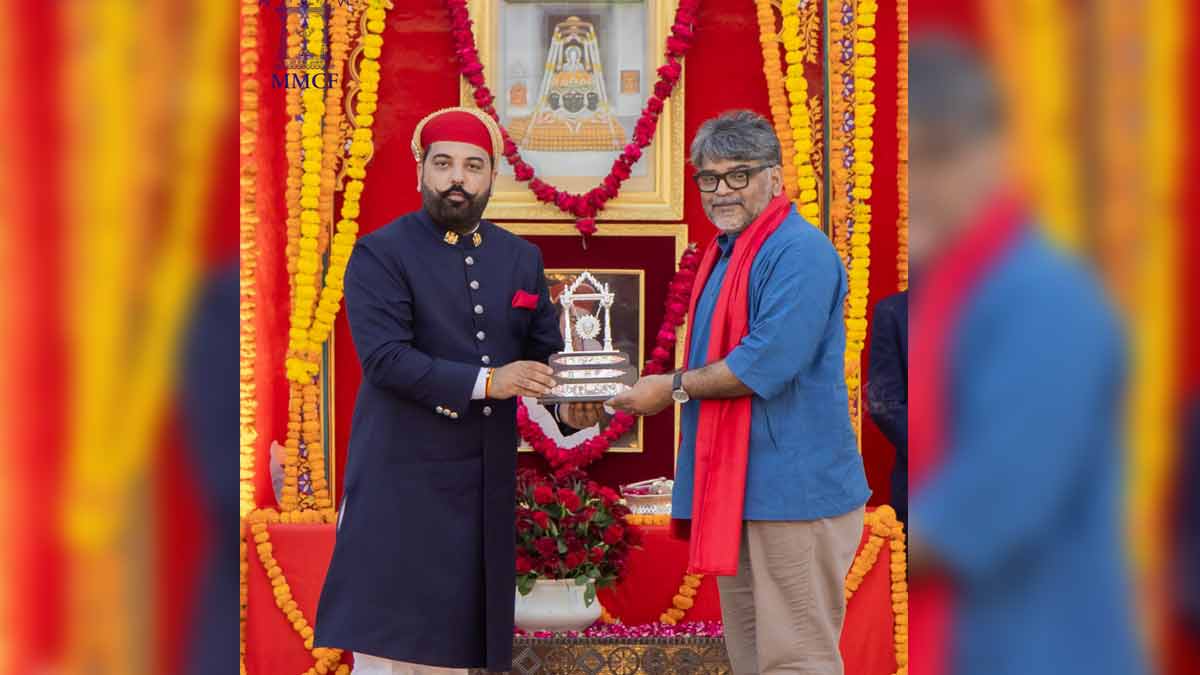
MUMBAI- Kamlesh Singh just turned a lifetime of sharp words into a shiny shield because when journalism wakes up a society, even the Maharana of Mewar wants to pin a medal on it.
The Maharana of Mewar Charitable Foundation (MMCF) conferred its prestigious Haldi Ghati Award on Kamlesh Singh, a senior editor at the India Today Group, during a ceremony in Udaipur on 15 March 2026. The national award, instituted in 1981-82, recognises “work of permanent value that initiates an awakening in society through the medium of journalism.”
Singh, who leads several editorial initiatives including Aaj Tak Radio, the Teen Taal community and The Lallantop, was presented the honour by Lakshyaraj Singh Mewar, Managing Trustee of MMCF. The citation highlighted his three decades of contributions to Indian media, innovations in digital journalism, mentoring young reporters, and his popular podcast persona “Tau” on Teen Taal, which fosters thoughtful public discourse.
The Haldi Ghati Award, named after the historic Battle of Haldighati symbolising valour and resilience, is one of four national awards given annually by MMCF. Past recipients include Tavleen Singh, Piyush Pandey and Raj Chengappa.
Other honourees this year included Padma Vibhushan Pt Hari Prasad Chaurasia, Vedamurti Devvrat Rekhe, Treeman of India Marimuthu Yoganathan, Vir Chakra Capt Rizwan Malik, and US-based researcher Molly Emma Aitken, who received the Colonel James Tod Award for contributions to understanding Mewar’s spirit and values.
In an era where headlines often shout louder than substance, the MMCF quietly reminded everyone that real journalism isn’t about noise, it’s about the quiet, persistent work that stirs society awake, one thoughtful story at a time.







