MAM
55% marketers make better decisions with machine learning: iProspect report


MUMBAI: Digital agency iProspect has released its third annual Future Focus whitepaper geared to examine how machines and technology are impacting marketing and advertising in the year ahead. The paper takes a look at how brands can make the most of machines in 2018, from facilitating seamless consumer experiences to delivering greater efficiencies.
iProspect interviewed 250 of its global clients, including FTSE 100 and Fortune 500 companies, and used real-time feedback to outline key insights and priorities necessary for businesses to thrive in our fast-moving, high expectation digital economy.
Feedback shows that the transformative impact of voice, artificial intelligence (AI) and machine learning (ML) is being felt across the entire business landscape with 55 per cent of marketers surveyed agreeing that ML will allow them to make better decisions in 2018. 56 per cent of the marketers surveyed highlighted effective management of large data sets to deliver personalisation and relevant one-to-one experience as their main priority in 2018.

The 2018 Future Focus whitepaper discusses some new machine rules. Brands enhanced customer experience by closing the gap between consumer expectation and brand reality. While 2017 was about understanding how best to connect data to understand consumers better, 2018 will be the year where marketers put consumers firmly at the centre of communications.
The concept of ‘consumer moments’ will become widespread in 2018, encouraging marketers to seek out data signals that help them understand not just who their customers really are, but what are the moments that matter most as those consumers interact with brands at different stages of the purchase journey.
Digital assistants have become the new gatekeepers and are set to fundamentally change the relationship between brands and consumers. According to market intelligence company Tractica, more than 700 million people use some form of digital assistant today, be it Siri on their mobile phone, or Amazon’s Alexa via a home device. With word error rate now at parity with humans, digital assistants can understand us better than ever, and usage of assistants is expected to soar to almost two billion by 2021. Within the next five years, most of the developed world will be using a digital assistant in one form or another to automate and manage many aspects of their daily lives.
And it’s not just millennials who are early adopters of this technology. Forrester estimates that while 66 per cent of 18-24 year olds are using digital assistants, almost 40 per cent of the 70+ age group are also engaged. For marketers, this represents a new challenge in 2018 and beyond on learning how to market not to the consumer, but to the machine.
AI & ML have transformed marketing and it is time for brands to get ahead of the intelligence curve. Simply put, AI aims to emulate human cognitive capabilities through artificial systems. One of the specialities of AI is machine learning, which enables computers to solve a problem by themselves, learning through examples, rather than being programmed especially to solve a distinct problem. If AI and ML capabilities are sought-after by tech companies, it’s because those companies understand the benefits for customer experience (eg., personalised recommendations on Netflix), security (eg., fraud detection on Paypal transactions), or product development (eg., autonomous cars for Uber).
In 2018, we can expect mainstream brands to truly start testing the potential of AI and ML in advertising, taking marketing efforts to the next level. ML has the power to improve efficiency, help scale personalisation, and predict consumer behaviour with greater accuracy. As a result, 2018 will bring greater investment and experimentation in this area.
VR will take commerce to new horizons and the distance between inspiration and conversion is now smaller than ever. Global e-commerce sales reached nearly $1.9 trillion in 2016, and are forecasted to grow to $3.9 trillion in 2020. As consumers expect to be able to buy everything, everywhere and at any time, this staggering growth will be increasingly supported by ecosystems which weren’t designed to be transaction first, but are now developing commerce features.
There will be a rise of Amazon, the ‘everything store’. There can be little doubt that 2017 was a significant year for Amazon, as its seemingly irresistible expansion broke new ground across some of the biggest categories in the world. Amazon’s enormous capital power and evident knack for winning in any division it turns its attention to means it truly is becoming the oft-quoted ‘everything store’, apparently achieving the impossible — major, simultaneous expansion without sacrifice of either product or profit.
Yet the company remains highly secretive, rarely announcing its intent or offering strategic insight. This means that as Amazon claims not only more net shoppers, but also creates new shopper behaviours, the onus is on today’s marketers to be proactive, rather than reactive, in developing their understanding of it. The good news is that there’s no more opportune time to learn than now. As Amazon finally turns its attention to the long dormant opportunity in ads by outlining plans for it to become a major income stream, marketers should seize the opportunity to get in at ground zero and start including it on media plans today.
iProspect global chief strategy officer Shenda Loughnane says, “Advances in ML will allow for greater effectiveness and efficiency in marketing communications, freeing both marketers and agencies to focus on adding strategic value. Brands will need to understand how to balance the human versus machine elements of their business in order to leverage the full value of both.”
iProspect India CEO Rubeena Singh adds, “In an increasingly complex digital economy, ML is set to play a pivotal role in our ecosystem. In India, we are already feeling these forces of change are driving better data understanding, enabling personalised conversation at scale and delivering greater efficiencies. We are at an inflection point where brands need to learn how to marry human capital and machines in order to succeed in the transformation that lies ahead.”
Advances in ML will allow for greater effectiveness and efficiency in marketing communications, allowing both marketers and agencies to focus on adding strategic value, whilst allowing machines to take on more of the more complex administrative tasks associated with digital optimisation.






Brands
SBI General Insurance appoints Shrish Mahuli as chief business officer
Industry veteran with 24 years’ experience to drive growth and distribution
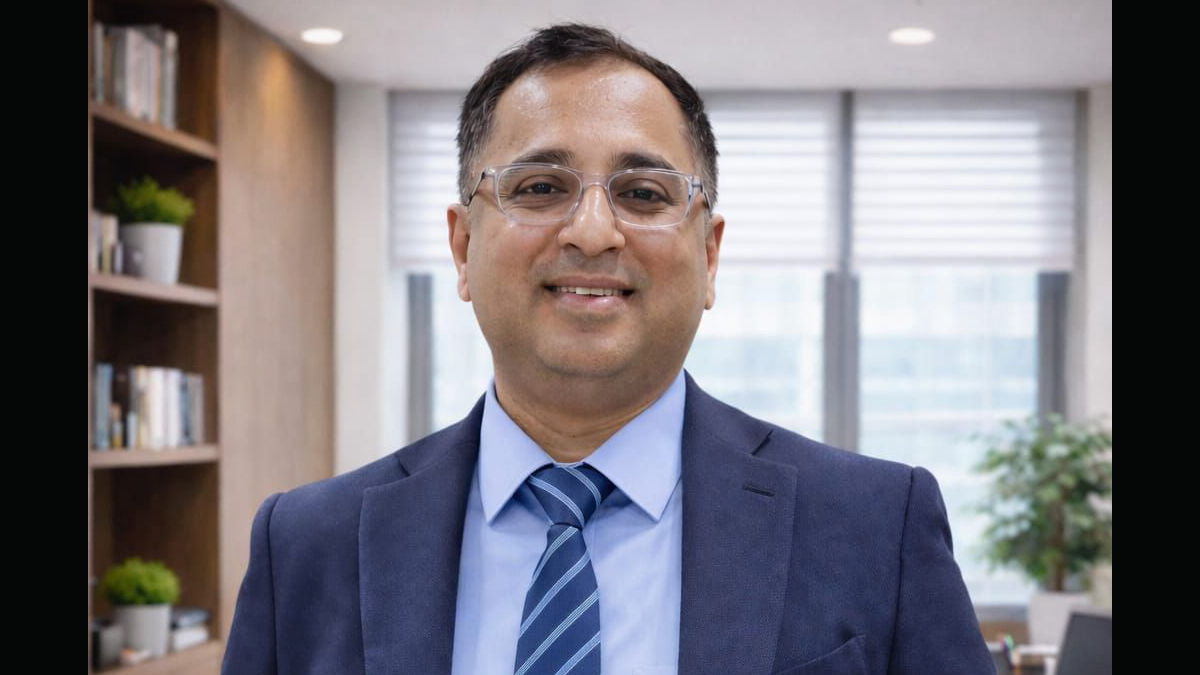
MUMBAI: SBI General Insurance has appointed Shrish Ramchandra Mahuli as chief business officer, strengthening its leadership team as it looks to accelerate growth and deepen market reach.
In his new role, Mahuli will oversee the company’s overall business strategy, expand distribution channels and drive customer-focused growth initiatives across key markets. The move comes as the insurer sharpens its focus on profitable growth and enhanced customer engagement.
Mahuli brings over 24 years of experience across the insurance and automotive sectors. He has previously held leadership roles at Reliance General Insurance, ICICI Lombard General Insurance and Tata Motors, where he worked on scaling businesses and strengthening distribution networks.
SBI General Insurance managing director and CEO Naveen Chandra Jha said, “We are delighted to welcome Mr Mahuli at a time when the industry is witnessing strong momentum driven by rising awareness and evolving customer needs. His deep domain expertise and proven leadership will be instrumental in strengthening our distribution footprint and driving profitable growth.”
SBI General Insurance chief business officer Shrish Ramchandra Mahuli said, “I am pleased to join SBI General Insurance at a time when the industry is evolving rapidly. I look forward to working with the team to further strengthen the business and drive sustainable growth.”
The appointment underlines the company’s push to build leadership depth and deliver more accessible, customer-centric insurance solutions in a rapidly evolving market.