MAM
Winning awards doesn’t get you clients: Piyush Pandey

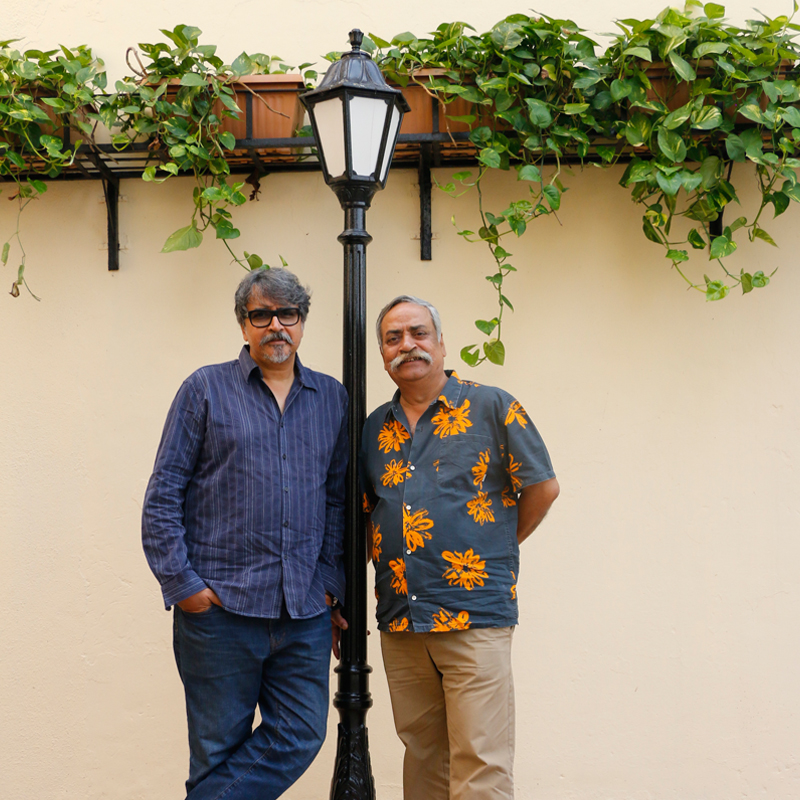
MUMBAI: Ogilvy South Asia chairman and creative director Piyush Pandey, the man behind notable campaigns that include Fevicol, Fevikwik, Cadbury Dairy Milk, The Hindu, and Asian Paints, has been a stalwart figure in the progress of the Indian advertising industry for close to four decades. A recipient of the Padma Shri in 2016, Pandey’s contribution at Ogilvy & Mather made it the third largest ad agency in the country.
His brother Prasoon Pandey, on the other hand, directs advertising films. Advertising Age listed him among the top 100 advertising film directors of the world. His ‘one black coffee’ ad for Ericsson was the first Indian commercial to win at Cannes.
The duo has collaborated on a number of campaigns bagging national and international awards in the process.
But the world has transformed significantly from the time they joined the advertising industry. The digital savvy world won’t rest unless it gets an engaging story. Traditional media is making first-time entry into interior India. Being creative but keeping the brand messaging intact is a tough nut to crack for most agencies today. While Piyush believes agencies should not consider the audience as being naive, Prasoon opines the first thumb rule of advertising is to always remember that the audience is more intelligent than the creative minds at an agency. He has always made sure to leave the creative communication open-ended and let the audience figure out their takeaways from the ad.
Piyush joined Ogilvy & Mather in 1982 when advertising on television was in the early stages. The medium had just entered India and the creatives were highly influenced by the West. He points out that it was only towards the late 80s that India started coming up with its own creative storytelling and making stuff that was not adapted from the world. “Today, there are a number of youngsters who are doing very good work. Indians who travel abroad always come up to me and say that our advertising is much better than it is abroad. It feels good that people accept what we do,” he says.
Recalling the advertising feel in 1980s, Prasoon adds that advertising was a little plastic back in the day and people were scared as it was a new medium. The team’s Fevicol egg was a gamechanger. “Before that notable Fevicol egg ad, there was a lot of emphasis on making a commercial look good but we were lucky to have a client that asked us to keep it real,” he adds.
Ogilvy India is also popping open bottles of champagne and the reason for the celebration is its big boss Piyush, along with Prasoon, will be honoured with the Cannes Lions’ Lifetime Achievement Award, the Lion of St Mark. The brothers are ecstatic about the Cannes win and feels it is a recognition for India and puts a little more responsibility on them to work hard.
They will be the first Indians to receive the prestigious award on 22 June 2018. The Lion of St Mark is the highest honour that the Cannes International Festival of Creativity bestows on creative geniuses within the communications industry. In the past, it has been awarded to David Droga, John Hegarty, Lee Clow and Marcello Serpa, Dan Wieden, Joe Pytka and Bob Greenberg. This is the 8th Lion of St Mark awarded by the Cannes Film Festival.
The Pandey brothers do seem to agree that India’s creativity is on the rise but can still be scaled up. A majority of work is great work but the percentage of good work has increased in the last 10-15 years.
Ogilvy & Mather recently announced its new consulting arm OgilvyRED, which will bring together senior strategic specialists to consult on digital transformation of brands in India. The agency will help tackle the toughest business, brand and innovation challenges of its clients to drive growth and enable digital transformation while enabling the clients to find solutions in a disruptive world where brands are struggling to connect with consumers. OgilvyRED consulting has been hugely successful in North America, Europe, Latin America and Asia Pacific.
It will offer digital transformation consulting, data and marketing analytics consulting, marketing technology consulting, innovative and e-commerce consulting services to its clients. While the new division is headquartered in Mumbai, it does have an office in Bengaluru. Comprising five people at the moment, the team is set to expand next year and will have as many as 50 people on board. Since the consulting agency is new, its only client is Aditya Birla Corporate Group but is out to bag more clients by March 2018.
Now, more than ever, brands need to take a transformative approach to connect with consumers. There are many challenges that clients face today that cannot be solved by a traditional agency approach. Ogilvy has a long-standing history of helping clients stay ahead of the curve when it comes to all things digital. The difference with OgilvyRED is that it is a digital transformation consulting that is deeply tied with Ogilvy’s ability to execute with creativity, impact and speed.
It is generally believed in the industry that recognition and awards lead to having bigger and better clients but Piyush seems to disagree. He says that you won’t lose clients just because you don’t bag awards but they do motivate you to do better.
Piyush concludes that though India is a late starter on digital, we cannot satisfy ourselves by just ‘being’ on the medium but need to be great.