AD Agencies
Account Planning Group (APG) announces its board members for India Chapter
MUMBAI: The India Chapter of the Account Planning Group (APG) has announced the induction of Board Members that represent planning heads across major advertising agencies.
In keeping with its credo, the committee would work towards equipping planners and strategists with the training and inspiration they need to be bold and rigorous thinkers while also driving several initiatives for APG in India including its soon-to-be-announced Awards show.
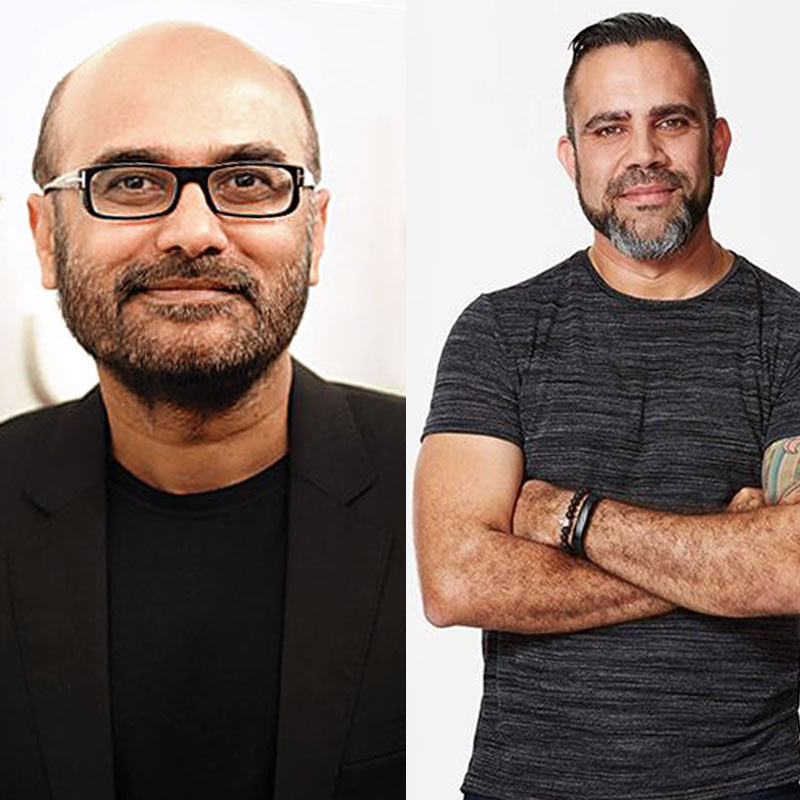
APG members include DDB Mudra national planning head Amit Kekre, J Walter Thompson India chief strategy officer Bindu Sethi, Leo Burnett chief strategy officer of South Asia Dheeraj Sinha, Ogilvy India chief strategy officer Prem Narayan, Whyness Worldwide head of strategy and new business Roma Singhal, McCann Truth central national head, planning and executive VP and GM of McCann Mumbai Suraja Kishore, Lowe Lintas chief strategy officer S. Subramanyeswar and Publicis India chief strategy officer and managing partner Sudeep Gohil.
The APG got off to a commendable start in India at the end of 2017, and has since organised a couple of community-driven initiatives including the recently held workshop on Culture and Creativity by Whyness founder and chairman Ravi Deshpande. The committee has queued up several such workshops and training modules in the coming months, which would be hosted across key metros in India.
As of date, the APG is being led by a consortium of leading agencies from India including Ogilvy & Mather, J Walter Thompson, MullenLowe Lintas Group, Leo Burnett India, DDB Mudra Group, Publicis India, Taproot, Dentsu, Grey Worldwide, McCann Worldwide, L&K Saatchi & Saatchi, Famous Innovations, Rediffusion Y&R, Whyness Worldwide and others.
The Account Planning Group is a membership organisation that promotes smarter thinking. Headquartered in London, it is a not-for-profit organisation run for and by its members: primarily account planners in advertising agencies. It is expanding with a community of communications strategists, including media planners, channel planners, DM planners and digital planners.

AD Agencies
Fevicol releases its last ad campaign by the late Piyush Pandey
The adhesive brand’s last campaign by the late advertising legend Piyush Pandey turns an everyday Indian obsession into a quietly powerful metaphor
MUMBAI: Fevicol has never needed much of a plot. A sticky bond, a wry observation, a truth that every Indian instantly recognises — that has always been enough. “Kursi Pe Nazar,” the brand’s latest television commercial, is no different. And yet it carries a weight that no previous Fevicol film has had to bear: it is the last one its creator, the advertising legend Piyush Pandey, will ever make.
The film, released on Tuesday by Pidilite Industries, fixes its gaze on the kursi — the chair — and what it means in Indian life. Not just as a piece of furniture, but as a currency of ambition, a vessel of authority, and a source of quiet social drama that plays out in every home, office and institution across the country. Who sits in the chair, who waits for it, and who eyes it hungrily from across the room: the film transforms this sharply observed cultural truth into a narrative that is, in the best Fevicol tradition, funny, warm and instantly familiar.
The campaign was Pandey’s idea. He discussed it in detail with the team before his death, but did not live to see it shot. Prasoon Pandey, director at Corcoise Films who helmed the commercial, said the team needed five months to find its footing before they felt ready to shoot. “This was the toughest film ever for all of us,” he said. “It was Piyush’s idea, magical as always.”
The emotional weight of that responsibility was not lost on the team at Ogilvy India, which created the campaign. Kainaz Karmakar and Harshad Rajadhyaksha, group chief creative officers at Ogilvy India, described the process as “a pilgrimage of sorts, on the path that Piyush created not just for Ogilvy, but for our entire profession.”
Sudhanshu Vats, managing director of Pidilite Industries, said the film was rooted in a distinctly Indian insight. “The ‘kursi’ symbolises aspiration, transition, and ambition,” he said. “Piyush Pandey had an extraordinary ability to elevate such everyday observations into iconic storytelling for Fevicol. This film carries that legacy forward.”
That legacy is considerable. Over several decades, Pandey’s partnership with Fevicol produced some of the most beloved advertising in Indian history, building the brand into something rare: a household name that people actively enjoy watching sell to them.
“Kursi Pe Nazar” does not try to be a tribute. It simply tries to be a great Fevicol film. By most measures, it succeeds — which is, in the end, the most fitting send-off of all.