News Broadcasting
Republic TV partners Gramener to enhance election coverage

MUMBAI: Republic TV has signed on Gramener for real-time media coverage. Powered by Gramener, the channel has lined up real time coverage for all Indian state elections and mainly for the 2019 general elections. Gramener, which has signed a multi-year deal with Republic TV, will help enhance the visual look both on-air and online to present the data in a constructive and meaningful manner.
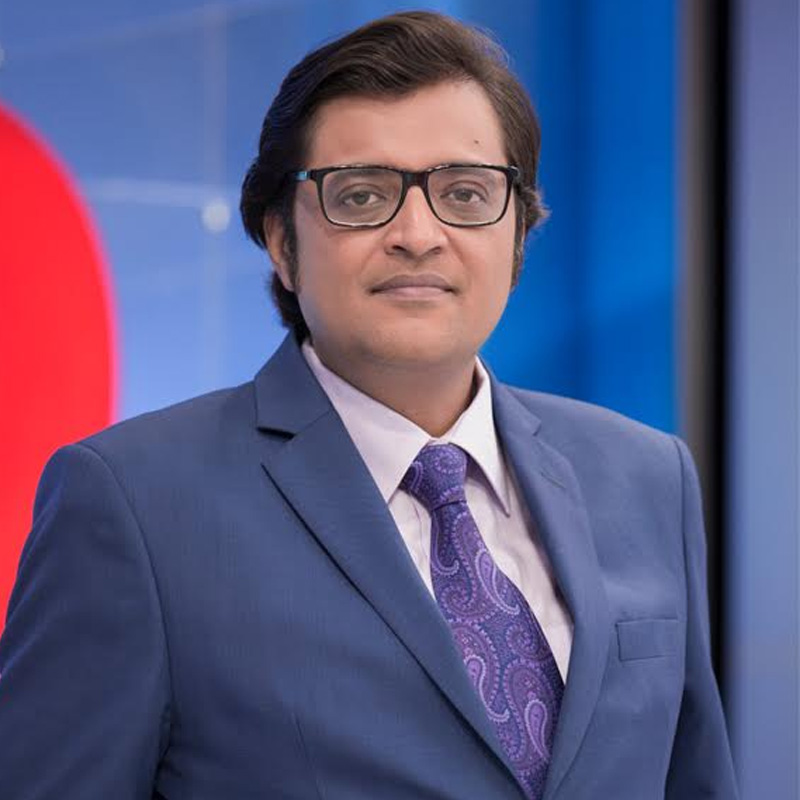
Republic TV Editor-in-Chief Arnab Goswami said that the Republic Network focuses mainly on covering elections, political debates and election related panel discussions.
“Our viewers expect us to cover every election in the most accurate and in-depth manner. With the explosion of noise today, it’s becoming more and more crucial to present viewers with the accurate picture and present it in a manner that’s easy to understand and evaluate. Hence we have partnered with Gramener in a continued pursuit to focus on analyzing data and bringing to the audience fantastic visual presentation of election results. Election means Republic TV and Republic TV equals news,” he said.

Republic TV CEO Vikas Khanchandani said, “As a brand, we want to provide deeper insights to the audience using simple data representation for election coverage. A major reason for us to retain our number 1 spot since the past 52 weeks is our keenness to analyse data with precision and speed. In today’s noisy and complex world, we have the ability to focus on what’s important and draw out results which our users find extremely valuable. I’m glad that Gramener, our strategic partner, will help us further strengthen this ability by decoding complex election data and build a unique experience for our audience with live data graphics and fastest numbers in all Indian state elections and the 2019 General Elections.”
Gramener, a data science company, forayed into visual data journalism in 2013 and has since conducted multiple projects in visualising election campaign data with clear number-based analyses, including national elections in 2014 and multiple state elections since then.
Commenting on this collaboration, Gramener CEO Anand S said, “Media and entertainment is a key vertical for growth and we devised intelligent solutions for Global audience. We would bring cognitive and data science expertise to sharpen the election analysis with cutting-edge analytics and visualisation tools in a real-time environment.”
Republic TV’s election coverage will be telecast on air and will also be available on the website and on the Republic TV app.
Also Read:
How Republic TV is spreading its wings through media partnerships
Republic TV continues to lead as English news genre ratings drop
Republic TV continues lead as genre ratings rise







News Broadcasting
Times Network to air JVC Exit Poll across 5 regions on April 29
Four-hour broadcast spans states and Puducherry with data-led analysis

MUMBAI: Times Network is set to roll out what it calls one of its most expansive election programming efforts yet, culminating in the JVC Exit Poll on 29 April, with a multi-hour broadcast spanning key poll-bound regions.
The exit poll will air across Times Now and Times Now Navbharat, beginning at 5pm and 4pm respectively. Co-powered by Vedanta and Jindal Stainless, the programming aims to combine on-ground reportage with data-driven projections across West Bengal, Tamil Nadu, Kerala, Assam and Puducherry.
The network has deployed over 50 journalists across these regions, gathering voter sentiment and local insights in the run-up to polling. The effort builds on its ongoing election formats such as Election Yatra and Election Premier League, which have tracked campaign narratives and community-level issues.
In parallel, Times Now Navbharat has focused on constituency-level reporting in West Bengal through its Jan Gan ka Mann series, capturing voter opinions across diverse segments.
The coverage has also featured interviews with prominent political leaders. Kerala chief minister Pinarayi Vijayan and Congress leaders Ramesh Chennithala and V D Satheesan have appeared on the network’s election specials. From Tamil Nadu, voices including deputy chief minister Udhayanidhi Stalin, DMK MP Dayanidhi Maran, BJP leader K Annamalai and NTK’s Seeman have also featured in discussions.
On the day of the exit poll, the network’s primetime anchors, including Navika Kumar, Zakka Jacob and Sumit Awasthi, will lead the coverage. They will be joined by a panel of political analysts, psephologists and senior journalists offering real-time insights and interpretation of trends.
The programming will integrate grassroots reportage with analytics from the JVC Exit Poll, aiming to give viewers an early sense of electoral outcomes ahead of the official results on 4 May.
With its combined English and Hindi broadcast reach, Times Network is positioning this effort as a comprehensive look at voter sentiment, blending field reporting, data and debate to decode what could lie ahead when the final mandate is revealed.