AD Agencies
Publicis launches AI powered tool Marcel

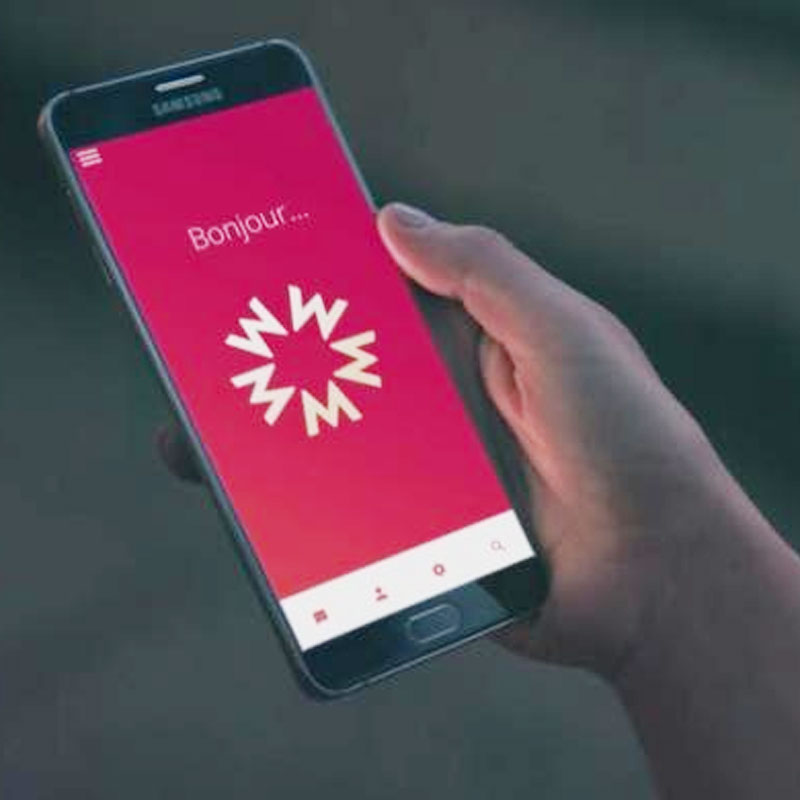
MUMBAI: Publicis Groupe has unveiled Marcel – named after Publicis Groupe founder Marcel Bleustein-Blanchet – an AI-powered innovation that will accelerate transforming the organisation from a holding company to a platform, creating the first truly borderless, frictionless enterprise workforce, comprised of 80,000 employees worldwide, and usher in a new era of creativity and innovation.
Publicis Groupe chairman and CEO Arthur Sadoun says,“In June last year, Publicis Groupe announced the creation of Marcel, to connect our 80,000 employees and completely reinvent the way that we work, for ourselves and our clients. Since then, our industry has gone through unprecedented challenges, demonstrating that incremental change is not a solution. The need for reinvention is stronger than ever.”
Marcel is a journey to shift Publicis Groupe from a holding company to a platform and give creative minds the freedom to progress and thrive in this ever-changing industry. With Marcel, clients will be able to leverage the incredible diversity of talent to bring to life the ideas they need to grow their business.
The company says that tying the development of Marcel to its one-year industry event hiatus was a controversial decision, but a necessary one. It drew a line in the sand and showed its determined to do whatever it takes to reinvent an industry that has struggled to evolve over the past 40 years.
In a world where people no longer want to work for companies and instead expect companies to work for them, Marcel is the first enterprise platform designed with people-first benefits and experiences in mind. At its core, Marcel is about empowering every single Publicis employee to the power of 80,000. Founded in a belief that an augmented workforce leads to higher engagement, which in turn leads to better work and results for clients, Marcel is built on the foundation of four key pillars: knowledge, connectivity, opportunity and productivity.
The bold ambition to transform Publicis Groupe into a platform required that the Groupe take on very significant enterprise business challenges. One important challenge is around data. With more than 80,000 people and over 1,200 entities, spanning 200 specialities and thousands of clients, the Groupe has vast amounts of data. Publicis Groupe estimates well more than five billion data files.
In order to unlock the value of this data, the Groupe created the Marcel AI Platform built on Microsoft AI and knowledge graph technologies. This knowledge graph connects both structured and unstructured data that exist across the organisation and then maps relationships within it. This centralised, integrated source of data will power Marcel as well as other enterprise initiatives. The group will use Microsoft’s sophisticated AI tools to process, filter, connect and organise the data to make it useful for its people.
As a part of Marcel’s power of knowledge proposition, Publicis Groupe has entered into a partnership with the Cannes Lions International Festival of Creativity to access The Work, a unique digital platform that showcases over 200,000 pieces of award-winning creative work from 2001-2018.
Built for today’s technology-savvy workforce, Marcel is launching as a mobile application for both Android and iOS. Future versions will include a desktop version or other interfaces as the need arises.
Designed to be as user-friendly as any consumer app, employees can use Marcel through voice or text input. The AI engine will suggest refinements to queries that provide large returns to help someone rapidly make connections and complete goals. Marcel will do more than respond to requests. It will also proactively present relevant knowledge, connections and opportunities. Each workday, Marcel will serve six prompts tailored to the person’s role and interests in the form of a daily digest. Marcel will refine what it presents each day based on an employee’s interaction and feedback.
Today, Marcel is tested by a team of 100 alpha users. In June, Publicis will release a beta version to 1000 people selected as an exact Publicis Groupe representation, by agency, role and geography. This group will provide feedback that will help refine the app. It wants to reach 90 per cent of its people by 2020.
This beta phase will include a precise on-boarding process defined to ensure beta user profiles are complete, a training module available to get the individual familiar with the Marcel platform and a feedback function included for employees to provide real-time feedback.
The aim of this real-time exercise will allow Publicis Groupe to refine the app constantly, course correct as needed, improve the user’s experience and add functionality along the way.
There will be multiple, updated versions until the optimal state-of-the-art product developed for rollout to the entire Publicis Groupe. Publicis Groupe will begin Marcel rollout to the 80,000-person workforce in January 2019.