MAM
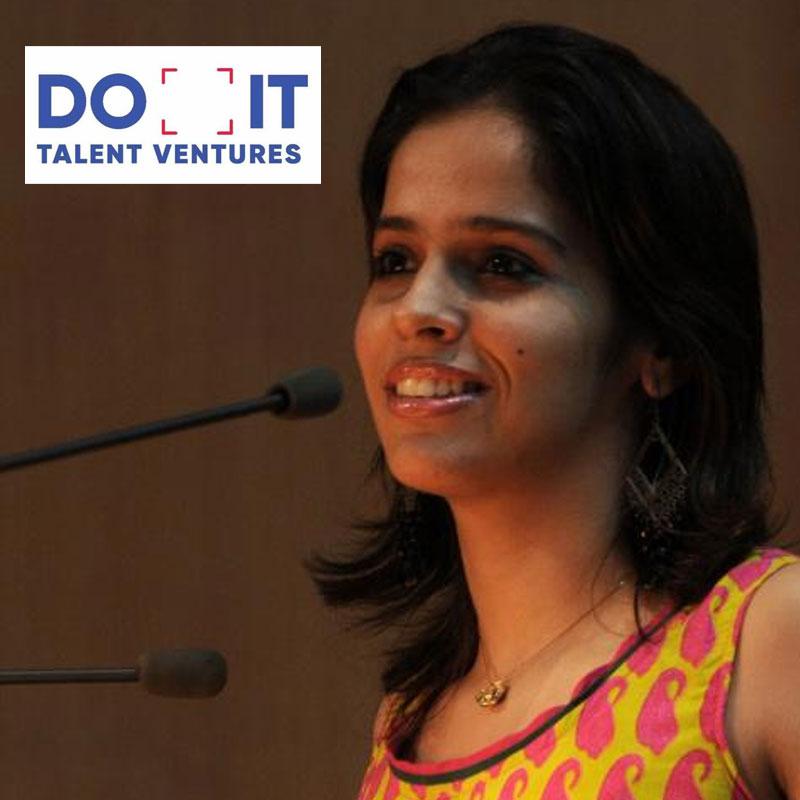
Do-iT Talent Ventures signs badminton star Saina Nehwal
MUMBAI: Do-iT Talent Venture, the firm owned by Darshana Bhalla and Radha Kapoor Khanna, reinforces its sport portfolio with the 4th most famous global woman athlete Saina Nehwal.
Do-iT Venture has signed badminton player Saina Nehwal for the long term purpose for all her commercial and player endeavours which also includes sponsorships, endorsements, publishing, appearances, digital rights amongst others.
Nehwal is one of India’s top badminton players and earlier she was the flag bearer of the Indian badminton contingent for the longest time. Bronze in 2012 Olympics and Commonwealth gold in 2010 and 2018 are some of the highlights of her illustrious career. She is the only Indian woman to be ranked number one in the world. In 2016 she was awarded India’s third highest civilian award, Padma Bhushan.
Do-iT Talent Ventures (India) CEO and Founder Darshana Bhalla said, “Right at the advent of Do-iT Talent Ventures, we expressed that we believe in talent across various arenas and having Saina Nehwal as one of our lead talent illustrates our passion and enthusiasm towards Sports. Saina is a renowned champion and her dedication and commitment resonates ours, hence collectively we look forward to do some exemplary work. We believe in optimising our talent’s potential by putting together a robust strategy followed by an intently structured micro action plan”.
Nehwal added, “As an individual, I have always attempted to work with experts. I am sure that Do-iT Talent Ventures’ proficiency in understanding my sport and its potential influence will be highly impactful for me and my career. They hold high repute and have aligned work ethics with me. The team has immense experience in managing top talent across fields and I am excited about this association.”
In a short span of three months Do-iT Talent Ventures has signed a number of celebrities across entertainment and sports like Farhan Akhtar, John Abraham, Lara Dutta, Kajal Aggarwal, Neeraj Pandey Samir Kochhar and Vicky Ratnani in Culinary. In sports, they have Virender Sehwag, Mahesh Bhupathi, Geeta Phogat, Ashwini Ponnappa, Robin Singh, Viren Rasquinha and Aparna Popat.

MAM
Deepfakes target women in 93 per cent of cases, report finds
Pi-labs study shows 900 per cent rise in female-focused synthetic media; India sees 60 per cent jump in cybercrime complaints.
MUMBAI: Deepfakes aren’t just fooling cameras, they’re hitting women hardest, turning pixels into a new kind of weapon. A new report from creator intelligence platform Pi-labs has revealed that nearly 93 per cent of deepfake victims are women, with deepfake content targeting females surging 900% in recent years. The findings paint synthetic media as a fast-escalating digital threat with a stark gendered impact.
In India, cybercrime complaints involving women rose from about 50,000 in 2024 to nearly 80,000 by 2026, an increase of roughly 60 per cent in just two years. Almost 98 per cent of deepfake pornography is aimed at women, often powered by face-swapping apps and bot networks that disproportionately target females, including school-age girls. Victims typically fall in the 18–30 age group, with Bengaluru reporting a growing share of cases.
Globally, 62 per cent of deepfake abuse cases involving women go unreported due to stigma, in India, over one-third of women facing online harassment take no action, and many reduce their digital presence after abuse. Close to 33 per cent of women remain unaware of protective laws.
City-level trends show Bengaluru leading with nearly 30 per cent of complaints, followed by Hyderabad (14 per cent), Mumbai (13 per cent), Chennai and Kolkata (5 per cent each), and Delhi (3 per cent).
Pi-labs, CEO and founder Anukush Tiwari said, “AI is one of the most powerful technologies of our time, but like every powerful tool, it reflects the intent of those who use it. We are witnessing a growing trust deficit in digital spaces, where identity can be manipulated within minutes and reputations can be damaged overnight.”
Image morphing and deepfake videos remain the most common forms of misuse. The report also notes a new trend: fully AI-generated female personas (not based on real individuals) gaining high engagement on social platforms, raising questions about digital credibility.
Detection remains challenging due to widespread generative tools and rogue creators. Industry estimates suggest over 5,000 face-swap tools and more than 1,000 voice-cloning applications are accessible online.
pi-labs offers pi-authentify, an AI-driven detection system that scans media for generative markers and provides authenticity scores, as well as Namokavach, a verification portal delivering confidential assessments within two working days. The Payal gaming case was resolved using pi-authentify’s forensic analysis.
The report urges minimising digital footprints and adopting detection tools to limit replication risks. It frames the gendered impact of synthetic media as an urgent digital safety issue requiring coordinated action from individuals, platforms and technology providers.
In a world where faces can be borrowed in seconds, the real crime isn’t just creation, it’s the silence that follows, and women are paying the heaviest price.