MAM
“How digital changed in 365 ways, in 365 days” – an e-Book launched by White Rivers Media

MUMBAI: The year 2018 has been a great year for the advertising industry and especially for digital marketers. It was a celebratory year where digital became critical to every advertiser and the industry saw some amazing campaigns and use of technology becoming integral for marketers.
White Rivers Media, one of the India’s fastest growing independent digital marketing agency has launched their second e-book on how the digital scenario changed in 365 ways in 365 days, in the year 2018. The e-book showcases how digital players introduced new features that enhanced user experience and some features that enabled brands to target their audiences in a better way.
The e-book has been curated with an aim to help the marketers and digital stakeholders get a better picture of the year that went by, which will in-turn help them gear up for 2019. The e-book comprises of all the significant changes, updates and events that happened in the digital world in 2018.

For instance, social media giant Facebook rolled out a new tool to prevent harassment and also developed chatbots with improved conversation skills. The platform also introduced new AR filters to spice up Facebook stories. Snapchat launched its in-app store for company merchandise. Everyone’s favourite, WhatsApp allowed users to delete their sent messages within 8 minutes, which was a relief for so many people!
The latest e-book mentions 365 such updates which affected the industry and ensure that one can indeed keep in touch through the daily evolution of digital media. It is an essential read for any marketer, entrepreneur, journalist and student anywhere in the world.
This book is a part of their series of e-books, which was launched last year, on their 6th Anniversary.




AD Agencies
Fevicol releases its last ad campaign by the late Piyush Pandey
The adhesive brand’s last campaign by the late advertising legend Piyush Pandey turns an everyday Indian obsession into a quietly powerful metaphor
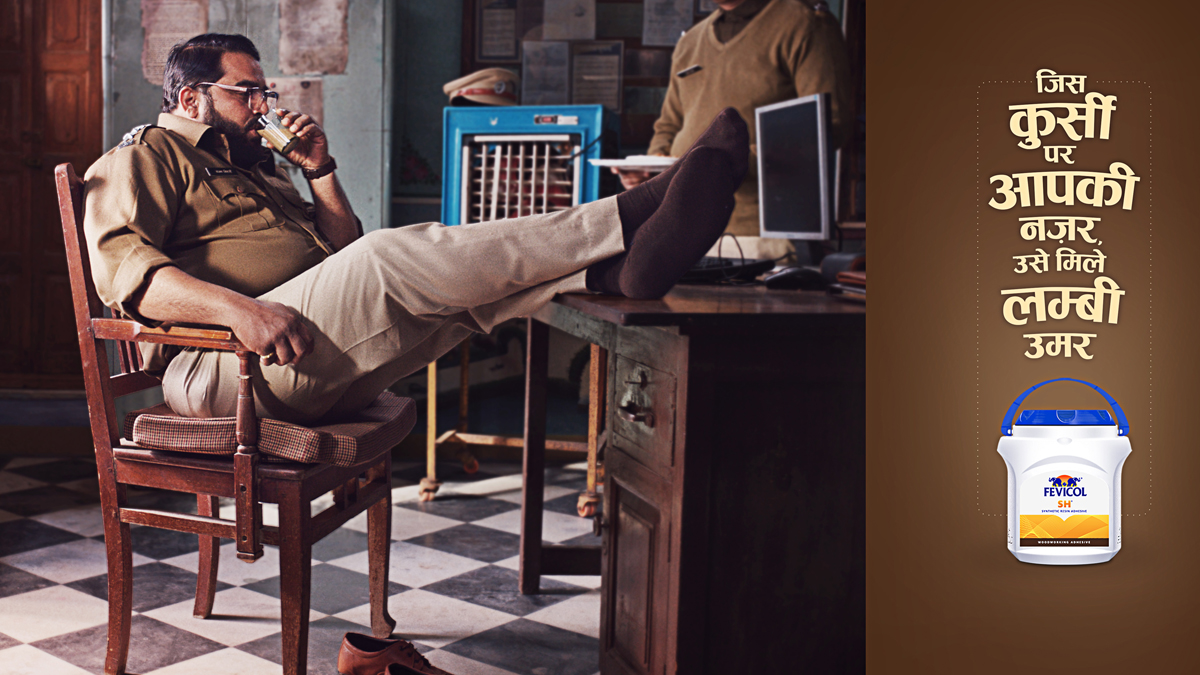
MUMBAI: Fevicol has never needed much of a plot. A sticky bond, a wry observation, a truth that every Indian instantly recognises — that has always been enough. “Kursi Pe Nazar,” the brand’s latest television commercial, is no different. And yet it carries a weight that no previous Fevicol film has had to bear: it is the last one its creator, the advertising legend Piyush Pandey, will ever make.
The film, released on Tuesday by Pidilite Industries, fixes its gaze on the kursi — the chair — and what it means in Indian life. Not just as a piece of furniture, but as a currency of ambition, a vessel of authority, and a source of quiet social drama that plays out in every home, office and institution across the country. Who sits in the chair, who waits for it, and who eyes it hungrily from across the room: the film transforms this sharply observed cultural truth into a narrative that is, in the best Fevicol tradition, funny, warm and instantly familiar.
The campaign was Pandey’s idea. He discussed it in detail with the team before his death, but did not live to see it shot. Prasoon Pandey, director at Corcoise Films who helmed the commercial, said the team needed five months to find its footing before they felt ready to shoot. “This was the toughest film ever for all of us,” he said. “It was Piyush’s idea, magical as always.”
The emotional weight of that responsibility was not lost on the team at Ogilvy India, which created the campaign. Kainaz Karmakar and Harshad Rajadhyaksha, group chief creative officers at Ogilvy India, described the process as “a pilgrimage of sorts, on the path that Piyush created not just for Ogilvy, but for our entire profession.”
Sudhanshu Vats, managing director of Pidilite Industries, said the film was rooted in a distinctly Indian insight. “The ‘kursi’ symbolises aspiration, transition, and ambition,” he said. “Piyush Pandey had an extraordinary ability to elevate such everyday observations into iconic storytelling for Fevicol. This film carries that legacy forward.”
That legacy is considerable. Over several decades, Pandey’s partnership with Fevicol produced some of the most beloved advertising in Indian history, building the brand into something rare: a household name that people actively enjoy watching sell to them.
“Kursi Pe Nazar” does not try to be a tribute. It simply tries to be a great Fevicol film. By most measures, it succeeds — which is, in the end, the most fitting send-off of all.