MAM
77 per cent citizens report high happiness levels in June 2024: Ipsos IndiaBus Happiness Monitor


Mumbai: How happy were Indians in June 2024? More happy or less? Interestingly, overall happiness levels have stayed constant and high in June wave at 77 per cent, like the previous month.

June wave shows that the cities and cohorts most happy were tier1 (88 per cent), east zone(85 per cent), north zone (84 per cent) and west zone (83 per cent) citizens; full time parents and homemakers (83 per cent), 45 plus age group (81 per cent), low education citizens (80 per cent), females (79 per cent), SEC A (78 per cent), SEC C (78 per cent), SEC B (77 per cent), males (76 per cent), employed – part time/ full time (78 per cent), tier 2 (76 per cent), 18-30 years (77 per cent) and 31-45 years (76 per cent), high education (74 per cent) among others.
Citizens dwelling in non-metros were happier (80 per cent) vis-à-vis those residing in the metros (71 per cent).

South zone residents continued to be the least happy, at 56 per cent. Do they feel excluded?
These are the findings of the Ipsos IndiaBus Happiness Survey, that is the monthly barometer of happiness of urban Indians.
Commenting on the findings of the survey, group service line leader, public affairs, corporate reputation, ESG and CSR Parijat Chakraborty said, “Largely, majority of Indians are happy, across cities, cohorts and age groups. For a growing, emerging market like India, it is understandable as people are happy and filled with hope and aspirations and are driven. Monsoons in several parts of the country could have worked as a mood elevator, amplifying happiness; more so after a hot and prolonged summer season. And non metros are seeing a lot of improvement in infrastrucure, with a manageable cost of living, making it conducive for the citizens to lead a comfortable life and be joyful.”
“Full time parents/ homemakers seem the happiest across all cohorts – spending time with children as they have their holidays and family, socializing/ outings and binge watching OTT at home, could be other reasons for their elevated happiness levels,” added Chakraborty.
Further, the survey showed, that in the June wave, urban Indians were the happiest about family (77 per cent) (minus two per cent), health (72 per cent) (minus two per cent), friends’ circle (70 per cent) (minus two per cent), economic conditions (66 per cent) (plus two per cent), colleagues/ business associates (68 per cent) (plus two per cent), employment/ work (65 per cent) (=), neighbours (65 per cent) (plus one), situation of the country (62 per cent) (minus one per cent), situation of the world 58 per cent (=).

“Happiness is not just a fleeting feeling. Different aspects of our daily life have a bearing on happiness and it manifests in our relationships, wellbeing, social network, work and other key areas,” said Chakraborty.




Brands
Mother’s Recipe launches Summerwala Sharbat range
Five nostalgic flavours priced at Rs 215 aim to tap summer refreshment demand.
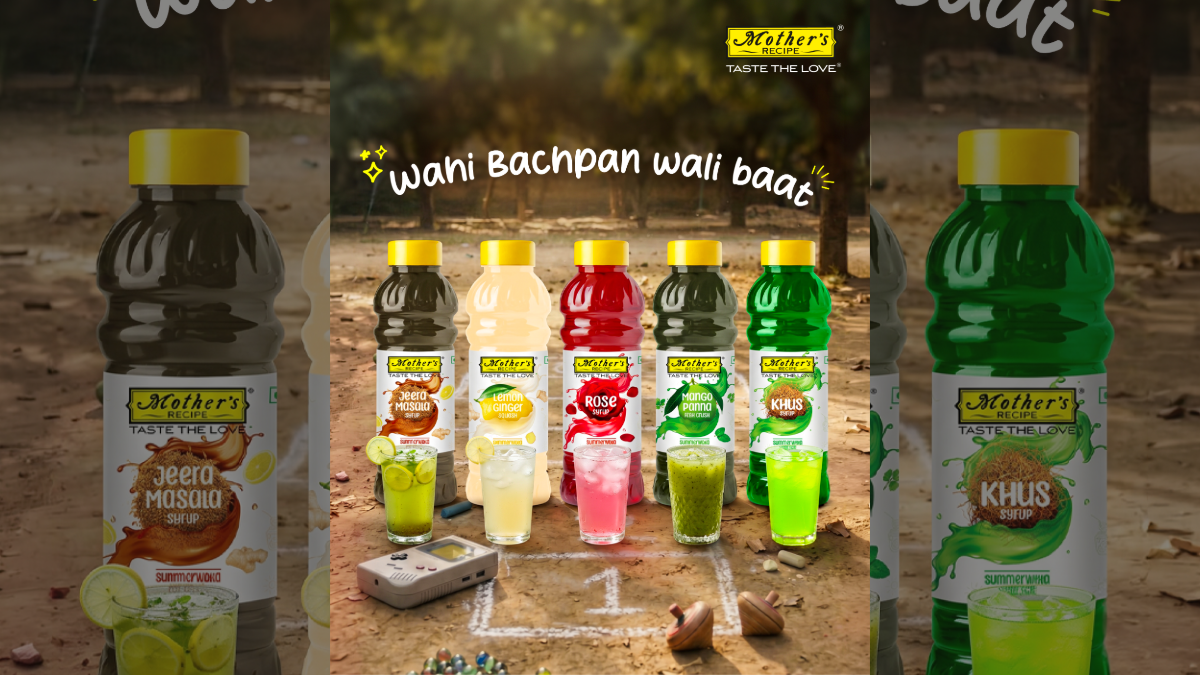
MUMBAI: Call it a sip of summer nostalgia, Mother’s Recipe is bottling childhood memories and pouring them back into the present. The homegrown ethnic food brand has introduced its Summerwala Sharbat range, a five-flavour line-up designed to recreate the familiar tastes and rituals of Indian summers, while catering to modern consumption habits. The range features Mango Panna, Rose Syrup, Jeera Masala Syrup, Khus Syrup and Lemon Ginger Squash, each rooted in flavours that have long defined seasonal refreshment across Indian households. From the tang of raw mango to the cooling comfort of khus, the portfolio leans heavily into recall, not reinvention.
At a time when brands are increasingly leaning on nostalgia as a strategic lever, Mother’s Recipe is positioning Summerwala Sharbat as both a functional beverage and an emotional cue. The idea is simple: revive the small, everyday rituals post-play drinks, family gatherings, the clink of ice in a glass that once defined summer afternoons.
The products are packaged in 750 ml PET bottles and priced at Rs 215, targeting both routine household consumption and social occasions. Distribution spans leading e-commerce platforms as well as select offline retail outlets.
Mother’s Recipe executive director Sanjana Desai said the intent was to bring back flavours tied to “taste, routine and home”, while making them relevant for today’s consumers.
The move reflects a broader shift in the beverages market, where heritage-led storytelling and familiarity are increasingly being used to stand out in a crowded, innovation-heavy category.
With Summerwala Sharbat, Mother’s Recipe isn’t just selling a drink, it’s selling a season, one glass at a time.