MAM
Mindshare India announces changes in key leadership

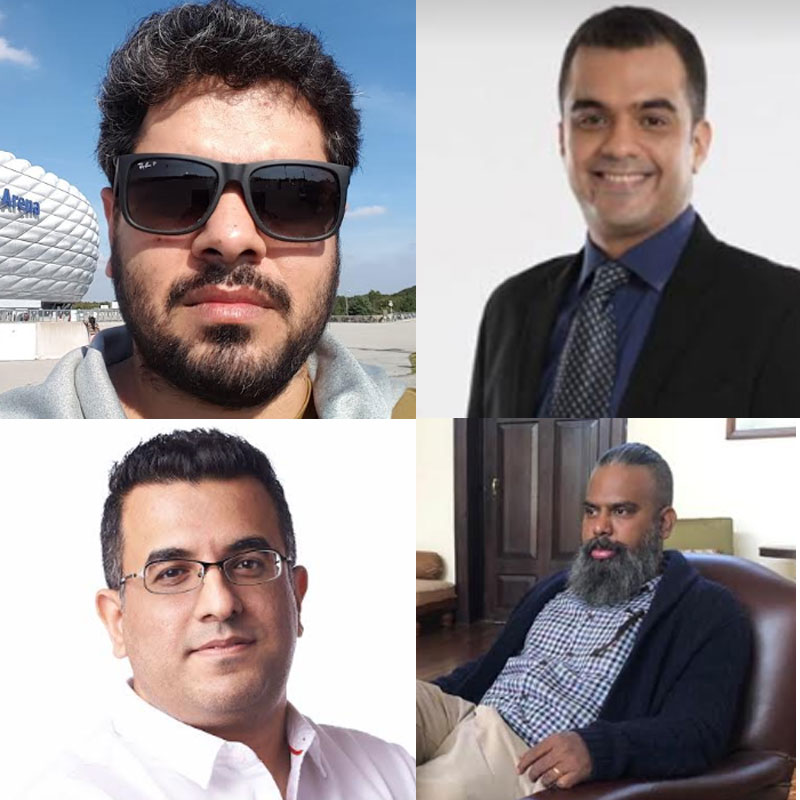
MUMBAI: Mindshare, a media agency from GroupM, today announced a major rejig of leadership roles in line with the agency’s efforts to stay adaptive, agile and innovative. These leaders have all been groomed from within the agency.
Harsh Deep Chhabra takes on the role of SVP, Mindshare Fulcrum with immediate effect. In his last five years in the company, he has played an instrumental role in the growth of team Fulcrum at Mindshare and ensuring value creation for Hindustan Unilever. Harsh has also played a critical role in managing the strategic digital mandate.
As Mindshare re-orients its business around the pillars of “Acceleration”, “Outcomes” and a “Refreshed Neo”, there have been key changes in the leadership of its Content+ practice and Neo India as well.

Ajay Mehta moves to the role of SVP Content+. In his new role, he will take on national responsibilities for Entertainment & Sports (ESP), Branded Content, Music & IP Creation along with the Experiential Marketing practice. His responsibilities also include South Asia Content+ mandate for Unilever.
Nikhil Mayne has been designated VP Content+. His responsibilities include developing the Social Media practice and driving the creation of Agile content that powers performance marketing. He will also drive the ESP & Branded Content practice for m/SIX India.
Samraat Kakkar, who has driven the Digital practice for Mindshare North & East, will take on the role of VP Neo India. Neo is a proven expert in Performance Marketing globally and partners Mindshare in driving integrated solutions for clients across Brand & Demand.
Mindshare South Asia COO Amin Lakhani said: “We at Mindshare strive to keep our clients ahead of the curve and our people agile and integrated. All these leaders have proven their abilities to deliver desired outcomes and beyond even in challenging situations. I am positive that the new structure will help us achieve maximum impact for our clients and create more value for our teams”
Mindshare South Asia CEO MA Parthasarthy said: “As the industry is staring at unexpected times, it is imperative for us as an agency to be future-ready. We are delighted to have such experienced leaders within the agency, who are future-focused and skilled to deliver disruptive business thinking for our clients”






Brands
6 in 10 face bias, 58 per cent delay care: India’s LGBTQIA+ health crisis
Study highlights bias in care and unsafe spaces shaping everyday choices

MUMBAI: A significant number of LGBTQIA+ women in India are putting off essential healthcare, with 58 per cent reporting delays or avoidance due to discrimination, according to a new study. The figure is the highest among five countries surveyed, pointing to deep-rooted systemic challenges.
The research, conducted by Kantar in partnership with DIVA Charitable Trust and The Curve Foundation, draws insights from over 3,200 LGBTQIA+ women and non-binary individuals globally. Released around Lesbian Visibility Week, the findings highlight how bias continues to shape access to care.
In India, 60 per cent of respondents said they had faced discrimination in healthcare settings, often feeling dismissed or not taken seriously by providers. This has led many to delay seeking treatment, underscoring how trust deficits in the system directly impact health decisions.
The study also reflects broader social realities. Instances of verbal or physical abuse were commonly reported across platforms such as social media, public transport and social venues, reinforcing a persistent sense of insecurity in everyday life.
At the same time, expectations from brands are evolving. In India, 78 per cent of respondents believe companies should actively contribute to advancing diversity and inclusion, signalling a growing demand for corporate accountability.
Kantar India HR head Mridul Shekhar said, “LGBTQIA+ women and non-binary people remain underrepresented and overlooked. Their experiences are shaped by uneven access to care and systems not designed with them in mind. When people are invisible in data, they become invisible in decision-making.”
DIVA Charitable Trust executive director Lady Phyll added, “When people delay healthcare because they fear discrimination, we are no longer talking about symbolic inclusion. These are life decisions driven by the need to feel safe.”
The findings underline a stark reality. While awareness around inclusion is growing, bridging the gap between intent and lived experience remains an urgent priority.