MAM
What next after the WFH honeymoon?


NEW DELHI: The ‘new normal’ might already have started setting in with major conglomerates of the world taking calls like allowing their employees to work from home ‘forever’. Recently, Twitter CEO Jack Dorsey announced in a company-wide email that while opening the offices will be the company’s call, to come back will be totally an employee’s choice.
Several other tech companies, including the other two giants Facebook and Google, have told their employees to work from home till the end of this year. Closer home, e-learning platform Unacademy announced that 60 per cent of its workforce will be working from home permanently, even after the lockdown.

This gives a clear picture of what the future of workplaces is going to be like, at least for the tech firms where most of the work can be managed over servers and clouds. Reacting to the same, brand-thinker and independent consultant Harish Bijoor noted: “WFH makes sense for every factor: economic, social, family, commute, cost, time, and common sense. Corporate society does not need to artificially divide home and work anymore. It makes great sense!”
Brand-nomics managing director Viren Razdan said: “While Google has announced WFH beyond the lockdown, the truth is tech companies have thrived on the idea of WFH or rather WFA or Work From Anywhere. Amazon and Apple were born in home-garages, giving birth to the cult of ‘ideas behind napkins’, start-up buzz at cafes, the informality bred a new culture of play.”
Sharing his thoughts on how the culture can be embedded in other industries, he added, “This IS perhaps the WFH honeymoon; we are all learning and encouraging, holding each other’s hand firmly through this phase. The real truths would unveil once we bring the practice into regular play. The biggest challenge perhaps would be to disrupt our culture to allow this fluidity and freedom. Our models at work based on firm control, checks and balances in place. The buzzing office is symbolic of efficiency and business as usual. Companies would be pushed to make accountability a key factor, and shed the weight of authority. A lot of companies are moving to fast-forward to agile models of work, which are perhaps more conducive to adapt to these new systems.”
Recently, in a webinar hosted by the Advertising Club of Bangalore, BBH India CEO and managing partner Subhash Kamath and Wunderman Thompson South Asia group CEO and chairman Tarun Rai supported the idea of allowing flexibility to agency workforce to work from home, citing reasons like the fact that it will bring more gender-equality within the teams and liberate the talent from geography.
However, they had also noted that to make this culture a reality, people will have to bring some behavioural changes in themselves and leave control that they like to have on subordinates, and also the firms will have to rework their appraisal policies.
Agreeing to this, Samsika Marketing Consultants MD Jagdeep Kapoor said: “I had learnt this from grandmother and it stands relevant today that when everything closes there should be one thing that remains open, and that is your mind. I think any transition will be possible if people keep an open mind and accept changes.”
He also vouched for the many benefits that working from home will come with. “I think working from home increases productivity, saves time, and allows teams across cities to work together for better deliverables. Personally, I have been working from a home office for more than a decade now and it has been great. I have this policy that I don’t visit client offices and meet them at my place. With remote working, now clients have eased out even more and we have those meetings over video calls now.”






MAM
Navi releases new ‘Hurrypur’ film focused on speed and simplicity
Auto breakdown turns F1-style pit stop in campaign film set to Baalti’s track
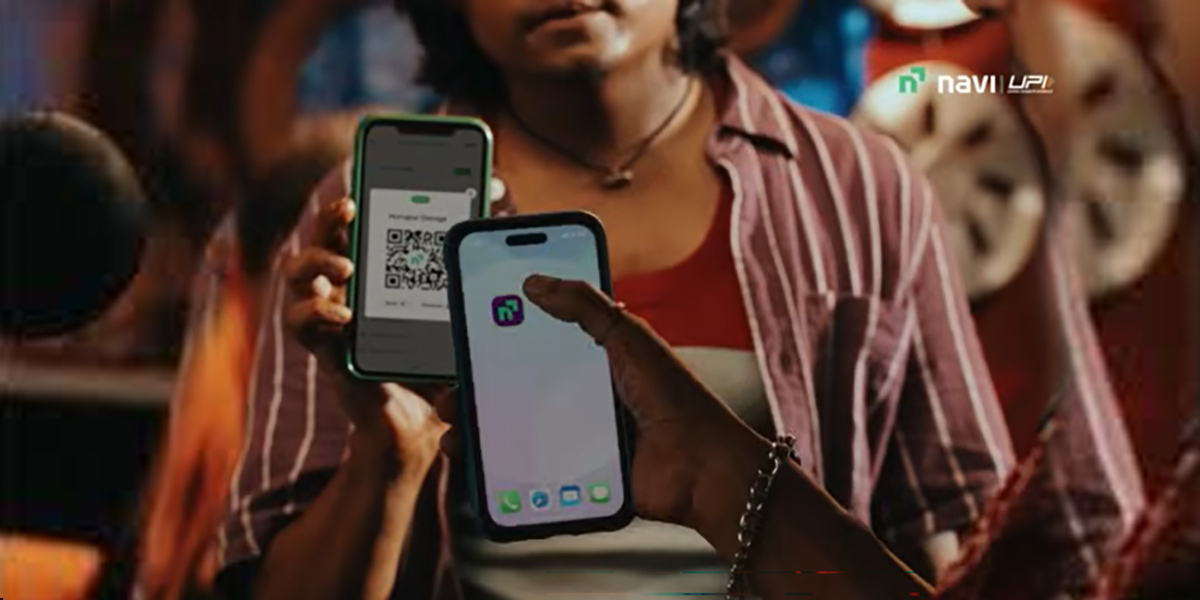
MUMBAI: When life’s in the fast lane, Navi wants even your breakdowns to be over in a blink. Navi has rolled out a new film under its ongoing ‘Hurrypur’ campaign, doubling down on its core pitch speed and simplicity in everyday transactions.
The film opens on a familiar hiccup, an autorickshaw breaking down mid-ride. But what follows is anything but ordinary. The repair unfolds like a Formula 1 pit stop swift, precise, almost cinematic. Within seconds, the tyre is replaced, the vehicle is back on the road, and even the fare negotiation wraps up in record time.
Set to US-based musical act Baalti’s track “123”, the film uses rhythm and pacing to mirror its central idea, in a world that moves fast, everything around it must keep up.
The narrative builds on Hurrypur, a fictional world where time is treated as currency and delay is almost obsolete. Through exaggerated yet relatable scenarios, the campaign reflects a broader behavioural shift consumers increasingly expect instant responses, whether from people, platforms or payments.
Navi Limited MD and CEO Rajiv Naresh said the Hurrypur universe is designed to highlight the company’s focus on delivering seamless, time-efficient experiences. Meanwhile, creative agency Sideways and director Ayappa KM leaned into humour and visual energy to push the story beyond a typical product-led narrative.
Instead of listing features, the campaign sticks to storytelling turning a routine inconvenience into a high-speed spectacle.
Because in Navi’s world, even a pit stop refuses to slow things down.