MAM
“We want to be in the top 25 FMCG brands in India” – Mamaearth’s Ghazal Alagh

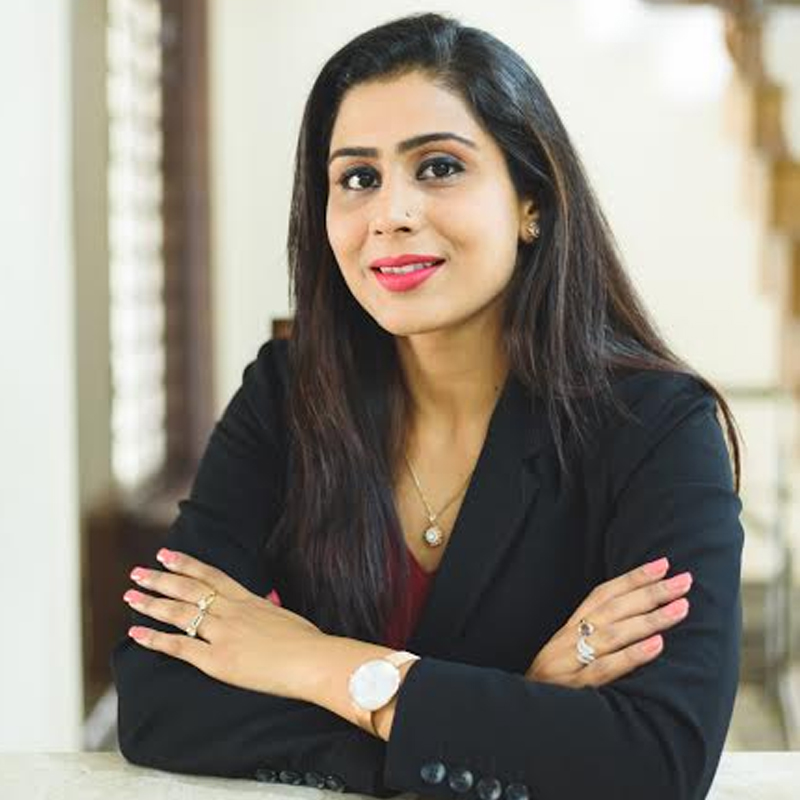
It is a little baby in the FMCG space, but its safe, natural, toxin-free personal care products have helped Mamaearth take rapid steps and get noticed by the biggies. Started in 2015, by the husband-wife duo of Varun and Ghazal Alagh under Honasa Consumer Pvt Ltd, Mamaearth began with six baby care products, and today has 100 plus stock taking units, including its skin and hair care range targeted at both men and women, and natural products for pregnant women.
More than that it has notched up a revenue of Rs 100 crore in the year just ended and has its eyes set on a Rs 1,000 crore top line by 2023. Apart from actress Shilpa Shetty who invested in the company, it has blue chip private equity firms which believe it is well on course to do that. It announced a series B investment of Rs 130 crore from Sequoia Capital, and existing investors Fireside Ventures, Stellaris Venture Partners and Sharp Ventures in January 2020.
The paucity of good quality natural products when their baby was born, was the driving force for the Alagh couple to foray into manufacturing them, and now with demand growing – especially among millennials – even the big boys of the FMCG world are eyeing the segment.
But Ghazal explains that Mamaearth has a substantial lead time over them because “the biggies are still struggling to remove toxins from their products, whereas we have already ventured into the personal care segment with toxin free skin and hair products.”
Being a digital first brand, Mamaearth- which is available in stores in New Delhi, Mumbai, Kolkata ,Chennai, Pune, Nagpur, has been pretty focused on online marketing through influencers and digital campaigns. For instance, during the Covid2019 lockdown, it asked netizens to “Spread awareness, not fear”” and gave away 50,000 sanitisers through thousands of goodness ambassadors to health care workers, security personnel, delivery agents, domestic helps etc. Then it launched its “Let your smile show” initiative under which it gave away 20,000 smiley masks as the lockdown was being lifted.
Indiantelevision.com’s Dolly Mahayan got into a conversation with Ghazal Alagh on what makes the brand tick and the road ahead. Excerpts from the interview:
Marketing always plays a very crucial role in any new brand. What was your marketing perspective when you started, and how it has evolved over the years?
We started as a small brand with a premium proposition and wanted to reach out to only the metro consumers. That’s why we chose the digital medium to reach our target audience and communicate our brand story. We tied up with influencer moms who helped us spread the word about toxin-free products on social media. The strategy worked well, and our sales went up through positive word-of-mouth on popular social networking sites. Even today, we use influencer marketing to reach out to our core consumer group. While earlier, our objective was to spread awareness about toxin-free products, we are now focused on communicating the USP of each of our products.
With every passing year, brands tend to increase their ad spends, ultimately leading to a surge in product pricing. How should a brand find the right balance between marketing expenses and product costs?
The idea is to have a strong marketing plan in place for short, mid, as well as for the long term. Building a clear marketing budget from the beginning and breaking down the costs monthly helps us stay on top of the spends, without any nasty surprises at the end of the financial year. Finally, even if the ad spends increase every year, the key is to spend effectively.
The brand is extensively prioritising influencer marketing to drive engagement. In what ways, these partnerships have helped?
Influencer marketing has worked really well for us. Our target audience is the millennial generation who rely on information available on the internet and are influenced by word of mouth from their peers. In today’s digital age, influencers have built a high amount of trust from their followers, and recommendations from them establish trust with the brand’s potential customers.
For a new brand like Mamaearth, how do you find the right balance between marketing expenses and product costs?
Being a product company, we make sure we are not cutting down costs on raw material and manufacturing. In the end, it is the product that will deliver. Marketing efforts at each stage of the brand, especially for FMCG, keep changing, and each stage requires a different approach and investment. Eventually, the right balance between marketing expense and product cost has to be made by keeping in mind a healthy bottom line.
Your products are towards the higher end of the spectrum, what do you think gives you an edge in the Indian market?
We’ve focused on our products, innovations, and communication with the millennial generation. Another factor that gives us an edge over other FMCG products is our D2C business. We are breaking the traditional mold of big distribution required to enter the FMCG segment. The D2C business has helped us in reaching our consumers faster and with more efficiency.
The company has recently started rolling out digital campaigns. Any plans to expand the reach to TV or any other medium?
So far, we’ve been able to reach and engage with our target audience through the digital medium. Not only is it cost-effective, but digital technology also helps us in understanding our consumers better and connecting with them closely. So, for now, we’ll continue with digital campaigns only.
You have crossed the initial hurdle, now, what is the way forward? What are your plans when it comes to retail expansion?
With our focus on innovation, a six-product portfolio is now a 100+ SKU portfolio within four years. Even during this pandemic, we managed to introduce 12 new products —the goal is to consistently and quickly push the envelope in the big personal care segments. Soon the goal is to enter the more niche segments (sheet masks, face cream, hand cream, etc.) as well.
For our brand Mamaearth, the goal is to reach a Rs 1000 crore run rate in the next three years, which will put us in the top 20-25 FMCG brands in the country.