MAM
Baggit eyes tier 1 & 2 cities for expansion
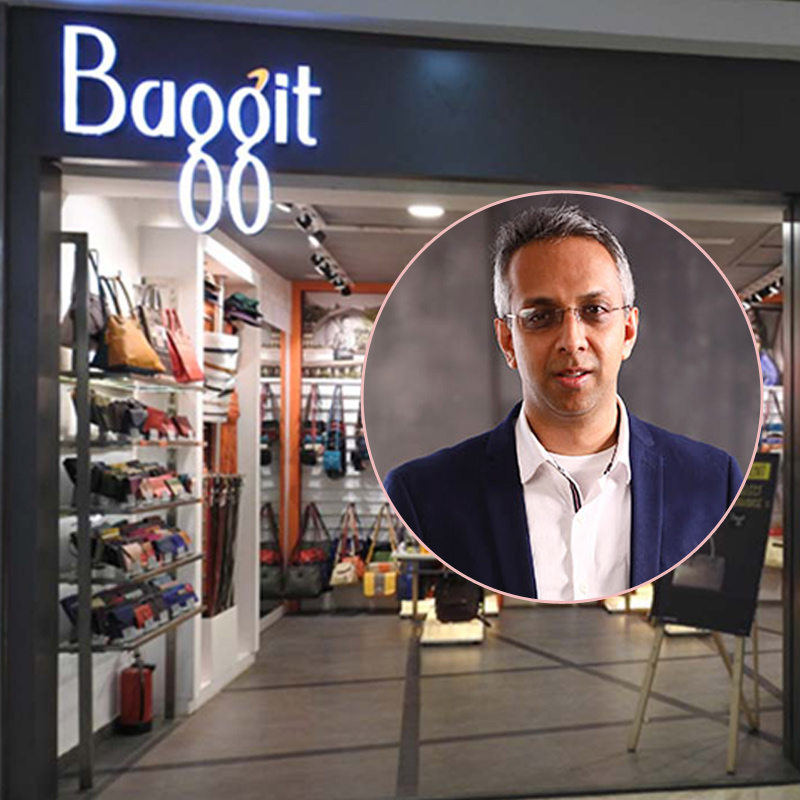
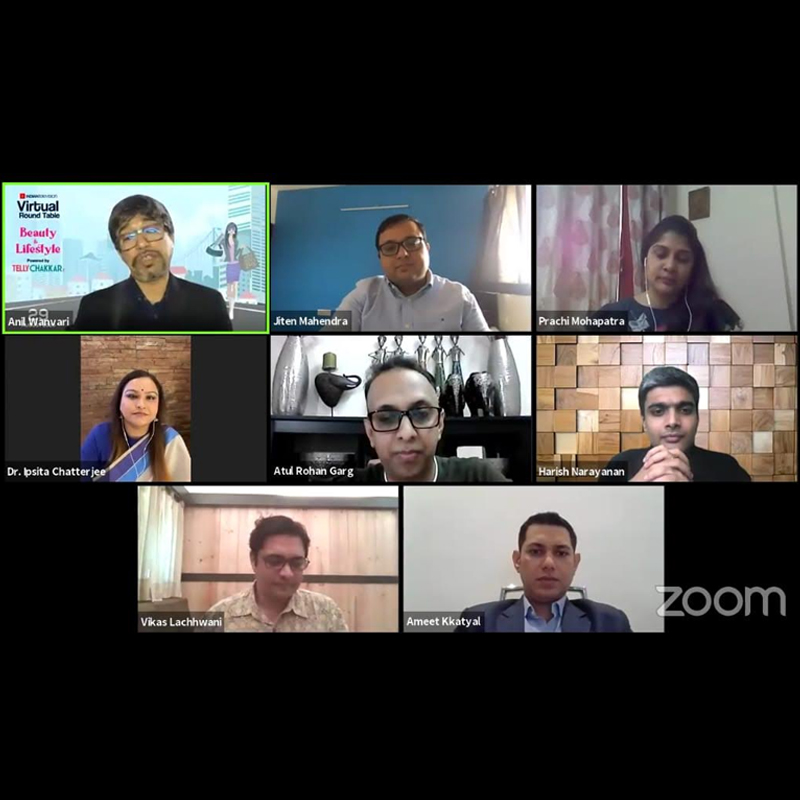
NEW DELHI: Expanding beyond the 3000-odd pin codes that it serves today with its delivery channels, Baggit will soon be touching more than 25,000 areas with its supply chain, diving deep into the hinterland India, brand’s head of marketing Atul Rohan Garg announced during the Beauty & Lifestyle Virtual Roundtable hosted by Indiantelevision.com on Saturday.
“I was reading some statistics provided by an e-commerce platform stating that metro cities are only contributing to 40-42 per cent of our sales and the rest 60 per cent is coming from the rest of the country. So, our focus is to touch more of tier 2, tier 3, and tier 4 cities,” he elaborated.
He added that his intention is not only to drive sales but be present as many touchpoints as the brand can. “This whole mechanism has the benefit to take customer feedback, which means I have a control on ROI from service-level and not only from a brand level.”
Additionally, the brand will soon be rolling out video calling facilities for its consumers to give them digital assistance while buying Baggit products.
Garg elucidated that for brands, it is not just about pedalling through the ongoing crisis but also maintain a strong foothold in the coming 2-3 years, which are going to be really rough. That’s why his core focus remains on strengthening the sales side capabilities of the brand.
For the production side, according to him, the advantage that the brand holds is that they design and manufacture in India. Therefore, it is easier for them to keep a vigil on the operations, quickly include client feedback, and maintain a robust system in place.
Speaking about his experience of managing the brand during the lockdown, Garg noted that the two things that really worked for the brand were influencer marketing and CRM.
“Influencers were not only making lookbooks for us but also remotely shooting campaign videos, going up to our stores and showing people how safe is that and were taking us to new markets. Our CRM, which is very strong, enabled people to shop online smoothly,” he quoted.
He also shared that their fully digital brand GG performed exceptionally well during the lockdown, surprising them with the response it got as they were not expecting sales to happen during the lockdown.

AD Agencies
Fevicol releases its last ad campaign by the late Piyush Pandey
The adhesive brand’s last campaign by the late advertising legend Piyush Pandey turns an everyday Indian obsession into a quietly powerful metaphor
MUMBAI: Fevicol has never needed much of a plot. A sticky bond, a wry observation, a truth that every Indian instantly recognises — that has always been enough. “Kursi Pe Nazar,” the brand’s latest television commercial, is no different. And yet it carries a weight that no previous Fevicol film has had to bear: it is the last one its creator, the advertising legend Piyush Pandey, will ever make.
The film, released on Tuesday by Pidilite Industries, fixes its gaze on the kursi — the chair — and what it means in Indian life. Not just as a piece of furniture, but as a currency of ambition, a vessel of authority, and a source of quiet social drama that plays out in every home, office and institution across the country. Who sits in the chair, who waits for it, and who eyes it hungrily from across the room: the film transforms this sharply observed cultural truth into a narrative that is, in the best Fevicol tradition, funny, warm and instantly familiar.
The campaign was Pandey’s idea. He discussed it in detail with the team before his death, but did not live to see it shot. Prasoon Pandey, director at Corcoise Films who helmed the commercial, said the team needed five months to find its footing before they felt ready to shoot. “This was the toughest film ever for all of us,” he said. “It was Piyush’s idea, magical as always.”
The emotional weight of that responsibility was not lost on the team at Ogilvy India, which created the campaign. Kainaz Karmakar and Harshad Rajadhyaksha, group chief creative officers at Ogilvy India, described the process as “a pilgrimage of sorts, on the path that Piyush created not just for Ogilvy, but for our entire profession.”
Sudhanshu Vats, managing director of Pidilite Industries, said the film was rooted in a distinctly Indian insight. “The ‘kursi’ symbolises aspiration, transition, and ambition,” he said. “Piyush Pandey had an extraordinary ability to elevate such everyday observations into iconic storytelling for Fevicol. This film carries that legacy forward.”
That legacy is considerable. Over several decades, Pandey’s partnership with Fevicol produced some of the most beloved advertising in Indian history, building the brand into something rare: a household name that people actively enjoy watching sell to them.
“Kursi Pe Nazar” does not try to be a tribute. It simply tries to be a great Fevicol film. By most measures, it succeeds — which is, in the end, the most fitting send-off of all.