MAM
Ashish Bhasin thinks advertising needs to find the balance between optimism and realism

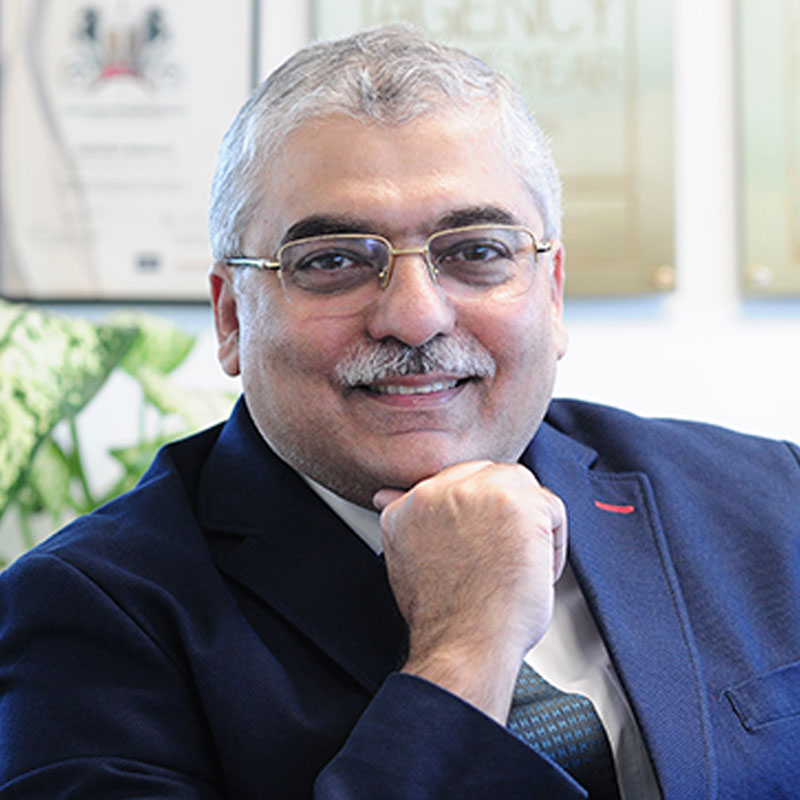
NEW DELHI: A movie buff, a chess lover, and a businessman with great intuitions and understanding, Ashish Bhasin is one of the easiest persons to talk to in the industry. An excellent leader with a future-focused vision, he might now be called the Nostradamus of the advertising world as his prediction of digital becoming the pack leader of marketing pies has been coming true amazingly, though in a scenario that neither him nor any other agency head, for that matter, could have predicted.
The CEO of Dentsu Aegis Network’s APAC operations & chairman for India, Bhasin is currently heading a number of markets, including the origin of the Covid2019 pandemic, China, as they set their sails for the ‘new normal’. Recently, in a virtual fireside chat with Indiantelevision.com founder CEO & editor-in-chief Anil Wanvari, he talked about his experiences in the industry, how he is handling the lockdown and managing his national and international teams, and his thoughts on the economic slowdown we are in. Edited excerpts follow
So, have you been going back to your favourite classics, Gone With The Wind and The Sound Of Music during the lockdown or agency work is keeping you busy?
Well, the days are surely busy and longer for me now. It’s even hard for me to remember if it’s a weekday or a weekend. I start my day around 6:30, that’s when calls with the Australian team happen, and then as most of our senior management is in the UK now, the time stretches till late in the night sometimes. But I am not complaining. I love my work. I find it extremely satisfying that you have something that you're passionate about and you get paid for it.
So yes, I did not have much time to go back to these movies but still, I managed to watch The Sound of Music twice or thrice in these months. You can draw parallels from this film to your own personal and professional life. The whole movie is just about how you manage to keep your focus and enjoy working even in tough times.
What I love about Gone With The Wind is that it takes you to a whole different cultural era and shows human beings at their best. How with changes some hang on to older ideas and how some adapt. Also, it is one of the few movies that are as good as the book. Another such example is the Godfather.
And what about chess?
Chess, yes, I keep playing regularly. It’s something that both I and my son enjoy and there is always a healthy competition going on. And now with digital, I sometimes play it against other competitors too.
You said you love your work. But had you not been in the profession, what career choice would you have made?
I think I would have been a lawyer. But whenever I sit and think about my life and would have done anything differently if given the chance to restart, 9.9 times I feel that I would do exactly the same things that I have done. I would get into the same profession, I would marry the same person, and I would want to spend each day as it has been.
What do you love the most about advertising? What keeps you going?
One is that I am very passionate about my work. I love what I do and I have a sense of ownership. And the second thing is that no two days or I may say that no two hours are the same in the advertising business. Every day is a new challenge.
Also, I am a social person. I love interacting with people. And you get to meet and work with so many interesting and intelligent people in advertising. You find people who dropped out of school and college formal education but are so bright and so smart. So I think just the pure variety of people that you get to work with and the joy and enthusiasm that they bring in that keep me going.
I have always seen it as a great business. I think that’s what most of the industry misses right now. Advertising is not seen as a business; as much as creative talents are valued or planning leaders are valued, business leaders are not valued as much. I agree that advertising is more than just numbers but if you don’t run it as a business, you will get out of it soon.
That’s the only area that confuses me about the profession.
Who have been your role models?
Certainly, Alyaque Padamase, who was my super boss at my first job in Lintas. Then Prem Mehta, who was then the chairman of Lintas. I worked with him closely and learned a lot. Also, Martin Sorrell is one of the finest we have ever seen.
But I think at the end of it, you have to develop your own style, and you can just draw (energies, ideas) from people.
And what is your personal leadership style? Are you an optimist or a realist?
See, I am an optimist in the sense that I see opportunities in adversities. Like right now, I am not seeing any sudden V-shape recovery happening, but I am sure that things will start getting better from here, month-on-month. So, I plan according to the real scenario but my goals are more optimistic.