MAM
Top honey brands fail international quality test


KOLKATA: Among top honey brands in India, majority have failed to make it through a stringent quality test. According to the Centre for Science and Environment (CSE), brands including Dabur, Patanjali, Emami have flunked the Nuclear Magnetic Resonance (NMR) test that was carried out at a lab in Germany, bringing focus on the adulteration of packaged honey in Indian markets.
Food researchers at CSE selected 13 top brands and some smaller brands that sell processed and raw honey in India to check their purity. The researchers found that 77 per cent of the samples were adulterated with sugar syrup. Out of the 22 samples that were checked, only five passed all the tests.
Marico’s Saffola Honey has cleared the litmus along with two other brands – Markfed Sohna and Nature's Nectar. However, Dabur has already countered saying its honey has passed NMR test. For the record, the NMR test is required only for exporting honey, and not for local marketing in India.

After the report was released, Dabur has categorically stated that its honey is not adulterated with sugar syrup. “Dabur is the only company in India to have an NMR testing equipment in our own laboratory, and the same is used to regularly test our honey being sold in the Indian market. This is to ensure that Dabur Honey is 100 per cent pure without any adulteration,” it said in a statement.
On the other hand, Patanjali Ayurved MD Acharya Balkrishna claimed that the CSE report is an attempt to downplay Indian honey and promote German technology. An Emami spokesperson also said that its Zandu Pure Honey conforms to all the protocols during production and adheres to quality norms and standards.
“It is a food fraud more nefarious and sophisticated than what we found in our 2003 and 2006 investigations into soft drinks; more damaging to our health than perhaps anything that we have found till now – keeping in mind the fact that we are still fighting against a killer Covid2019 pandemic with our backs to the wall. This overuse of sugar in our diet will make it worse," Centre for Science and Environment (CSE) director general Sunita Narain said.







Brands
Wipro hires 7,500 freshers, withholds FY27 hiring outlook
Profit rises to Rs 3,522 crore, Rs 15,000 crore buyback announced.
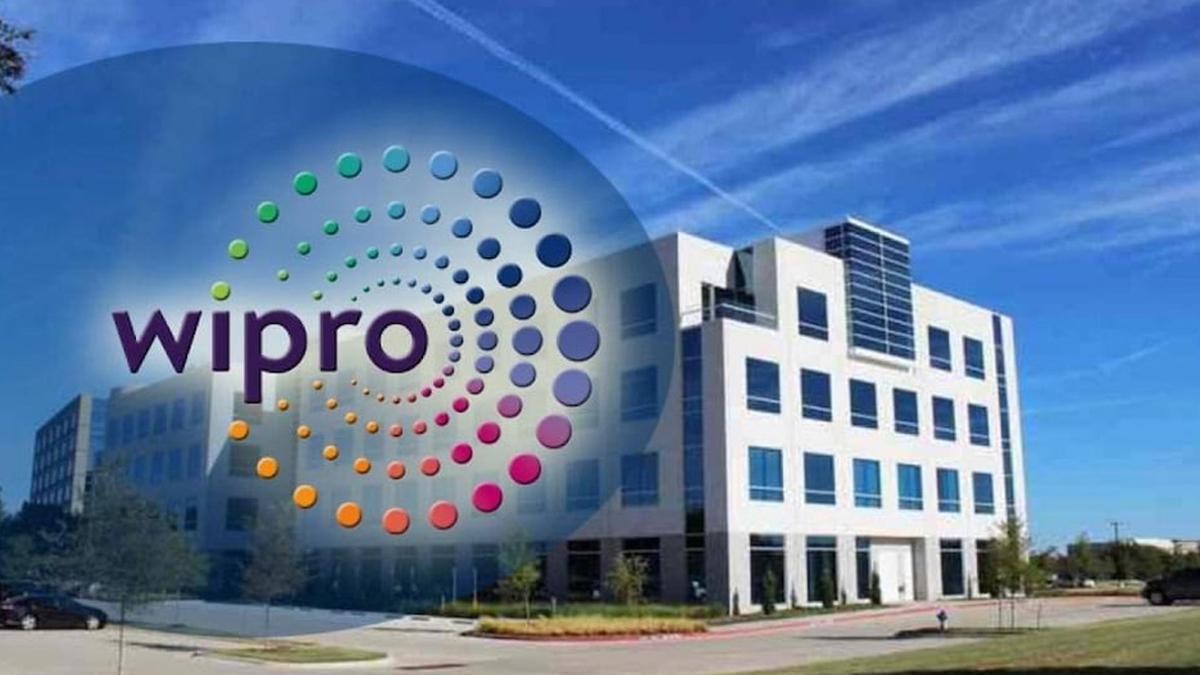
MUMBAI- Hiring may be on, but visibility is off, Wipro is adding talent even as it pauses the crystal ball. The company hired 7,500 freshers in FY26 but stopped short of offering any hiring outlook for FY27, underscoring the uncertainty gripping the IT services sector as it pivots towards an AI-led operating model.
The disclosure came alongside its fourth-quarter earnings, where management flagged volatile demand conditions and refrained from committing to future workforce expansion. Chief human resources officer Saurabh Govil noted that over 3,000 of the total hires were onboarded in the March quarter alone, signalling continued intake despite a lack of clarity on deployment pipelines.
This divergence active hiring without forward guidance reflects a broader industry pattern where talent acquisition continues even as deal conversions remain uneven and client spending cycles stretch. Wipro expects its IT services revenue for the June quarter to range between a decline of 2 per cent and flat growth sequentially in constant currency terms, reinforcing near-term caution.
Chief executive officer Srini Pallia pointed to artificial intelligence as both a disruptor and an opportunity. He said evolving client priorities are pushing the company towards outcome-driven engagements, with Wipro increasingly focusing on a services-as-software model through its AI Native Business and Platforms unit. The shift marks a structural change from traditional headcount-led growth to AI-enabled delivery frameworks.
The company has already committed over $1 billion to its AI ecosystem, with investors closely watching how these investments translate into revenue. For now, the numbers present a mixed picture. Net profit rose sequentially to Rs 3,522 crore, while revenue grew 3 per cent to Rs 24,236 crore. However, core IT services performance remained under pressure, with full-year revenue declining 0.3 per cent in dollar terms and 1.6 per cent in constant currency.
Large deal bookings offered a counterpoint, rising 45.4 per cent year-on-year to $7.8 billion, highlighting a widening gap between deal wins and actual revenue realisation. On a quarterly basis, IT services revenue slipped 1.2 per cent sequentially, signalling continued softness in execution.
Margins, however, told a more optimistic story. Operating margins expanded to 17.3 per cent in the fourth quarter, up from 14.8 per cent in the previous quarter, reflecting improved cost discipline. That said, the company cautioned that upcoming wage hikes and the ramp-up of large deals could exert pressure going forward.
Attrition stood at 13.8 per cent in the March quarter, indicating stabilisation after periods of elevated churn. Alongside its earnings, Wipro also announced a Rs 15,000 crore share buyback, reinforcing its focus on shareholder returns, with a payout ratio of 88 per cent over the past three years.
Taken together, the numbers capture a company in transition investing in AI, maintaining hiring momentum, but navigating a demand environment where growth is uneven and visibility remains limited.