iWorld
Jio hops onto SpaceX’s StarLink bandwagon close on the heels of Airtel
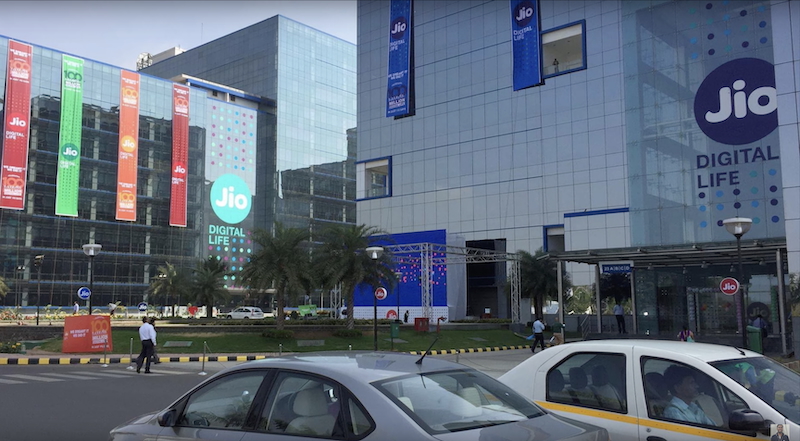
MUMBAI: In a strategic move that follows arch-rival Airtel’s recent partnership, Jio Platforms has entered into an agreement with SpaceX to offer Starlink’s satellite internet services to Indian customers.
The agreement, announced Wednesday, will see India’s data traffic heavyweight join forces with the world’s leading low Earth orbit satellite operator in a partnership that promises to reach even the most remote corners of the subcontinent.
“This deal isn’t just about connecting the unconnected—it’s about transforming digital access,” says an industry analyst. “With Airtel and now Jio partnering with Starlink, SpaceX has strategically orchestrated its entry into one of the world’s most competitive telecom, internet and data delivery markets.”
Jio’s retail network will soon showcase Starlink equipment alongside installation and activation support, creating a significant expansion of connectivity options that complement existing JioAirFiber and JioFiber services.
Mathew Oommen, group chief executive at Reliance Jio, emphasized the company’s mission to provide “affordable and high-speed broadband” to all Indians, while Gwynne Shotwell, president and chief operating officer of SpaceX, expressed enthusiasm about the partnership—pending government authorisation. “We are looking forward to to provide more people, organisations and businesses with access to Starlink’s high-speed internet services.”
The satellite internet competition has intensified in India, with both telecom giants now aligning with Elon Musk’s constellation. Industry watchers suggest this competition could revolutionise connectivity across rural India, where terrestrial infrastructure has traditionally been inadequate.
Beyond immediate internet provisions, both companies are exploring additional collaborative ventures to boost India’s digital ecosystem in what Oommen described as “this AI-driven era.”
For millions of Indians lacking reliable internet access, these satellite partnerships promise to be a significant breakthrough—one that now has not just one, but two major telecom providers driving forward.

iWorld
Snapchat parent Snap cuts 16 per cent of workforce in AI-driven restructuring
The Snapchat parent is axing around 1,000 jobs and closing 300 open roles to save $500m, as artificial intelligence makes smaller teams the new normal
CALIFORNIA: Snap is snapping. The Snapchat parent has confirmed plans to cut around 1,000 employees, roughly 16 per cent of its full-time workforce, as it bets that artificial intelligence can do what headcount once required. Shares jumped more than 10 per cent in premarket trading on the news, a brisk vote of confidence from a market that has watched the stock shed about 31 per cent this year.
The restructuring, which also closes more than 300 open roles, follows pressure from activist investor Irenic Capital Management, which holds an economic interest of about 2.5 per cent in the company and has been loudly pushing Snap to tighten its portfolio and lift performance. The firm got what it asked for, and then some.
Chief executive Evan Spiegel told employees the cuts would reduce annualised expenses by more than $500m by the second half of the year. The company expects to incur charges of between $95m and $130m related to the layoffs, mostly severance, with the bulk landing in the second quarter. Staff in Snap’s North America team were asked to work from home on the day of the announcement.
The financial backdrop is not without bright spots. Snap expects first-quarter revenue to rise around 12 per cent to approximately $1.53 billion, broadly in line with analyst estimates. Adjusted core profit for the January to March quarter is forecast at about $233m, comfortably ahead of Wall Street’s expectation of $186.8m.
The harder question surrounds Specs, Snap’s augmented reality smart glasses subsidiary, which Irenic has urged the company to spin off or shut down entirely. The unit has absorbed more than $3.5 billion in investment and burns through approximately $500m in cash annually. Snap is pressing ahead regardless, with a consumer product expected later this year, even as Meta leads the market in the segment.
Spiegel is betting that leaner teams, smarter machines and a consumer AR play can restore Snap’s credibility with investors who have run out of patience. The redundancy notices have gone out. The harder restructuring, the one that requires a hit product rather than a headcount reduction, is still very much pending.