Connect with us

Digital

Dentsu India charts the Martech map to decode digital dominance

Published

on

MUMBAI: In a world where marketing meets machines, Dentsu India has launched its latest industry report, ‘Martech Landscape in India’, offering a deep dive into the nation’s ever-evolving Martech ecosystem. With digital transformation accelerating across industries, the report unpacks how businesses can harness AI, first-party data, and hyper-personalisation to drive real impact.

The study comes at a time when India’s digital advertising market is projected to grow at a 19.09 per cent CAGR, touching Rs 59,200 crore by 2025. Driven by government initiatives like ‘Digital India’, Martech adoption is reshaping customer engagement, streamlining operations, and maximising ROI.

The Martech landscape is rapidly evolving, driven by key trends that are reshaping digital marketing strategies. AI and automation are revolutionising the industry, with predictive analytics and AI-led tools enhancing decision-making and customer engagement. As privacy regulations tighten, brands are increasingly turning to first-party data strategies, making owned data a crucial asset for personalised marketing.

Advertisement

Meanwhile, omnichannel and vernacular marketing are gaining traction, enabling brands to connect with diverse audiences through regional languages and voice search. The rise of e-commerce and digital retail is further fuelled by AI-powered personalisation, which is transforming the online shopping experience. Additionally, Tier 2 and 3 cities present untapped opportunities, as digital adoption surges beyond metro hubs, opening new avenues for growth and brand expansion.  

The report underscores that Martech is no longer an option but a core business strategy. However, challenges such as integration complexities, data privacy concerns, and skill gaps must be tackled to unlock its full potential.

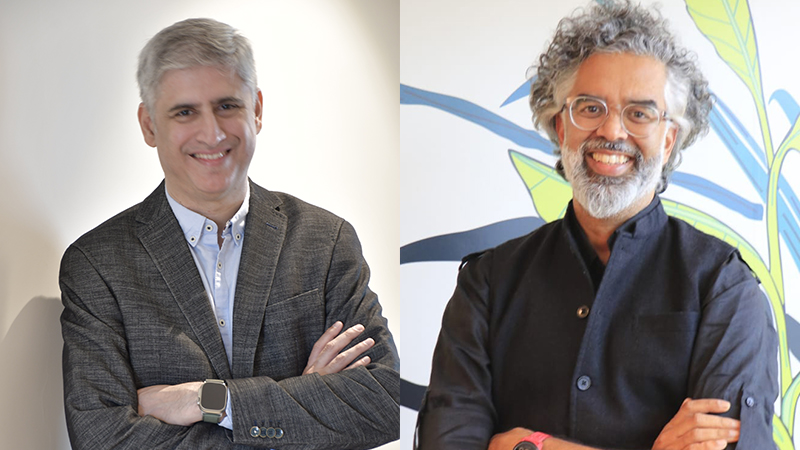
Dentsu CEO for South Asia Harsha Razdan said, “I have always believed that technology is most powerful when it simplifies complexity. Martech is a great example of that – it helps businesses make sense of vast amounts of data and turn it into meaningful customer experiences. Today, it’s not about whether businesses use Martech, but how well they integrate it into decision-making and customer engagement. In India, we’re at that turning point. The companies that get this right will build stronger customer relationships and more resilient businesses. But success isn’t just about having the right tools – it’s about knowing what to focus on. This report is designed to help businesses cut through the noise, focus on what works, and turn Martech into real business impact.”

Advertisement

Dentsu president & chief strategy officer for South Asia Narayan Devanathan added, “As the dots between media, creative, and customer experience connect more intimately, Martech has become the spine that unites these disciplines – enabling powerful, data-driven connections that drive meaningful outcomes. India’s Martech landscape is evolving rapidly, redefining how brands engage with consumers. By viewing Martech as the backbone of their business strategy, brands can unlock smarter solutions that fuel growth and impact. We’re proud to introduce this report as a valuable guide for brands looking to navigate and thrive in this ever-changing market.”

As India’s Martech revolution picks up pace, Dentsu’s latest report serves as a roadmap for brands looking to navigate, adapt, and thrive in the digital-first era.

Advertisement
Click to comment

Leave a Reply

Your email address will not be published. Required fields are marked *

Digital

Eight-year-old coder steals the show at India AI Impact Summit 2026

Ranvir Sachdeva meets Sundar Pichai and Sam Altman, links ancient philosophy to modern AI

Published

on

DELHI: Amid a sea of global tech chiefs and policy heavyweights, the loudest buzz at Bharat Mandapam this week came from a boy barely tall enough to see over the lectern.

Ranvir Sachdeva, eight, became the youngest keynote speaker at the India AI Impact Summit 2026 in New Delhi, elbowing his way into a line-up dominated by chief executives, founders and ministers. Calm, bespectacled and fiercely articulate, he declared himself a technologist — and spoke like one.

“I’m here as the youngest keynote speaker at the India AI Impact Summit. I’m talking about how I’m linking ancient Indian philosophies to modern-day technologies. I’m also covering the different approaches which the rest of the nations are building AI,” he told news agency ANI.

Advertisement

He added: “I’m talking about how India is building AI with. I’m sharing my own use case of an Indian AI model just released and how I’m contributing to India’s GDP and driving AI literacy with it.”

The summit, held from February 16 to 21 in New Delhi, has drawn global names. Ranvir met Google chief executive Sundar Pichai and OpenAI chief executive Sam Altman on the sidelines, sharing photographs of the encounters. He has previously met Salesforce chief executive Marc Benioff and Doreen Bogdan-Martin, secretary-general of the International Telecommunication Union, at the AI for Good Global Summit in Geneva.

In 2024, he met António Guterres, United Nations secretary-general.

Advertisement

His most high-profile brush with corporate royalty came earlier. In 2023, during the opening of Apple’s Delhi store, Ranvir demonstrated his Swift coding skills to Apple chief executive Tim Cook in a one-on-one session. Cook later posted: “What an incredible reception, Delhi, thank you! We’re delighted to welcome our customers to our newest store—Apple Saket!”

Ranvir replied publicly: “Thank you so much, @tim_cook! It was great meeting you today and showcasing my Apple Swift coding skills! You are an inspiration and I so want to meet you at #WWDC2023!”

The invitation followed. Cook extended a personal call for Ranvir to attend the Worldwide Developers Conference 2023 at Apple Park in Cupertino.

Advertisement

This is not Ranvir’s first turn on the global stage. In 2025, aged seven, he addressed the United Nations’ AI for Good Global Summit in Geneva as its youngest keynote speaker. He spoke for 20 minutes on “Agents of Change: A 7-Year-Old’s Lens on Generation AI for Good”, in front of more than 10,000 attendees from over 180 countries and 53 UN partner organisations.

He shared the broader stage with Geoffrey Hinton, Nobel laureate and Turing Award winner, alongside senior figures from Amazon, Meta and Salesforce. According to a LinkedIn post by the Ardee School, Ranvir argued that “Generation AI are the true changemakers”, highlighting healthcare breakthroughs from bionic solutions and exoskeletons to assistive devices for ALS patients. He called for the democratisation of such tools to bridge the digital divide.

The precocity runs deep. At six, he became the world’s youngest TEDx speaker, speaking on technology and innovation. At five, he won a gold medal as a “Super Presenter” in the 2022 Global Reading Challenge. Media reports say that in 2021 he built a prototype rocket aimed at supporting NASA’s Mars exploration, earning recognition from the Jet Propulsion Laboratory.

Advertisement

In 2023, he became the youngest recipient of a robotics and AI certification from IIT Delhi after a summer workshop at the I-HUB Foundation for Robotics.

He began coding at three.

At an event otherwise obsessed with trillion-dollar valuations, sovereign AI stacks and regulatory guardrails, it was a small voice that cut through. Linking Sanskrit thought to silicon chips, GDP to generative models, Ranvir Sachdeva did more than make history. He made the grown-ups listen.

Advertisement
Continue Reading

Advertisement News18
Advertisement All three Media
Advertisement Whtasapp
Advertisement Year Enders

Copyright © 2026 Indian Television Dot Com PVT LTD