Connect with us

MAM

Stone Sapphire India Pvt Ltd appoints Shobhit Singh as the CEO

Published

on

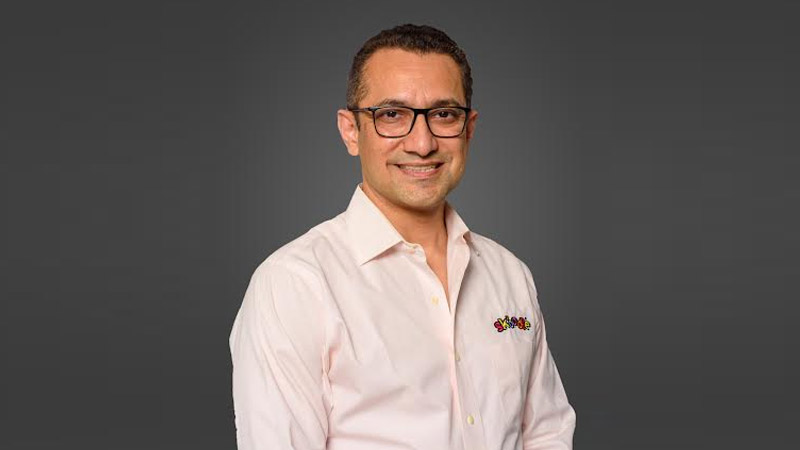
Mumbai: Stone Sapphire India Pvt Ltd, a manufacturing and distribution company, has announced the appointment of Shobhit Singh as chief executive officer (CEO). Previously serving as director, Singh’s new role is a strategic move aimed at enhancing the company’s market position and expanding its reach across various sectors.

Shobhit Singh, who has been instrumental in driving growth and innovation within the company, brings a wealth of experience and a visionary approach to his new role. Under his leadership, Stone Sapphire India Pvt Ltd aims to become the world’s largest iconic distribution brand company, focusing on relevance and value-added products across multiple categories.

“I am honoured to step into the role of CEO and lead Stone Sapphire into its next phase of growth,” said Stone Sapphire India Pvt Ltd CEO Shobhit Singh. “Our vision is to bring iconic and relevant brands to the Indian retail market, catering to diverse customer needs. We aim to achieve a significant milestone of clocking INR 1,000 crore in revenue over the next four years while maintaining our commitment to quality and customer satisfaction.”

Advertisement

Stone Sapphire India Pvt Ltd, known for its diverse product range, including toys, stationery, homeware, and sports equipment, is set to adopt a sector-agnostic approach. The company plans to expand its portfolio to include fast-moving consumer goods (FMCG) and other household categories. This strategic shift aims to capture a larger share of the Indian retail market by introducing brands that bring value and relevance to customers.

“Stone Sapphire’s journey started with a strong focus on kids’ products, but we are now moving towards a broader market presence,” added Singh. “Our goal is to cultivate purpose-driven brands that not only meet customer needs but also enrich the lives of our employees, dealers, and distributors. We are committed to creating a business that is relevant to all stakeholders, including suppliers, consumers, investors, and partners.”

In addition to expanding the product portfolio, Stone Sapphire India Pvt Ltd is focused on strengthening its distribution network. The company recently opened a new office in Noida in addition to its offices in Mumbai and Baroda, along with depots in Delhi and Bangalore. This expansion is part of a larger strategy to make the company’s distribution system more robust and efficient.

Advertisement

“We believe that our people are the cornerstone of our success,” said Shobhit Singh. “We are investing in hiring top talent at various levels, including CXOs, to bring best practices and professional expertise into the company. Our aim is to create a business that thrives on innovation, technology, and strategic growth.”

Outside of his professional responsibilities, he enjoys sports and meditation. His commitment to personal well-being and continuous learning reflects the company’s values of positivity and persistence.

With Shobhit Singh at the helm, Stone Sapphire India Pvt Ltd is poised for a transformative journey, aiming to set new benchmarks in the Indian retail market.


Advertisement


Click to comment

Leave a Reply

Your email address will not be published. Required fields are marked *

MAM

Deepfakes target women in 93 per cent of cases, report finds

Pi-labs study shows 900 per cent rise in female-focused synthetic media; India sees 60 per cent jump in cybercrime complaints.

Published

on

MUMBAI: Deepfakes aren’t just fooling cameras, they’re hitting women hardest, turning pixels into a new kind of weapon. A new report from creator intelligence platform Pi-labs has revealed that nearly 93 per cent of deepfake victims are women, with deepfake content targeting females surging 900% in recent years. The findings paint synthetic media as a fast-escalating digital threat with a stark gendered impact.

In India, cybercrime complaints involving women rose from about 50,000 in 2024 to nearly 80,000 by 2026, an increase of roughly 60 per cent in just two years. Almost 98 per cent of deepfake pornography is aimed at women, often powered by face-swapping apps and bot networks that disproportionately target females, including school-age girls. Victims typically fall in the 18–30 age group, with Bengaluru reporting a growing share of cases.

Globally, 62 per cent of deepfake abuse cases involving women go unreported due to stigma, in India, over one-third of women facing online harassment take no action, and many reduce their digital presence after abuse. Close to 33 per cent of women remain unaware of protective laws.

Advertisement

City-level trends show Bengaluru leading with nearly 30 per cent of complaints, followed by Hyderabad (14 per cent), Mumbai (13 per cent), Chennai and Kolkata (5 per cent each), and Delhi (3 per cent).

Pi-labs, CEO and founder Anukush Tiwari said, “AI is one of the most powerful technologies of our time, but like every powerful tool, it reflects the intent of those who use it. We are witnessing a growing trust deficit in digital spaces, where identity can be manipulated within minutes and reputations can be damaged overnight.”

Image morphing and deepfake videos remain the most common forms of misuse. The report also notes a new trend: fully AI-generated female personas (not based on real individuals) gaining high engagement on social platforms, raising questions about digital credibility.

Advertisement

Detection remains challenging due to widespread generative tools and rogue creators. Industry estimates suggest over 5,000 face-swap tools and more than 1,000 voice-cloning applications are accessible online.

pi-labs offers pi-authentify, an AI-driven detection system that scans media for generative markers and provides authenticity scores, as well as Namokavach, a verification portal delivering confidential assessments within two working days. The Payal gaming case was resolved using pi-authentify’s forensic analysis.

The report urges minimising digital footprints and adopting detection tools to limit replication risks. It frames the gendered impact of synthetic media as an urgent digital safety issue requiring coordinated action from individuals, platforms and technology providers.

Advertisement

In a world where faces can be borrowed in seconds, the real crime isn’t just creation, it’s the silence that follows, and women are paying the heaviest price.

Continue Reading

Advertisement News18
Advertisement All three Media
Advertisement Whtasapp
Advertisement Year Enders

Copyright © 2026 Indian Television Dot Com PVT LTD

This will close in 20 seconds