Components
Broadcast Asia 2025 brings the heat to Singapore with AI, cloud and channel chaos control

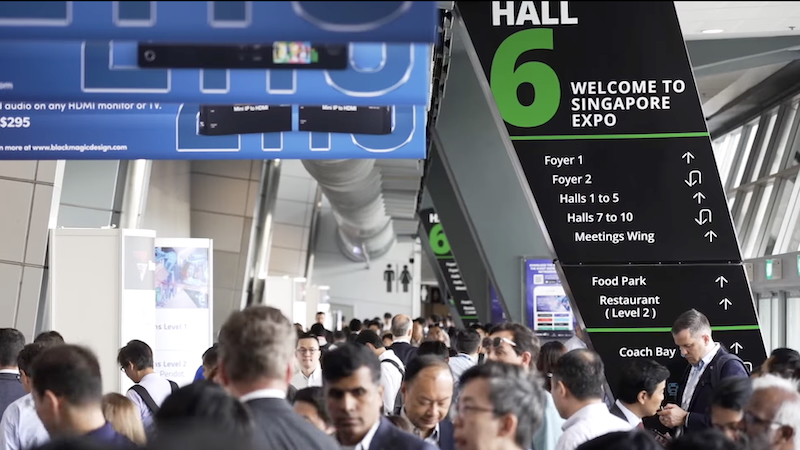
SINGAPORE: The lights are on, the mics are hot, and the future of broadcasting is rolling live from the Singapore Expo as Broadcast Asia 2025 kicks off from 27–29 May. Touted as Asia’s answer to IBC and NAB, the event expects close to 10,000 visitors and will be the centre stage for the latest in AI-driven tech, streaming disruption, and next-gen media delivery.
Topping the charts is PlayBox Neo, making noise at booth 5A2-5 with its award-winning PlayBox Neo Suite. The modular solution bundles AirBox, Ingest, Media Gateway and the flagship Channel-in-a-Box, offering seamless playout, scheduling, graphics, and centralised control.
“We’re redefining what ‘channel-ready’ means,” said Desmon Goh, md Asia-Pacific.
CEO Pavlin Rahnev added, “From terrestrial to OTT, we power it all — stable, scalable, and smart.”

Not far behind is Veset, the cloud playout powerhouse. Its Nimbus platform is currently being used to migrate ten channels of Telekom Malaysia to AWS. Meanwhile, its JPEG XS + Multicast integration and the AdWise contextual ad solution are pushing the envelope for live TV workflows and viewer-friendly monetisation.
Bitmovin is bringing developer cred to the floor with fresh insights from its 8th Annual Video Developer Report. Expect new features like SSAI Analytics and Real-Time Observability, plus a tie-up with Ad Insertion Platform. It’s already powering Japan’s public sector via Akamai Cloud and partnering with 24i to serve Revry’s advanced ad formats.
Accedo is flexing its streaming smarts with the newly minted One Design Studio, XR consultancy upgrades, and a new partnership with FloSports. With clients from Paramount to Tata Play, it’s all about boosting UX across screens.
CDNetworks is delivering the goods at booth 5J3-1, offering media delivery that’s fast, secure, and globally scalable. Neighbouring partner The Northern Alliance is showcasing everything from Ecreso FM AiO Series transmitters to the Audemat MC6 — the Swiss Army knife for FM & DAB measurement.
Meanwhile, TSL (on booth 5D1-1) is serving serious control-room swagger: think software-driven control, market-leading audio monitoring units, and intelligent power distribution. Their recent role in helping Sony Pictures Networks India nab Tier 4 certification is earning applause.
Strawberry (yes, that’s the name) is sweetening post-production with its Skies platform. Real-time teamwork, cloud-on-prem integration, and an exclusive €100/month pilot offer make it a tempting pick for creative teams tired of workflow gridlock.
Broadpeak is serving adtech with bite — personalised SSAI, Click2® formats, and mABR-powered EdgePeak™ to scale streaming without breaking the bank. MediaPrima and K+ are already on board.
SES is taking it to the skies at booth 4B3-1 with demos on multi-orbit orchestration, satellite case studies, and a clear mission: deliver performance and reliability, wherever your broadcast ambitions lie.
Elsewhere, Actus Digital is showcasing its all-in-one Intelligent Monitoring Platform, Cobalt Digital is flaunting IPMX-compliant gear at booth 5F1-1, AxelTech is revealing updates to its XRadio automation system, and Magna Systems is hosting a flurry of action with its stacked stand.
Broadcast Asia 2025, part of Asia Tech x Singapore, remains the crown jewel for broadcasters, creators, and tech providers across the region. Whether it’s cloud-native control, AI in playout, or rethinking ad delivery, Singapore is where the future of media gets its next big upgrade — no buffering required.








SEOUL: In the eternal battle between gamers demanding lightning-fast refresh rates and professionals craving pixel-perfect clarity, LG Display reckons it has found détente. The South Korean display titan is unveiling the world’s first 27-inch 4K OLED monitor panel that marries an RGB stripe structure with a blistering 240Hz refresh rate—a combination previously thought incompatible, like oil and water or fashion and function.
The breakthrough lies in how the pixels are arranged. RGB stripe structure lines up red, green and blue subpixels in neat rows, banishing the colour bleeding and fringing that plague lesser screens when you park your nose close to the display. It is the difference between reading crisp text and squinting at a rainbow-tinged mess. OLED panels using this method existed before, but they topped out at a sluggish 60Hz—fine for spreadsheets, useless for fragging opponents in first-person shooters.
LG Display’s engineering wizardry changes the game. By cranking the refresh rate to 240Hz whilst maintaining that pristine RGB stripe layout, the company has produced a panel that works equally well for colour-critical design work and twitchy gaming sessions. Better still, the panel incorporates Dynamic Frequency & Resolution technology, letting users toggle between ultra-high-definition at 240Hz and full-HD at a frankly ludicrous 480Hz. That is fast enough to make your eyeballs sweat.
The specs are suitably impressive: 160 pixels per inch for exceptional detail, optimised performance for Windows and font-rendering engines, and colour accuracy that should please the Photoshop brigade. LG Display achieved this by boosting the aperture ratio—the percentage of each pixel that actually emits light—and applying what it coyly describes as “various new technologies.” Translation: years of R&D and probably some sleepless nights.
Existing high-end gaming OLED monitors have relied on RGWB structures (which add a white subpixel) or triangular RGB arrangements. Both work, but neither delivers the sharpness that professionals demand. LG Display’s new stripe pattern is tailored specifically for monitor use, a recognition that staring at a screen from two feet away demands different engineering than watching telly from across the room.
The company is betting big on this technology, targeting the high-end monitor market where it already commands roughly 30 per cent of global OLED panel production. Among gaming OLED panels in mass production, LG Display claims world-leading specs across refresh rate, response time and resolution—a trifecta that sounds like marketing bluster until you check the numbers.
“Technology is the foundation of leadership in the rapidly growing OLED monitor market,” says LG Display head of the large display business unit Lee Hyun-woo. He promises to keep pushing “differentiated technologies compared to competitors”—corporate-speak for staying ahead of Chinese rivals snapping at LG’s heels.
The new panel will debut at CES 2026 in Las Vegas, where LG Display plans to woo customers and expand its lineup. Initial rollout targets high-end gaming and professional monitors, the sweet spot where people actually pay premiums for superior screens rather than settling for whatever came with their laptop.
Whether this technology reshapes the monitor market or remains a niche luxury depends on two things: pricing and production scale. But for now, LG Display has pulled off something rare—a genuine technical leap that solves a real problem. Gamers get their speed, designers get their clarity, and LG gets bragging rights. In the cutthroat world of display tech, that counts as a win.






