Connect with us

Gaming

CES2025: Free, AI-powered cultural, tourism app looks for international partners

Published

on

MUMBAI: Making waves at CES 2025 in Las Vegas, Cryptors in the City is being positioned as the world’s first AI-powered cultural app. Free, ad-free, and multilingual, this innovative app transforms cities into immersive playgrounds where history comes alive, reimagining exploration as an interactive adventure.

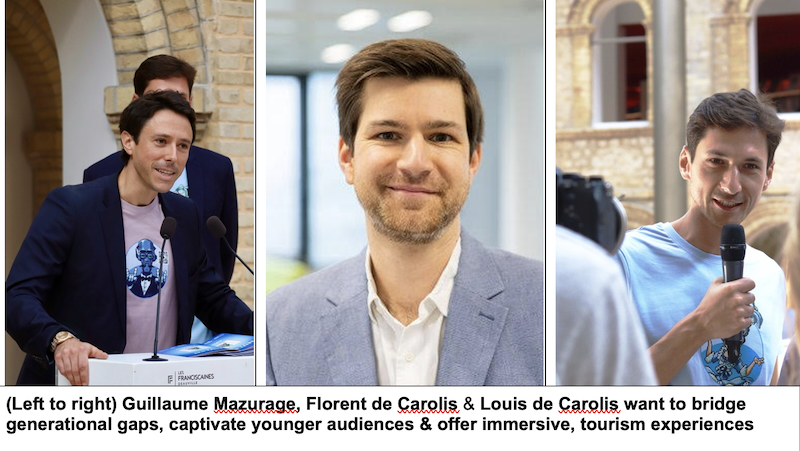
At the heart of the app are Cryptors—pixelated ceramic artworks crafted by renowned comic artist Guillaume Mazurage (Mazu). Strategically installed near iconic landmarks, these street art creations come to life through a simple smartphone scan. Acting as guides and companions, Cryptors engage users with interactive challenges, fascinating insights, and fun-filled exploration.

Founded in 2023 by Louis de Carolis, Mazu, and Florent de Carolis, Cryptors in the City blends cutting-edge technology with a passion for cultural preservation. Supported by esteemed institutions like Château de Cheverny, Deauville, and the Île-de-France municipalities, the app aims to captivate global audiences by fostering intergenerational connections and promoting immersive tourism.

Advertisement

With Cryptors in the City, users become the heroes of their own cultural journeys. Each step transforms into a treasure hunt, seamlessly blending history with modern exploration. Iconic locations become starting points for immersive quests, making every walk an engaging and educational experience.

Inspired by 1980s retro gaming aesthetics, the pixelated Cryptors come to life with enriched conversational AI. These historical figures share captivating anecdotes, pose thought-provoking quizzes, and offer personalized challenges. High scores unlock unlimited access to conversations with Cryptors, each imbued with a unique personality and deep historical knowledge. Imagine exchanging ideas with Aurangzeb or Mahatma Gandhi in real time!

“With Cryptors in the City, history and heritage become interactive playgrounds,” says Mazu, the app’s artistic director & co-founder. “Reimagining historical figures through a fresh lens makes them accessible and relatable to younger generations. For CES, Sacajawea was the perfect choice.”
 

Advertisement

Cryptors—pixelated ceramic artworks

Cryptors in the City was founded with three key objectives: to preserve and share cultural heritage in innovative ways;  to bridge generational gaps and captivate younger audiences and to offer immersive, year-round tourism experiences.

By blending street art, AI, and retro gaming aesthetics, the app creates an engaging, interactive universe. “Our goal is to transform tourism into a connected, educational, and entertaining adventure,” says Louis de Carolis, the app’s president &  co-founder.

With over 3.09 billion gamers worldwide (expected to grow to 3.32 billion by 2024), gaming is a powerful tool for engaging communities. Cryptors in the City draws inspiration from this global phenomenon, merging gaming elements with cultural exploration to connect users with history while revitalising cities and tourist sites.

Advertisement

Cryptors in the City is preparing for its next chapter with a fundraising campaign. Its key goals include: enhancing user experiences with augmented reality, creating dynamic 3D playgrounds; expanding to new cities across France and exploring opportunities in international markets. This vision aims to overlay immersive, interactive elements onto real-world settings, transforming streets and monuments into vibrant, living experiences.

Whether enjoyed solo, with friends, or as a family, Cryptors in the City transforms exploration into meaningful adventures. By integrating diverse forms of heritage—cultural, historical, artistic, natural, and even sports-related—the app creates connections across generations and offers a revolutionary way to experience the world.

Cryptors in the City is more than just an app—it’s a bridge between the past and the future, powered by the creativity of its founders and the limitless possibilities of AI.


Advertisement
Click to comment

Leave a Reply

Your email address will not be published. Required fields are marked *

Gaming

Dream Sports sees 100 plus exits after gaming ban forces overhaul

Company splits into eight units as real money gaming law hits revenue.

Published

on

MUMBAI: For a company built on fantasy leagues, reality has suddenly rewritten the rulebook. More than 100 employees have exited Dream Sports, the parent of Dream11, after the company reorganised its operations following India’s ban on real money online gaming. The shake up came after the Promotion and Regulation of Online Gaming Act, 2025 came into force in August 2025, prohibiting games where users deposit money expecting winnings. The regulation struck at the heart of the fantasy gaming industry and dramatically affected Dream Sports’ core business, wiping out about 95 percent of its revenue and all of its profits.

In response, the Mumbai based company shifted into what chief executive officer Harsh Jain described as “startup mode”, splitting its operations into eight independent business units in December.

Around 700 employees were reassigned across these newly formed ventures based on their experience and interests. However, roughly 15 percent opted to leave the company.

Advertisement

A spokesperson for Dream Sports said many of those who exited were experienced professionals accustomed to running scaled businesses rather than early stage ventures.

“Since some of these employees were experienced with running high scale businesses and not startups, around 15 percent chose to leave and join other scaled companies or start ventures of their own,” the spokesperson said.

Despite the departures, the company noted that the attrition rate is only slightly higher than its earlier level of around 10 percent before the ban. Dream Sports now has close to 950 employees and is not currently hiring, choosing instead to focus on stabilising its existing workforce.

Advertisement

The restructuring has transformed Dream Sports from a fantasy gaming company into a broader sports entertainment platform. The eight units now operate independently, each focusing on different segments of the sports and technology ecosystem.

These include Dream11, sports streaming platform Fancode, sports travel service DreamSetGo, mobile game Dream Cricket and artificial intelligence initiative Dream Sports AI, which includes sports analytics platform Dream Play.

Other ventures include fintech product Dream Money, open source initiative Dream Horizon and the philanthropic arm Dream Sports Foundation.

Advertisement

As part of cost saving efforts, Dream Sports also relocated its headquarters from Bandra Kurla Complex to Worli earlier this year. The new office, called Dream Sports Stadium, brings teams from its various brands together under one roof to improve collaboration and operational efficiency.

Jain had earlier said the company removed bonus lock in timelines for employees hired in recent years, allowing those who wished to leave to exit with pro rata payouts.

“We want people who are fully into the startup mode and willing to work for it, and we will share that reward if it comes,” he said.

Advertisement

Founded in 2008 by Harsh Jain and Bhavit Sheth, Dream Sports was last valued at 8 billion dollars after raising 840 million dollars in 2021 from investors including Falcon Edge Capital, DST Global, D1 Capital Partners, RedBird Capital Partners, Tiger Global Management, TPG and Footpath Ventures.

The new gaming law has forced several companies in the fantasy gaming sector to either shut down or pivot their business models, signalling a significant reset for one of India’s fastest growing digital entertainment industries.

Advertisement
Continue Reading

Advertisement News18
Advertisement All three Media
Advertisement Whtasapp
Advertisement Year Enders

Copyright © 2026 Indian Television Dot Com PVT LTD

This will close in 10 seconds

×