iWorld
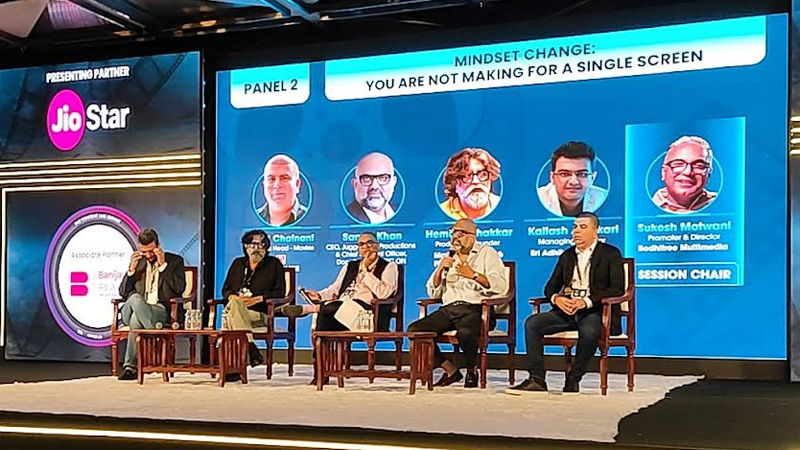
Mindset change: You are not making for a single screen

MUMBAI: The 9th edition of The Content Hub Summit 2025 may as well have been titled “Adapt or Fade,” as India’s media elite gathered to discuss the changing face and format of storytelling. The consensus? You’re no longer making content for a single screen. You’re building cross-platform universes.
Chaired by Sukesh Motwani, director at Bodhitree Multimedia, the session pulsed with the urgency of a business hurtling through change. It became clear: the future is platform-agnostic, monetisation-hungry, and format-fluid.
Motwani set the tone early: “Fiction’s no longer just about arcs and actors. It’s about vertical shots for Reels, character intros for Shorts, and scenes that snap into memes.” Even directors are now briefed to film key plot points in portrait mode. The narrative may stretch to 90 minutes, but it better look good in 9 seconds too.
Samar Khan, CEO at Juggernaut Productions and chief content officer at DocuBay and EPIC ON, summed it up: “We told a true story as a doc. Platforms bought it as fiction. Now we’re cutting Shorts from it too.” His teams are also repurposing old documentaries into audio formats ideal for the podcasting boom.
Meanwhile, Sunil Chainani, business head of movies at Applause Entertainment, still sees value in a “theatrical first” approach for big releases, but admits the exploitation game has changed. “The music, the score, even classic dialogues, they’re all mini verticals in themselves.”
Veteran producer Kailash Adhikari pointed out that three-decade-old shows from the family vault are still monetising now as memes, clips, and podcast fodder. “YouTube, Facebook, Shorts… legacy content’s like gold dust if you know how to pan for it,” he said. Even policy podcasts, once considered too niche, are finding new life as snackable content with high-value backers.
Hemal A Thakkar of Mariegold Studio spoke about the gaming crossovers for shows like OMG2, predicting a future where Shiva might be both screen hero and playable avatar. “It’s not just shows. We’re building IPs—franchises that stretch into games, VR, and who knows, maybe AI-generated spin-offs.”
Some were sceptical about the vertical video craze. “I’m just doing what everyone’s doing,” Khan admitted. “I don’t know if it’ll last.” But others believe it’s here to stay, especially in genres like horror, where the claustrophobic frame intensifies the scare factor.
A Russian filmmaker’s war epic shot entirely in vertical format was cited as a radical experiment that could become a norm in bite-sized streaming. And songs? Already stylised like Instagram Stories.
The phrase of the day was “multi-screen”, but not just in the literal sense. It’s about thinking across devices, genres, formats and audiences. Whether it’s a 3-hour film, a 30-second short, or a 3-minute podcast, content must be conceived from the start to travel.
As creators wrangle with digital fatigue and the death of appointment viewing, one thing is certain: survival lies in flexibility. From AI-generated music videos to audio-only comedies, every content piece must now be a Swiss army knife.
(If you are an Anime fan and love Anime like Demon Slayer, Spy X Family, Hunter X Hunter, Tokyo Revengers, Dan Da Dan and Slime, Buy your favourite Anime merchandise on AnimeOriginals.com.)