Movies
Indian cinema turns to artificial intelligence for epic Hanuman film

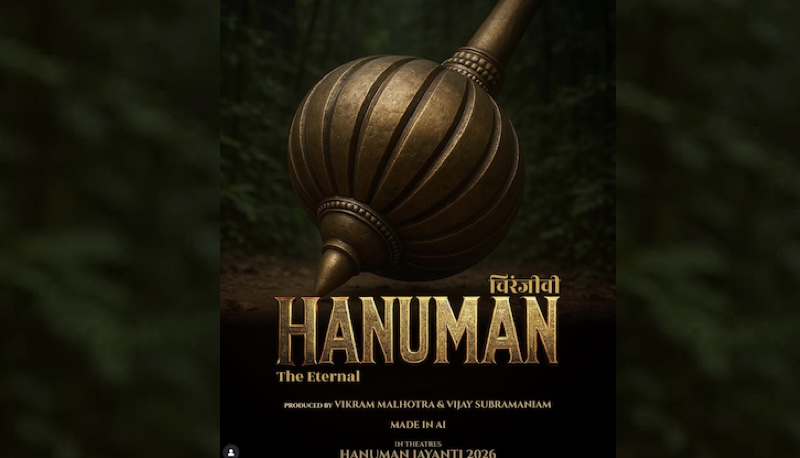
MUMBAI: Indian cinema is preparing to push the boundaries of filmmaking with what producers claim will be India’s first theatrically released motion picture created entirely using artificial intelligence (AI), centred on the Hindu deity Hanuman.
Chiranjeevi Hanuman – The Eternal, scheduled for worldwide release on Hanuman Jayanti in 2026, represents an ambitious fusion of ancient mythology and cutting-edge technology that could reshape how religious epics are brought to the screen.
Abundantia Entertainment, the production house behind hits including Airlift and Ram Setu, is partnering with Collective Media Network’s Historyverse division on the project, which draws from the Ramayana and Puranic texts to create what they describe as a “visual odyssey.”
The film is being developed by more than 50 engineers from Galleri5, the technology arm of Collective Artists Network, working alongside cultural scholars and literary experts to ensure narrative authenticity. Even the soundtrack will break new ground, composed by Trilok, billed as the world’s first AI-powered band that blends Indian spiritual traditions with contemporary sound.
“We constantly push boundaries of storytelling possibilities, and I am delighted that we are partnering with Vijay and his amazing team at Collective to harness cutting-edge tech and tools to tell one of India’s most iconic stories,” said Abundantia Entertainment founder & CEO Vikram Malhotra.
The project reflects growing confidence in AI’s creative potential within India’s entertainment industry, which has traditionally relied on star power and elaborate song-and-dance sequences to draw audiences. By choosing Hanuman—revered by hundreds of millions as a symbol of devotion, strength and faith—the producers are making a bold statement about technology’s role in preserving and reinterpreting cultural heritage.
Collective Artists Network founder & chief executive Vijay Subramaniam emphasised the company’s commitment to “authenticity and cultural stewardship”, promising “complete transparency about the role of AI in the creative process.” This approach addresses potential concerns from religious groups about technological interpretation of sacred stories.
The timing is significant, as India’s film industry grapples with rising production costs and increasing competition from streaming platforms. AI-generated content could potentially reduce expenses while enabling more spectacular visual effects than traditional methods allow.
Abundantia, founded in 2013 by former Viacom18 Motion Pictures chief operating officer Malhotra, has built its reputation on “uniquely Indian stories”, from the patriotic thriller Airlift to the biographical drama Shakuntala Devi. The company’s upcoming slate includes Subedaar starring Anil Kapoor and collaborations with acclaimed directors including Hansal Mehta.
Collective Artists Network has expanded rapidly through acquisitions including Under 25 Universe and Terribly Tiny Tales, positioning itself at what Subramaniam calls the convergence of “culture, creators, and technology”. The company operates Big Bang Social, a platform for brand-creator collaborations, and has launched Collective Media Network to broaden its content reach.
The Hanuman project represents more than technological experimentation—it’s a test of whether Indian audiences will embrace AI-generated storytelling for their most cherished cultural narratives. Success could open the floodgates for similar projects, while failure might reinforce traditional approaches to mythological cinema.
The 2026 release date on Hanuman Jayanti, the festival celebrating the deity’s birth, suggests producers are confident in their ability to create something worthy of such a significant cultural moment. Whether audiences agree will determine if this marks the beginning of a new era in Indian filmmaking or merely an expensive experiment.