Fiction
Appetite for quality content pushing the need for technological advancement

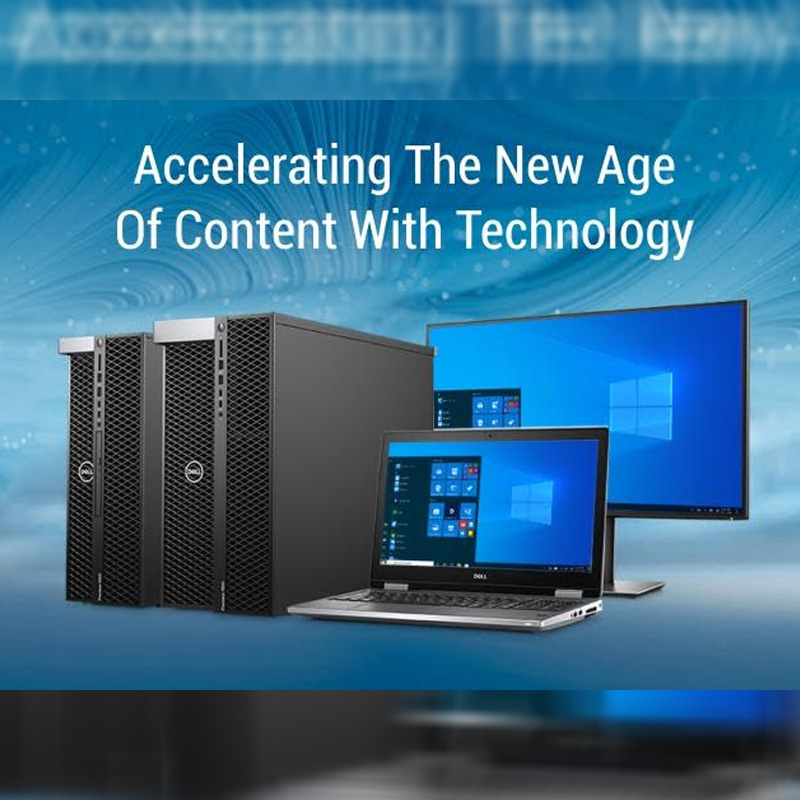
KOLKATA: With the appetite for quality content growing exponentially among consumers, the need for upgradation of technology has also risen simultaneously. Content studios and production houses have started looking at high quality hardware as well as cloud computing to keep up with the demand for better viewing experience. Moreover, the organisations are also looking at tools for easier remote work as the pandemic has changed the way the industry works. As part of the overall transformation, mobile workstations are gaining more prominence of late, panelists agreed during Indiantelevision.com's webinar themed ‘Accelerating the new age of content with technology’.
Moderated by founder, CEO and editor-in-chief Anil Wanvari, the engaging session included Excel Entertainment CG supervisor Apul Mehta, Endemol Shine India chief operating officer Gaurav Gokhale, Hats Off Productions chairman and managing director JD Majethia, Contiloe Pictures CFO & Illusion Reality Studioz business head – animation & VFX Nitin Dadoo, Redchillies VFX technology head Rajiv Sharma, Epic On chief operating officer Sourjya Mohanty, and Dell Technologies Dell Precision Workstations marketing consultant & product evangelist Suhas Pingat.
While India is witnessing the heyday of content consumption, accelerated by OTT platforms, certain challenges have emerged as well. Sharma said the size of content has actually become bigger now with the demand for better quality content. Hence, hardware supporting better graphic cards, faster NVMe (non-volatile memory express) storage, better display for viewing content is a must. If the hardware is not updated, it is tough to produce content which is up to the mark, he added.

On the other hand, Mehta mentioned that delivering content on time still remains a challenge due to the exploding uptake and quality requirement. And with the spread of the cheap and fast 4G data, the industry is competing with mobile phones as viewers are consuming more content on phones, observed Majethia. The industry has to go beyond – focus on a good story supported by greater technology. According to him, the storytelling team and executing team need to be in sync with the upgradation of technology.
Gokhale shared that the one important aspect which the industry needs to address is how it can adjust to the remote working style. In his view, even production can be executed with a smaller crew supplemented with more technology. From a post production perspective, the work has to move from a wired system to cloud based operating, he added.
“We have solutions which are one to one remote which means you dedicate one complete workstation to one single user. Remoting does not mean virtualisation. It can be one to one connectivity. Remoting can also be mobile workstations but stage four is definitely going to be virtualisation, because there you need to have practically low levels of latency,” Pingat explained.
As part of a production house, Dadoo has seen on set post-production work evolve in real time – this includes Unreal Engine and rear projection (cinematic technique in film production that combines foreground performances with pre-filmed backgrounds) for an upcoming feature series. The studio works closely with DOP and production designers from the beginning itself where they work live on set to complete the composition and final VFX on the camera itself. That’s where our system is heading, he added.
“We have a set where we have LED walls and a virtual cam. With that, we are shooting the data that technically comes in a hard drive. We want to visualise that onset whether the shot is properly done or not,” Sharma commented. He added that further mobile workstation is always needed for them, along with RTX cards, fastest NVMe RAM to allow them on set for visualising content. Epic On’s Mohanty also deliberated upon the need for mobile workstations for real-time computing.
Pingat explained further why mobile workstations are becoming more popular. Most importantly, the flexibility of the platform for a user to use on-site or anywhere makes it stand out. Mobile workstations do not require main power as well. Technology has enabled mobile workstations to be more powerful, he added.
“From a technology standpoint, as far as mobile precision is concerned, it (Dell’s mobile workstation) is very fast. Its entire ecosystem supports 4K as of now. It’s a mobile workstation, its processing capability from a graphics perspective is very fast,” he said.
In order to adapt to new technologies, content studios and production houses are investing increasingly in technology. Epic On’s Mohanty said it hovers around five to eight per cent because the platform usually keeps upgrading its technology on a six-month basis.
Echoing the sentiment, Dadoo said that Contiloe’s investment also stands at around five per cent as it deals with a lot of animation and VFX, which need constant upgradation. Redchillies and Excel Entertainment, too, are investing in the five-ten per cent range. Gokhale did not reveal an exact figure but stated the input differs from project to project.
Clearly, technological advancements have transformed the process of content production and it has become apparent that the filmmaker with the most cutting-edge tools has the edge over others in terms of qualitative aspects that make the consumer's viewing experience better. No wonder then, that the industry is upping the stakes in the technological race.