MAM
“We’ve championed the O2O2O model”: XP&D’s Chanda Singh

Mumbai: We’ve heard a lot about experiential marketing, and with strategic and technological prowess getting stronger with each passing day, it is undoubtedly evolving into becoming the talk of the town.
Launched in 2019, XP&D is a new age experiential and digital platform.
As a people platform, XP&D seeks to harness two decades of experience in events and activation and the potential of the ‘new data powered smart and social last mile’. The product platform blends offline to online to offline (O2O2O) at its core – to deliver beyond only on the ground or digital. Their collaborative business platform is built for the sharing economy bringing specialist partners.

For clients, XP&D aims to bridge the power of experiences and the scale of smartphones, social and digital to drive business.
XP&D drives the change; where experiences live beyond events. XP&D leads transformation in outreach; building digital communities where Facebook and Twitter don’t have relevance. Most importantly, XP&D brings to all digital platforms – the power and reality of human experience.
With key offices in Gurgaon & Mumbai, and a partner network within India and across the world, XP&D works with India’s biggest brands and organisations including Hyundai, Asian Paints, Kia Motors, BMW, Dream11, BCCI and Mercedes, amongst others.
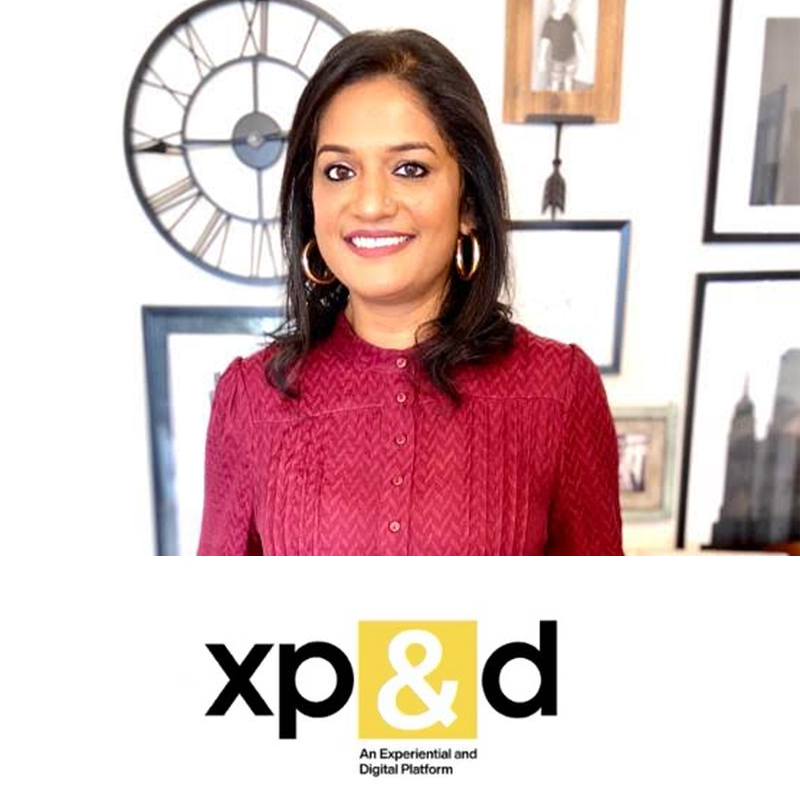
XP&D CEO Chanda Singh leads the company. In 2019, Singh moved on from Encompass to start her own venture, XP&D. Old clients and colleagues who believed in her, came on board and gave XP&D a much-needed boost. Today, Singh has made XP&D into a talk-of-the-industry, and with her relentless passion she is driving her company and teams to deliver the best.
Over the years Singh had been at the forefront of Geometry Encompass’ transformation. From being an experiential expert, she had seamlessly transitioned into leading teams in shopper marketing, rural activations and expanding the client width and depth of relationships to focus on more strategic forays. Her key accomplishments had been to execute eight IPL opening ceremonies in a span of ten days – where no one dared to even attempt it, she made it happen. Apart from this, she has also executed 36th National Games Opening ceremony, Hockey World Cup Opening Ceremony and other large scale events ushering in the new era of experiential experiences.
She is the mind behind bringing true global legends like Andre Agassi and Michael Phelps to India for a lifetime experience for the partners associated with True North.
Singh always leads from the front, keeping her people at the heart of her growth too. She is the nerve centre of XP&D, orchestrating the complex day-to-day functioning of the company.
In an interaction with Indiantelevision.com, XP&D CEO Chanda Singh talks about the experiential marketing firm, the O2O2O model and much more.
Edited excerpts:
On the journey of XP&D
The journey that XP&D has had over the past few years has been long and winding. We’ve worked with incredible clients, like Mercedes, BMW, the BCCI, Dior, Asian Paints, and many more, creating jaw-dropping experiences for all who attend their events. But we’re not done yet! We’re always looking for the next big project, and I’m excited about what we’re going to create!
On what prompted you to set up XP&D
The goal for XP&D was to set up an experiential marketing company that would be on par, and eventually even better, than some of the top players in the world! It’s the reason the team and I wake up in the morning—to get out there and create something that no one has ever seen before, and to put a smile on people’s faces while we’re at it.
On the kind of market gap that you sought to fill with XP&D
When we ventured into the experiential space, we noticed a general need for events that had elements of interactivity, engagement, and enthralling audiences. So with the events we do at XP&D, our goal is, first and foremost, to create an unforgettable experience for all those in attendance by making them a part of the show! Additionally, we’ve championed the O2O2O model (Online-to-Offline-to-Online or Offline-to-Online-to-Offline), which serves as a way to keep people engaged even after our events are over.
On being a woman entrepreneur in a patriarchal society, with not many Indian women at the C-suite level or in decision-making positions
At the end of the day, it’s about loving what you do, and I really enjoy what I do with every fiber of my being. So no matter what ladder I have to climb or what stones I have to leap over, I’m going to keep doing what puts a smile on my face!
On the evolution of experiential marketing over the decades
Experiential has always been about exactly that: the experience. So over the past decades, every new invention, innovation, and development that has contributed to enhancing an experience has enhanced experiential marketing. Some of the most notable changes we’ve seen over the ages have been Web 2.0 taking offline to online, and today with Web 3.0, we’re going from online to the Metaverse, our two primary models in recent years, O2O2O and O2O2M.
On your thoughts about events in the time of Metaverse
The Metaverse of today presents a huge opportunity to enhance experiences with the power of technology. Using AR, VR, and XR systems, the various Metaverse platforms have created new ways to conceptualise experiences that delight audiences. As for offline events, there exists a vast potential for integrations, primarily through our O2O2M model, where we create experiences that span Offline, Web 2, and Web 3!
Events today need to be new, data-powered, smart, and social to effectively reach the last mile – please elaborate on this.
In any form of communication, it’s essential that our message reaches as many people as possible, which includes those with little access and those living in the last mile. As such, we’ve been required to innovate, getting more innovative with our communications and using every tool at our disposal to reach out to every one of them.
On the similarity between Indian and international experiential marketing events
As far as similarities go, experiences are always tailored to the audiences they seek to entertain, entrance, and enthral. In that regard, every event shares the same objective: to leave a lasting impression in people’s minds while creating an impact. The significant differences lie in the audiences and how we can best tailor stories to different groups.
On how digital and experiential marketing are going to prove to be a great and effective concoction in the realm of events
We live in a digital world where people spend more time staring at the small screen than the big screen. So to create all encapsulating events, harmony must be created between the digital and real worlds. Through our O2O2O model, we have been developing experiences that extend from offline to online and vice versa to create a balance between the two and hold our audience’s attention for as long as we can.
Your vision for XP&D
XP&D’s future is centred around creating an impact for people to look at the things we do and say, “Wow, I wonder who did that!” In doing so, we want to create engaging experiences across platforms and mediums, reach out to as many people as possible, and create memories that last a lifetime.

Brands
GUEST COLUMN: Beyond layoffs, India emerges as creative-tech hub
Shift in hiring and AI-led workflows is reshaping global media and marketing
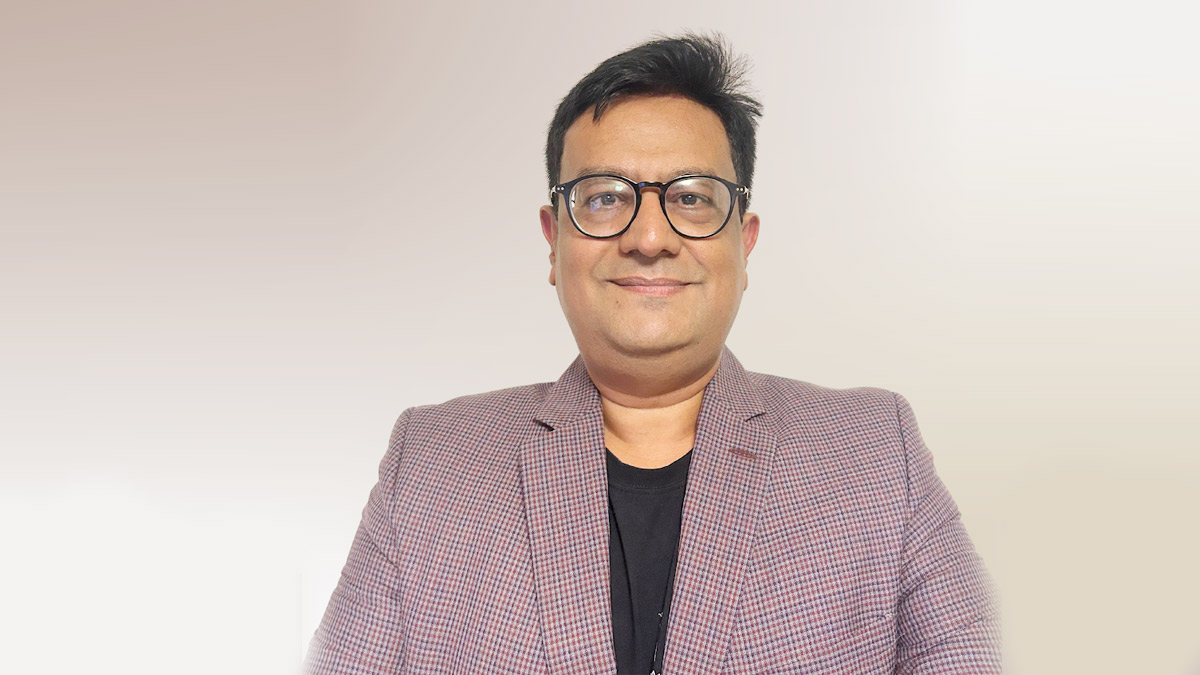
MUMBAI:The global narrative around layoffs in media and technology may suggest contraction, but a deeper transformation is reshaping how creative and tech capabilities are built and deployed. For Sanjil Zaveri, general manager – India at Brandtech+, this shift is less about decline and more about redistribution, one that is positioning India at the centre of a new global operating model. In this piece, Zaveri explores how integrated workflows, AI-powered production, and evolving talent demands are redefining the creative-tech ecosystem, why India is emerging as a strategic hub for global content and innovation, and what this means for the future of media, marketing, and talent.
The global headlines around layoffs in technology and media continue to dominate industry conversations. From platform restructuring to reduced marketing spends, the narrative suggests a slowdown across the creative and digital ecosystem.
But beneath these headlines, a different shift is underway, one that is quietly redefining how creative and technology work is delivered globally.
Hiring is not disappearing; it is being redistributed. And India is increasingly at the centre of this transition.
A structural shift in the creative-tech ecosystem
The media and marketing landscape is undergoing a fundamental reset. Brands today are moving away from fragmented agency models and siloed teams toward more integrated, agile structures.
Creative, technology, and media are no longer operating in isolation. Campaigns are now built through connected workflows, where ideation, production, and optimisation happen simultaneously.
This shift is forcing organisations to rethink where and how teams are built. Increasingly, the focus is on capability, speed, and scalability, rather than geography alone.
India’s emergence as a creative-tech hub
India’s role in this evolving ecosystem has expanded significantly.
Traditionally positioned as a backend execution market, India is now playing a far more central role in global campaign delivery. Teams based here contribute not just to production, but also to strategy, content development, and performance optimisation.
This is particularly relevant in a market where content velocity has increased dramatically. With the rise of digital platforms, OTT, and always-on marketing, brands require high volumes of creative assets without compromising on quality.
Industry insights from Ernst & Young point to India’s growing strength as a global content hub, while NASSCOM continues to highlight the scale and depth of the country’s digital talent pool. Together, these factors create a compelling case for India as a foundation for more efficient, integrated content ecosystems serving global markets.
A global company’s perspective on India
At Brandtech+, this shift is already shaping how we operate.
As a global organisation working across creative, marketing, and technology, our talent strategy is increasingly driven by capability rather than location. India has therefore become a key market for both scale and strategic talent.
In the first quarter of this year, we have significantly accelerated hiring in India across creative, technology, and operations roles, moving well ahead of plan and continuing to build strong momentum. We are actively hiring across multiple functions, with India playing a central role in delivering integrated creativetech solutions for global brands.
These signals reflect a broader change in how global companies view India, not as a delivery centre, but as a hub for connected creative, data, and technology capabilities.
“While much of the global narrative is centred on contraction, what we are seeing in India is a different kind of growth,” says Sanjil Zaveri. “As a global company, we are investing in talent that can work across creative, data, and technology, because that is where the future of marketing is headed.”
AI and the new content economy
Artificial intelligence is playing a critical role in enabling this transformation.
In today’s media environment, the demand for content has scaled exponentially. Brands are expected to create, adapt, and optimise creative assets across multiple platforms in real time. The scale of this demand would be difficult to sustain through traditional production models alone.
AI is helping make this possible.
Rather than replacing roles, AI is streamlining workflows, automating repetitive tasks, accelerating production timelines, and enabling faster experimentation. This allows creative and strategy teams to focus on higher-value outputs.
“AI removes the mundane and elevates the meaningful,” says Zaveri. “It allows teams to focus on ideas and storytelling, while technology drives efficiency.”
For media platforms and advertisers, this is redefining how campaigns are built, moving from linear production cycles to continuous, data-driven content creation.
What this means for media talent
For professionals across media, advertising, and digital, this shift is redefining skill requirements.
The traditional boundaries between creative, media planning, and technology are blurring. Content creators are expected to understand performance metrics. Media professionals are working more closely with data, platforms, and automation. Collaboration across disciplines is becoming a core skill.
This is creating demand for hybrid talent, professionals who can operate across disciplines and adapt to rapidly changing workflows.
India’s talent ecosystem is particularly well suited to this environment. With strong capabilities across content, design, engineering, and analytics, the market offers a unique combination of scale and versatility.
Importantly, global exposure is no longer tied to relocation. Professionals in India are increasingly working on international brands and campaigns, collaborating with teams across markets in real time.
Looking ahead: India at the centre of the reset
What we are witnessing today is not a temporary phase; it is a structural reset in the global creative-tech ecosystem.
Layoffs may continue to shape short-term narratives, but they do not capture where long-term growth is being built. That growth lies in new operating models, integrated workflows, and markets that can deliver both scale and innovation.
India is firmly at the centre of this transformation.
As global media and marketing organisations continue to evolve, India’s role will only become more critical, not as a support market, but as a strategic hub for content, creativity, and technology-led innovation.
The future of creative-tech will be defined by collaboration, speed, and adaptability. And increasingly, it will be shaped from India.
Note: The views expressed in this article are solely the author’s and do not necessarily reflect our own.






