iWorld
Vidnet Summit 2023: Accelerating Consumer Demand and OTT Uptake Through Experiences

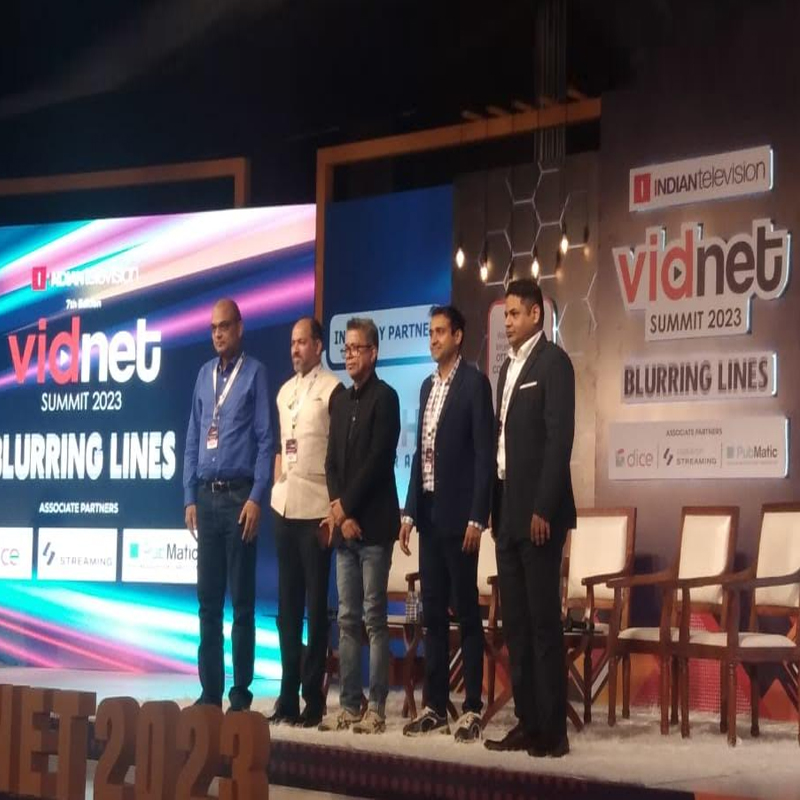
Mumbai: Today the lines are blurred as the streaming business is getting more complex and complicated, as monetization gets unclear. There is so much disruption happening, AVOD is offering SVOD and vice versa. Premium content is provided absolutely free and much more happening in this sector. Subscriber add-ons are slowing down. Time spent viewing on OTTs has plateaued for almost each and every platform, and high churn continues despite attractive annual schemes being offered by them. However, the good news is that the paid OTT subscription market in India continues to excite an increasing number of advertisers who are willing to put out their ads on these platforms. Mobile continues to be the main device of consumption even as connected TVs are increasingly getting into Indian homes. Investments in content continue to burgeon as viewers’ insatiable appetite continues to demand more and more.
It is certain that this new ecosystem is calling for new relationships to be forged, new partnerships to be developed as TV manufacturers, Cable TV, and DTH, and telcos and other aggregators’ presence as gatekeepers to their customers is increasingly being felt. So, what is the way forward for the OTT platforms? Where do the opportunities lie? What are the challenges?
This year’s Vidnet 2023 looked at all these scenarios and more, and found answers to some of these questions along with experts from the industry.

The moderator for this session was Indiantelelvision.com founder, CEO & editor-in-chief, Anil Wanvari and the panellists were Endeavor Streaming, sales director, India & ME, Vinit Mehta, Epic ON COO Sourjya Mohanty, Sony LIV head of technology Manish Verma, NXTDIGITAL COO NK Rouse.
Before getting to the panellists, Wanvari asked the audience what the consumers want in OTT. People gave various answers from getting entertaining content and looking for relevant recommendations to experiencing a buffer-free quality stream.
Wanvari moved to the panellists for the answer, to which Mohanty said, “ Apart from what the audience said, the customers are also looking at beyond the content, what are those avenues for engagement. These are some of the experiences that people are looking for. Secondly, they are also going beyond something very lateral. Will I be able to get gratification by spending my time within the OTT? These are some of the things they are looking for.”
Mehta said, “The way I look at OTT today, its three C’s: content, commerce, and community. The way OTT has evolved, I think content is obviously a given, its stable stakes, and you have to have fresh content uploaded on a weekly or periodic basis to engage the audience. But in terms of commerce and community, a lot of work has been done to create community features like chatting on OTT or social viewing or watching the game or matches together with others. People have experimented with that, I think now with the Jio experience with IPL where they had multi-camera views, localisation of content etc.”
Rouse said, “We are in a very price-sensitive market. But when it comes to experience with OTT platforms, definitely UI, personalised recommendations as well as what I am seeing is how you get a seamless sort of navigation or content discovery. And if the customer needs to be taken care of, I think they will come back to your platform.”
Verma commented, “I feel that consumers when they are coming to the app, we want to reduce the friction for the consumers to reach the content, as quickly as they can because it’s all about content and content is both AVOD and SVOD. Now if a user is landing into the application, how quickly I can give them access, if the content is paid, how quickly I can make sure that users are able to sample the content so that they can figure out which content I want to watch? If they are ready to pay, how can I quickly enable them to make the transaction successful, if it is AVOD content, how do I ensure that advertisements are really not hampering the experiences, we are sort of making some innovations around it. Reducing the friction is one of the key areas for us to focus on.”
In the end, Wanvari raised a question on how to increase consumer engagement to which Mohanty said, “I think given the part where the content is king, but from the platform part, working on the basics is the first level of activity. Once the basics are right, you have the monetisation in place and the innovation starts. The value of depth is about making the basics right and earning the money and then interactivity and all of that can be sort of layered above that.”

Gaming
Bluestone FY26 revenue rises to Rs 2,436 crore, turns profitable
Q4 profit at Rs 31 crore, full-year profit at Rs 13 crore vs loss last year.
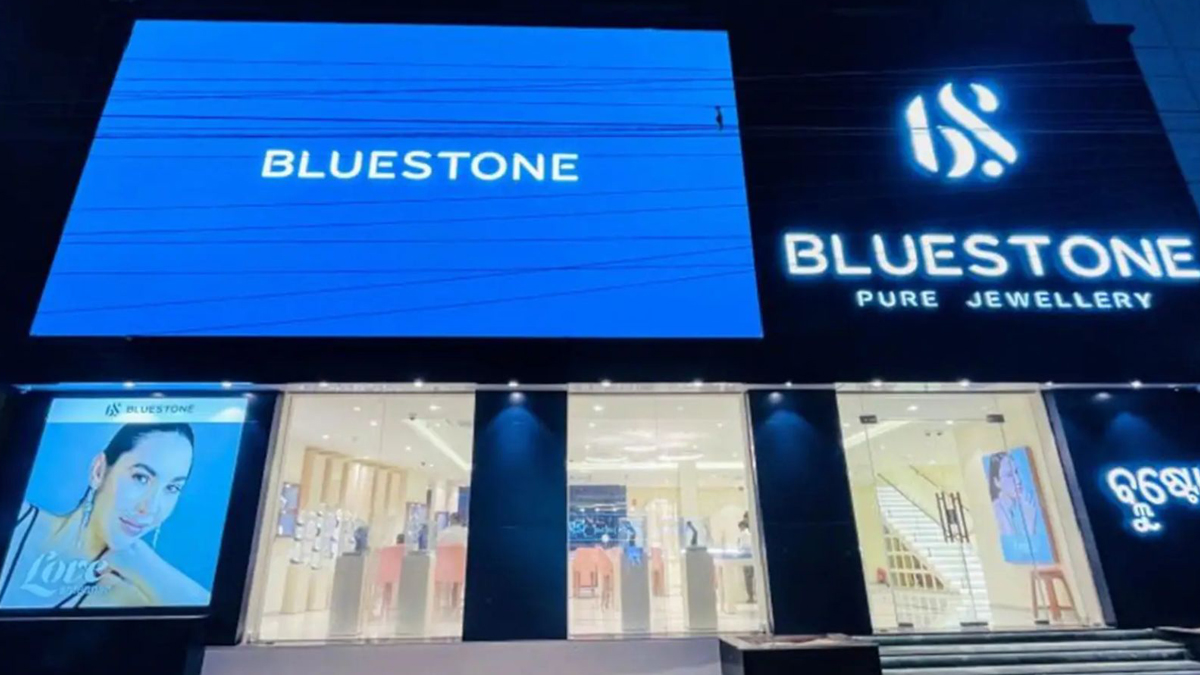
MUMBAI: From sparkle to numbers, Bluestone seems to be polishing more than just jewellery this year. Bluestone Jewellery and Lifestyle Limited reported a sharp turnaround in FY26, with revenue from operations rising to Rs 2,436 crore (Rs 24,364 million), up from Rs 1,770 crore (Rs 17,700 million) in FY25. The company posted a full-year profit of Rs 13 crore (Rs 131.79 million), a significant recovery from a loss of Rs 222 crore (Rs 2,218 million) a year ago.
Total income for the year stood at Rs 2,486 crore (Rs 24,860 million), compared to Rs 1,830 crore (Rs 18,300 million) in the previous year, reflecting both topline growth and improved operational momentum.
The March quarter, however, told a more nuanced story. Revenue from operations came in at Rs 681 crore (Rs 6,814 million), down from Rs 748 crore (Rs 7,486 million) in the year-ago period, though higher than Rs 461 crore (Rs 4,613 million) in the preceding December quarter. Net profit for Q4 stood at Rs 31 crore (Rs 311.81 million), compared to Rs 68 crore (Rs 688 million) a year earlier, but a clear reversal from a loss of Rs 51 crore (Rs 512 million) in Q3.
Margins were shaped by higher input costs, with raw material consumption rising to Rs 2,204 crore (Rs 22,043 million) for the full year, alongside employee benefit expenses of Rs 282 crore (Rs 2,824 million) and finance costs of Rs 210 crore (Rs 2,104 million). Other expenses came in at Rs 371 crore (Rs 3,715 million), slightly lower than Rs 393 crore (Rs 3,938 million) in FY25.
On the balance sheet front, total assets expanded to Rs 4,961 crore (Rs 49,610 million) as of March 31, 2026, from Rs 3,532 crore (Rs 35,322 million) a year earlier, driven largely by a surge in inventories to Rs 2,672 crore (Rs 26,718 million). Equity also strengthened to Rs 1,803 crore (Rs 18,030 million), nearly doubling from Rs 911 crore (Rs 9,107 million).
Cash flows reflected the cost of growth. Net cash used in operating activities stood at Rs 199 crore (Rs 1,990 million), while investing activities saw an outflow of Rs 239 crore (Rs 2,392 million). Financing activities, however, generated Rs 497 crore (Rs 4,971 million), helping the company end the year with cash and cash equivalents of Rs 108 crore (Rs 1,075 million), up from Rs 49 crore (Rs 487 million).
Earnings per share for FY26 came in at Rs 1.10, a sharp improvement from a negative Rs 79.74 in FY25, underlining the shift from losses to profitability.
With revenue scaling up, costs still glittering on the higher side, and profitability finally back in the black, BlueStone’s FY26 performance suggests a business mid-transition less about shine alone, and more about sustaining it.