iWorld
Vidnet Summit 2023: Creating a world in 6-10 episodes

Mumbai: Today the lines are blurred as the streaming business is getting more complex and complicated, as monetization gets unclear. There is so much disruption happening, AVOD is offering SVOD and vice versa. Premium content is provided absolutely free and much more happening in this sector. Subscriber add-ons are slowing down. Time spent viewing on OTTs has plateaued for almost each and every platform, and high churn continues despite attractive annual schemes being offered by them. However, the good news is that the paid OTT subscription market in India continues to excite an increasing number of advertisers who are willing to put out their ads on these platforms. Mobile continues to be the main device of consumption even as connected TVs are increasingly getting into Indian homes. Investments in content continue to burgeon as viewers’ insatiable appetite continues to demand more and more.
It is certain that this new ecosystem is calling for new relationships to be forged, new partnerships to be developed as TV manufacturers, Cable TV, and DTH, and telcos and other aggregators’ presence as gatekeepers to their customers is increasingly being felt. So, what is the way forward for the OTT platforms? Where do the opportunities lie? What are the challenges?
This year’s Vidnet 2023 looked at all these scenarios and more, and found answers to some of these questions along with experts from the industry.

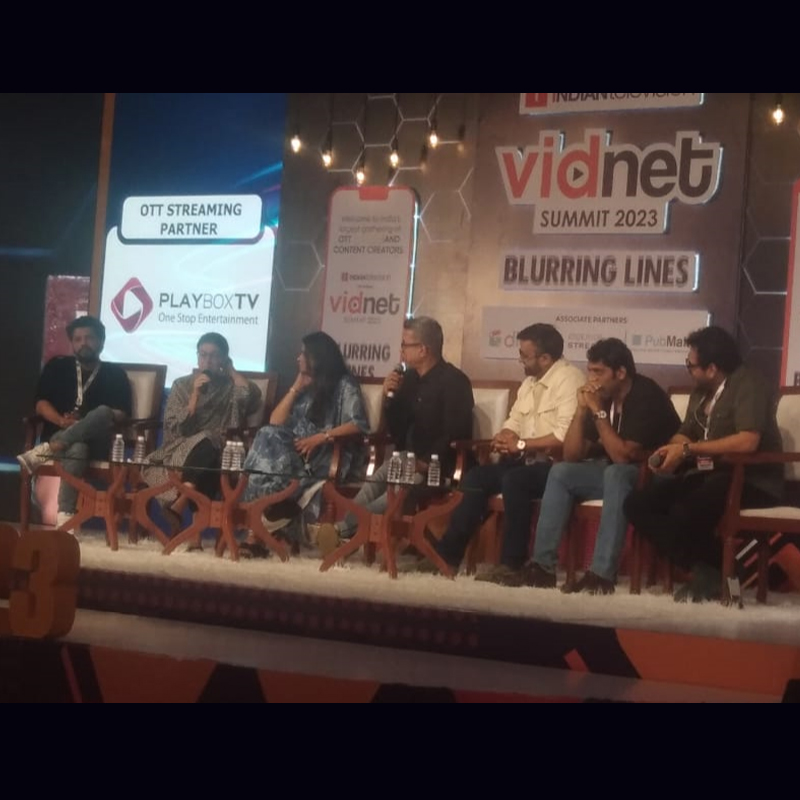
The seventh session was chaired by Indiantelevision.com founder, CEO & editor in chief Anil NM Wanvari. The panelists were Zee5 chief content officer Nimisha Pandey, film director & screenwriter Alankrita Shrivastava, Atomic Films writer, director, and producer Karan Anshuman, House of Talkies founder & producer Sidharth Jain, Pocket Aces head of development-Dice Media & writer, actor & creative director Kartik Krishnan and The Night Manager- creator & director Sandeep Modi.
Wanvari began the discussion by asking the question, “How do you decide whether a show deserves six to eight episodes, and not two or three? What goes behind that decision?”
Pandey said, “We don’t decide how many episodes the show should be. It is truly and always the story that dictates how many episodes it deserves, or how many episodes it needs to tell itself. Of course, you have to be honest enough to hear it and not try and force fit any mathematics into it. But if you read a story, it will tell you the pace it should have.”
Shrivastava pointed out, “Normally when one has a story, you are thinking of characters, a world, a universe – you know instinctively whether it’s a feature film, a mini-series, or a series. And I think for me a series means it’s going to be about six or eight episodes. It could be 12 – depending on the story if I feel it has that kind of an expanse. But the stories that I have thought of, I don’t think they should have so many episodes. Mini-series are not that popular in India. So, it depends on the story, on the length of the episodes – various factors come into play. But as a writer, as a creator, you instinctively know what you’re going for, whether it’s a film or a longer format in terms of a series. Many times when you start working on it, you don’t know actually how many episodes it will be. And once you start developing it, you realise that the number of episodes could vary, as the writing progresses. It is more of a collaborative decision and a lot of other factors come in such as the time required, there are budgets. Though there are a lot of factors that are at play, I don’t think that is the most relevant thing – I think what matters is what is the story that you’re telling, how are you building the universe, what you want to say, what are your characters doing – that’s the most important thing.”
Anshuman brought out, “It is not only the story that dictates this; definitely the platform has a lot of say in what they are looking for. This genre of storytelling – the OTT style – started in 2016 – it was new. Before that, we only had feature films or aiming for 500 episodes. I don’t know if it’s only the story that dictates because we have grown up looking at the two-hour format or if you’re in television, you wondered how you keep this going forever. And in this era now where you want to tell a story in six or eight, or even 10 hours – that’s why you have seasons, I guess, where you have the scope to expand you would just do another season. As far as I am concerned, I usually have a lot more to say as compared to what they end up screening or carrying forward on paper as well.”
Krishnan mentioned, “It depends on the themes – it depends on what you want to say in one particular season. There is a reason why Breaking Bad has six or more seasons, and Friends has 10 seasons and so many episodes. So it becomes a part of what the network or the platform says, and about what the audience feels. It also depends on how much love and appreciation it receives – it takes that kind of direction. A three hours film like Lagaan doesn’t trouble you, but there are some films that are under two hours but feel stretched – objectivity is necessary. It is about having the balance between holding the audience’s interest and ending it in eight or nine episodes if need be. It’s about honesty, and not about indulgence.”
Modi opined, “The Night Manager was originally made in 2015 – had six episodes, each an hour long. But the same show was sold in many countries as eight episodes of 40 minutes. When the adaptation came to me, it was never a question of the number of episodes. As producers, we are interested in knowing if our money is locked by the number of episodes that we produce. Is it going to be a per-episode earning, or based on a project? The honesty comes in based on that. If it is money based on a project, then we will be true to what the story requires. Sometimes producers push for an episode more as the finances would not work at a less number of episodes. As a creator, I am always keen to see the business in a 360 way. While it is very easy to go into a shell and say that as a creator and say that our job is only to look at the creative, it is the most expensive art form. A lot of people’s jobs and livelihoods are involved – unless you understand how the enablers, the platform, and the producers are seeing it, you will not be able to take everyone along – it is a collaborative art form. So that’s why there are many reasons why they ask to add or reduce an episode – so I ask why that – I ask questions. Also, a lot of creators hate data. I love data because it can be interpreted in so many ways – because as long as you’re open to sharing data, we can discuss and see whether the data is beneficial to us or if it is just messing up our brains. Data can mean one thing one day, the other day it could mean something else and change things. So most of the time the answers come from understanding the business and different points of view.
For Night Manager, there was so much story that we needed to pack into it, it felt like it may not hold in five or six episodes. We wanted to design a dip in the show – the joy of some episodes will only be when there is stability/slow pace and not always running around. So, we realised that it doesn’t matter whether we do six or seven episodes. So, once it was told to us, it was a home run after that.”
Jain elucidated, “Those days are over when a platform calls and says that they want a book – it’s gone two years ago. Platforms want good projects, they want clarity on the vision. It is about what the audience expects from a story, and not cheating them on their expectations. It is about sticking to your gut and instinct. About the release strategy – sometimes a series is to be released later, so the writing is adjusted a bit accordingly. It’s so many things, but ultimately it’s the story because you can’t bore the audience. So you can’t do that at the cost of anything else. It should stick, and the purpose of the show and the story should be delivered sincerely.”
Towards the end of the session, Wanvari spoke about opportunities in the writing field, to which Modi said, “The industry is very open – it’s a misconception that you got to be a big name to get your foot into the door. It is pretty democratic. To add to that, this is the best decade ahead of us, it is the best opportunity for us to tell diverse stories and we all have multiple projects in the pipeline because the platforms are really supportive. You got to back to your roots and see what you’re really good at. Don’t be like anybody else, do what you’re good at.”

iWorld
Warner Chappell Music launches India ops, Jay Mehta to lead unit
WMG shifts to direct model, unifying publishing and recorded music
MUMBAI: Warner Chappell Music has officially launched direct operations in India, marking a strategic shift by parent Warner Music Group to deepen its presence in one of the world’s fastest-growing music markets.
The move replaces the company’s earlier sub-publishing model with a full-fledged, on-ground operation, aimed at giving Indian songwriters stronger access to global networks, rights management tools, and creative infrastructure.
To lead the push, Jay Mehta has been handed an expanded mandate. Already serving as managing director of Warner Music India, Mehta will now oversee both recorded music and publishing across India and neighbouring South Asian markets, effectively bringing the two sides of the business under one roof.
The unified structure is designed to streamline how artists and songwriters work with the company, offering a more integrated ecosystem that spans compositions, recordings, and global distribution.
Warner Music Group managing director, recorded music and publishing, India and SAARC Jay Mehta said, “India’s songwriters are world-class, constantly redefining genres and pushing creative boundaries. By establishing a direct footprint for Warner Chappell, we’re bridging the gap between local brilliance and global opportunity.”
The timing is no coincidence. According to CISAC, creator collections in India jumped 42 per cent year-on-year to Rs 7 billion in 2024, while IFPI ranks India as the 15th largest recorded music market globally. At the same time, the industry is undergoing a structural shift, with independent and non-film music gaining ground over traditional Bollywood soundtracks.
Warner’s bet is that a direct presence will help it capture this changing dynamic. The company is also offering India-based creators access to its proprietary tools, including AI-powered royalty matching systems and real-time analytics platforms, aimed at improving transparency and earnings visibility.
Warner Chappell Music co-chair and CEO Guy Moot said the move is about shaping a publishing ecosystem that “works for creators and ensures their music is heard, protected, and rewarded everywhere.”
Meanwhile, Warner Music Group CEO Robert Kyncl underlined India’s importance to the company’s global strategy, noting that the new structure creates a “unified powerhouse” for both creators and audiences.
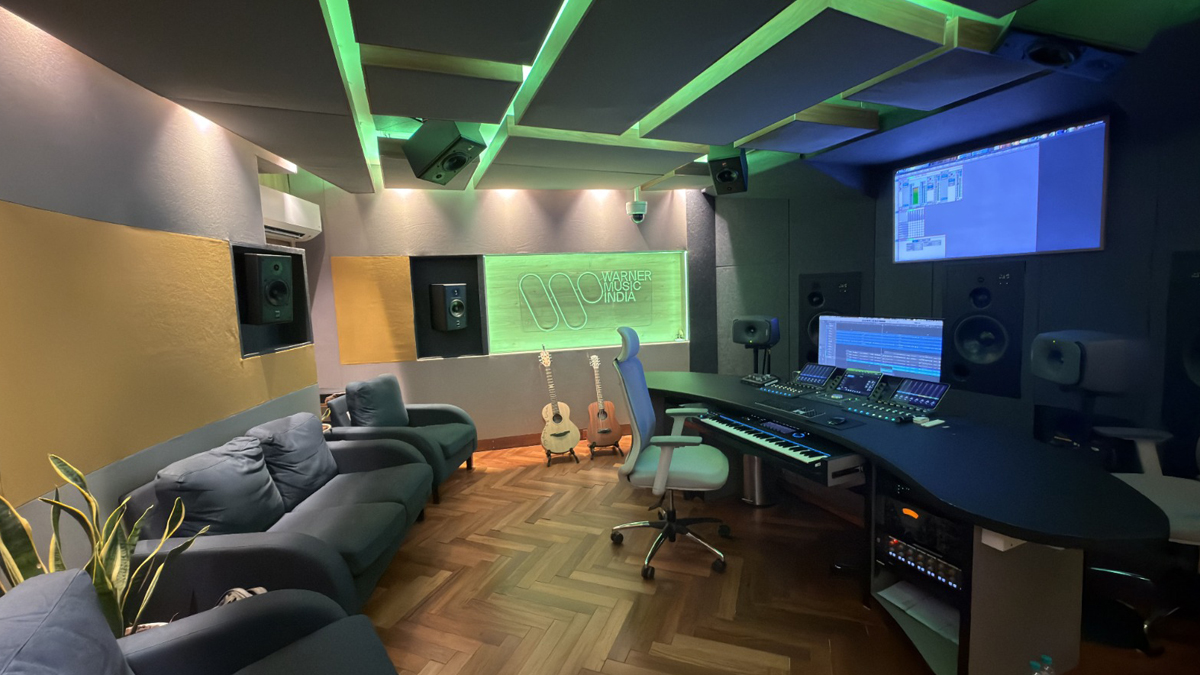
With local studios, global reach, and tighter integration across its business lines, Warner is clearly doubling down on India. And as streaming habits evolve and independent music rises, the company is positioning itself to be not just a participant, but a key architect of the country’s next music chapter.