iWorld
There’s a need for good stories but India doesn’t produce as many as the consumers want: MX Player’s Gautam Talwar

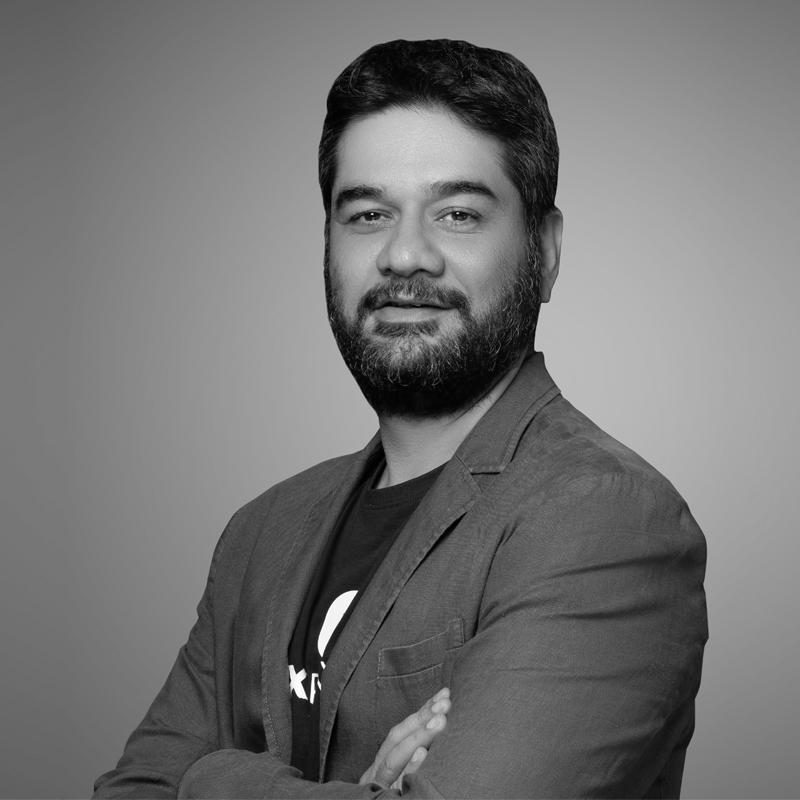
Mumbai: With a diverse selection of narratives in various formats, genres, and languages, MX Player has been captivating audiences. The company has built the largest digital entertainment ecosystem in India with one billion-plus app downloads on Android, 300 million monthly active users (MAUs) globally, and 2,00,000 hours of content across 10 languages. With the latest release of the intense crime thriller Dharavi Bank, which has a 9.3 rating on IMDb, MX Player has added further to its extensive library of original series.
As they say, content is king. The man behind this engaging and exciting content, MX Player’s chief content officer Gautam Talwar spoke to Indiantelevision.com about the show and overall expectations of content which goes on MX Player. It’s been five years since Talwar became the captain of the content ship, and he has been handling this position extremely well as the reason behind MX Player’s growth is largely the content they serve to the consumer.
The show Dharavi Bank tells the story of a cop attempting to overthrow a powerful mobster who serves as the de facto government in Mumbai while vividly bringing to life the endless stretch of small, filthy streets, open sewers, and overcrowded cottages of Dharavi in an exciting chase. Dharavi Bank is a complicated tale that goes beyond simply taking down a criminal empire, demonstrating the extent to which one may go for one’s family and responsibility to the country.

In this chat, Talwar spoke about expectations from the show, advantages, regional content, technological disruption, and regulations.
Edited Excerpts
On the USP of MX
Our distribution network is our greatest asset. The number of people who can watch our content is enormous, which is why I always say there are many people and our theatre is always full. We just need to make sure the film is correct. People are always on board with the platform’s channel. We simply need to keep delivering entertaining and engaging content.
On expectations from the show
It’s a big show for us; it’s a tentpole show. I’m just hoping it has an impact on the audience. That is significant. We’ve put in a lot of effort to make it realistic. And we have a fantastic cast. It’s very important for us to deliver, as our audience’s expectations are high.
On the duration
We have to determine what people want to see in 2024 because it will take us roughly 18 months to complete it. I’ll only be able to produce a second season of a series in 2024. So, that’s the main idea. Let’s see how this does, and I have no doubt that a second season will be added.
On advantages of casting Bollywood actors
It’s not an advantage in my opinion. The story necessitates a specific type of cast. I don’t believe it’s OTT vs. Bollywood. We have a very symbiotic relationship with Bollywood, or the Indian film industry. Everyone is welcome. I don’t think it’s this versus that; I just think it’s different. Because a film lasts about an hour and twenty minutes, this web series lasts approximately 400 minutes. As a result, the audience’s commitment is not for an hour and a half. To be honest, getting that commitment from an audience right now is extremely difficult.
Because films aren’t doing well. Getting an audience to pay money and spend an hour and a half with you is becoming increasingly difficult. I imagine the challenge for us is that you want the viewer to watch three movies and pay for them. It’s crucial. It is extremely difficult. Our challenges are different; our challenges are larger; it’s just that we have made progress; if you watch it, you don’t have to go to a theatre; however, taking that commitment from an individual is difficult.
On the crime genre
We get bored with things far more quickly than we consume them. Consumers do not perceive an excessive amount of crime. They will watch shows as they air. Look at some of our programs, such as Ashram, Bhaukaal, and Matsya Kand. If the content is well-made and has the potential to keep their interest, they will watch. It’s critical to distinguish storytelling even though consumers aren’t explicitly saying they don’t want to see new crime content. There is nowhere else one can go to watch crime. Saavdhan, Crime Patrol, and CID, three television series that ran for 20 years, are the only sources for crime stories.
The customer wants to see a good story; it’s just that it’s not being produced in the volume that India wants to watch.
On the regional content
We were the first platform to make significant regional investments. Queen is one of the most popular television programmes in Tamil. It was unusual. We purchased Samantar, a Marathi series winner who was among our best across all categories and honours. We spend a lot of money on local content.
Making sure the market is viable is the challenge. What language is it? What story do you want to tell specifically for that market? As far as the regional studies are concerned, these three are seriously important challenges.
On dubbing in Marathi
We probably don’t do Marathi as well because what we’ve understood from the consumer is that most consumers from North, West, and Eastern India are very comfortable with Hindi, but in South India there is a real challenge to understand.
On the revenue model
We are a hybrid right now. Right now, we have MX Gold, where we have a subscription, and we also have an AVoD. We are doing long-form shows with a total of 50 episodes. Tu Zakhm Hai is another show we launched, in addition to Roohaniyat. We are catering content to all models be it AVoD or SVoD.
On the challenges
It can be exceedingly challenging to predict the preferences of a generation. It is important to know whether the format is short or long. It’s challenging to keep someone’s interest for 400 minutes when they can scroll for new content in just 15 seconds. Therefore, our challenge is to produce this captivating content for that amount of time and keep viewers’ interest so they want to watch each new episode. That presents a very difficult challenge.
On the regulations
The government has a very sound self-regulation policy. We have a self-regulatory environment, and an excellent legal team. We have a very capable crew that reads through the scripts and episodes. We put the show live online only, and only after receiving clearance from the team. They play a crucial role in every one of our shows; in fact, we check our own work at least twice, once at the screenplay level and again after the show has been produced. Therefore, we are very clear that we are not creating sensationalism. Every scene and frame that we add is done so with great care because we only want to create good, authentic stories.
On the entrance of 5G
The democratisation of the internet in the nation contributed to the growth of OTT, ensuring that it saw its first surge, and 5G actually ensures that the experience is even better. If the user experience with the content improves and becomes richer, the quality of watching will improve, the compression technology will function better, the speeds will increase, the watching will be better, and there won’t be any buffering. The connection and motivation to be with OTT will grow even stronger.

Gaming
Bluestone FY26 revenue rises to Rs 2,436 crore, turns profitable
Q4 profit at Rs 31 crore, full-year profit at Rs 13 crore vs loss last year.
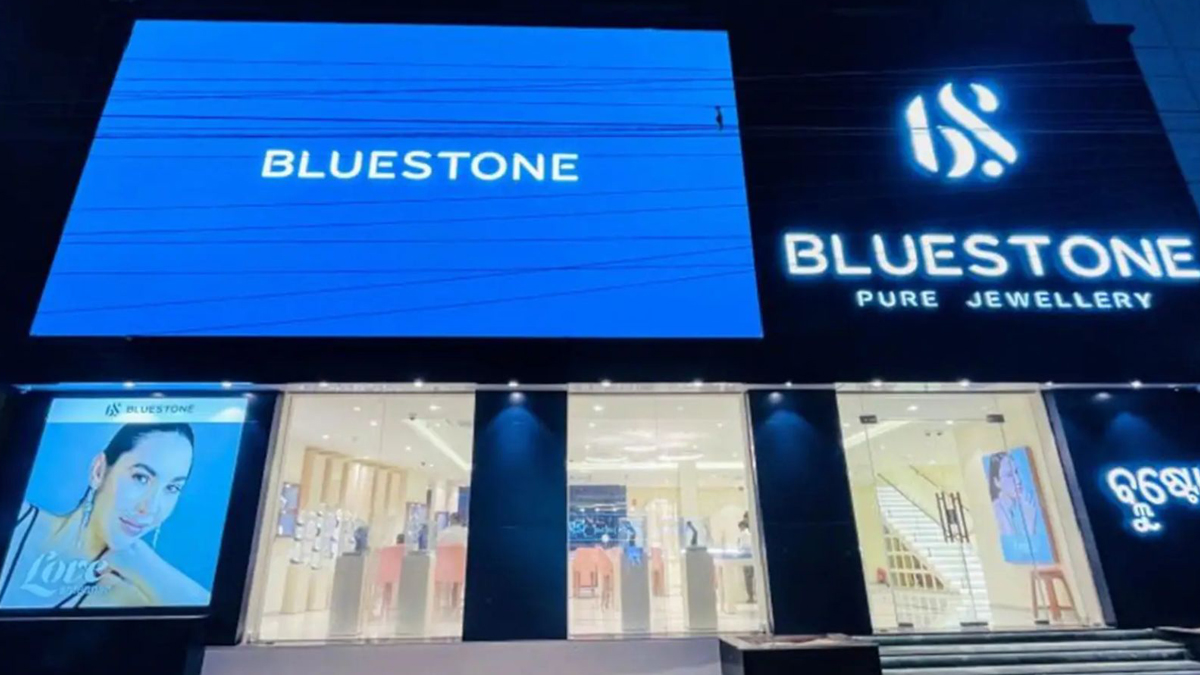
MUMBAI: From sparkle to numbers, Bluestone seems to be polishing more than just jewellery this year. Bluestone Jewellery and Lifestyle Limited reported a sharp turnaround in FY26, with revenue from operations rising to Rs 2,436 crore (Rs 24,364 million), up from Rs 1,770 crore (Rs 17,700 million) in FY25. The company posted a full-year profit of Rs 13 crore (Rs 131.79 million), a significant recovery from a loss of Rs 222 crore (Rs 2,218 million) a year ago.
Total income for the year stood at Rs 2,486 crore (Rs 24,860 million), compared to Rs 1,830 crore (Rs 18,300 million) in the previous year, reflecting both topline growth and improved operational momentum.
The March quarter, however, told a more nuanced story. Revenue from operations came in at Rs 681 crore (Rs 6,814 million), down from Rs 748 crore (Rs 7,486 million) in the year-ago period, though higher than Rs 461 crore (Rs 4,613 million) in the preceding December quarter. Net profit for Q4 stood at Rs 31 crore (Rs 311.81 million), compared to Rs 68 crore (Rs 688 million) a year earlier, but a clear reversal from a loss of Rs 51 crore (Rs 512 million) in Q3.
Margins were shaped by higher input costs, with raw material consumption rising to Rs 2,204 crore (Rs 22,043 million) for the full year, alongside employee benefit expenses of Rs 282 crore (Rs 2,824 million) and finance costs of Rs 210 crore (Rs 2,104 million). Other expenses came in at Rs 371 crore (Rs 3,715 million), slightly lower than Rs 393 crore (Rs 3,938 million) in FY25.
On the balance sheet front, total assets expanded to Rs 4,961 crore (Rs 49,610 million) as of March 31, 2026, from Rs 3,532 crore (Rs 35,322 million) a year earlier, driven largely by a surge in inventories to Rs 2,672 crore (Rs 26,718 million). Equity also strengthened to Rs 1,803 crore (Rs 18,030 million), nearly doubling from Rs 911 crore (Rs 9,107 million).
Cash flows reflected the cost of growth. Net cash used in operating activities stood at Rs 199 crore (Rs 1,990 million), while investing activities saw an outflow of Rs 239 crore (Rs 2,392 million). Financing activities, however, generated Rs 497 crore (Rs 4,971 million), helping the company end the year with cash and cash equivalents of Rs 108 crore (Rs 1,075 million), up from Rs 49 crore (Rs 487 million).
Earnings per share for FY26 came in at Rs 1.10, a sharp improvement from a negative Rs 79.74 in FY25, underlining the shift from losses to profitability.
With revenue scaling up, costs still glittering on the higher side, and profitability finally back in the black, BlueStone’s FY26 performance suggests a business mid-transition less about shine alone, and more about sustaining it.