iWorld
Organisations are likely to reorient their businesses to take advantage of the metaverse: IAMAI, Deloitte report


Mumbai: The metaverse technology is likely to see exponential growth in the coming years with rising awareness about its applications, rapid advancements in the digital infrastructure, and digital natives gaining purchasing power. But the success of metaverse penetration will depend on the time organisations take to understand its relevance to their businesses and the pace of this ecosystem’s development. The ability to increase technical skills and readiness as well as deal with rising cyber threats will be critical to its adoption. Governments can play an important role by enacting appropriate regulatory policies and providing incentives for the adoption of next-generation technology.
The recent uptick in the adoption of emerging technologies is due to several factors. One of the key drivers is the economic potential within the metaverse. It is primarily driven by web 3.0’s capabilities to accelerate digital transformation and the creator’s economy.
Web 3.0 facilitates immutable ownership, i.e., a digital record of ownership that cannot be tampered with, seamless transactions, and the interoperability of digital assets. This allows creators to create and own content digitally within the secured framework of a “decentralised” (distribution of ownership) ecosystem (platforms and apps). Creators can earn revenue from their own creations across decentralised platforms that provide an alternative pathway to monetise their content.

Further, the basic tenets of the metaverse (immersive experiences) have been in operation in the gaming industry for almost two decades.
On one hand, as the supply side of the metaverse ecosystem develops, more organisations are likely to reorient their businesses to take advantage of this evolving technology. Several organisations have already announced their metaverse offerings, which may help achieve the required scale and demand to improve cost-effectiveness and adoption rates. On the other hand, the demand side of this ecosystem has been driven by demography, along with phygital worlds, virtual work/play facilitated due to the pandemic, and Moore’s law playing its role in making the infrastructure affordable.
IAMAI and Deloitte launched a report on “Metaverse: The Hype, Possibilities, and Beyond.” The report highlights the possibilities of different types of metaverse architectures and their potential across enterprises.
The report noted that in media and entertainment, NFTs are already used as loyalty instruments for delivering privileged experiences. For instance, exclusive engagement with actors can be driven more efficiently in an immersive virtual environment without the hassles of real-world events. Production houses and content creators can plan for an exclusive metaverse release of content designed to be enjoyed by NFT holders.
Tourism companies can offer B2B loyalty reward systems in their metaverse ecosystem exclusively for their collaborating partners, such as e-commerce brands or hospitality businesses. Subscription-based loyalty or reward programmes will allow for special immersive offerings (virtual events and tours) as well as the trading of virtual digital assets for their collaborating partners and brands. It can be a unique way of creating exclusive, long-term relationships for the tourism companies.
In fashion and retail, the most common consumer loyalty programmes have been related to transferring rewards digitally for physical transactions. With the metaverse and NFTs, the model can turn-around with the possession of digital versions of physical goods, leading to concessions and discounts in physical transactions. In addition, the digital versions can also act as instruments for providing privileged experiences in an immersive environment.
Travel and tourism companies can collaborate with retail and fashion brands to provide travellers with a unique shopping experience in the virtual space, complementing the overarching experience of destination visits or event bookings. They can integrate virtual digital assets as a mode of exchange, which will create an additional mode of transaction in the virtual space.
For a beverage company, the metaverse can provide an added procurement channel, i.e., one that is more interactive and real-time, even as it democratises the service solutions provided by vendors and designers. A designer can showcase the possible designs by creating a digital avatar or even a NFT of the brand in the virtual space shared by all stakeholders. At the same time, a payment design company can enable instantaneous payment transfers through a virtual digital asset. Compliance activities such as IP transfers can also be carried out in this shared space.
Headline projections for metaverse growth and adoption have resulted in higher levels of engagement, primarily due to two factors: a changing consumer base and the associated change in consumer behaviour; and early adoption of metaverse by enterprises and use cases on metaverse resulting in tangible business gains.
Consumer base and preferences: Gen-Z has become the world’s largest generation, surpassing the millennials. It is estimated that by 2030, gen-z will constitute 30 per cent of the workforce and drive aggregate consumption through their independent disposable income. This tectonic shift in the composition of consumer demography will necessitate a change in various aspects of doing business. Brands and businesses must consider gen-z’s preferences to tap into the opportunity.
From shopping to education, from work to leisure, gen-z’s lives are inextricably tied to the digital realm. Popularly dubbed the “digital natives” or “dot com kids,” the generation Z, followed by the generation alpha, has grown up with social and interactive media and spends considerable time consuming content online.
The propensity of this consumer segment to consume digital goods and services will allow enterprises to creatively use the metaverse to drive demand for new products and immersive and elevated experiences.
Experience of early adopters: While large-scale enterprise-level adoption of the metaverse has yet to materialise, results from early adopters are fueling market sentiments favourably towards it. In the post-pandemic era, businesses are re-imagining their operations for continuity and growth. From entertainment to fashion, several enterprises rolled out use cases for the metaverse and its components.
New forms of customer experiences and engagements, remote working collaborations, etc. are some areas where enterprises have showcased tangible business benefits.
Growth in the metaverse and its adoption in India and elsewhere depend on the economic and technological barriers to the underlying technologies. The cost of compatible devices (VR, headsets, smart wearables) and the ability to develop technical skills and readiness will also influence the scale of adoption.
In other words, the evolution of the metaverse is favourably related to the progress of the network platforms, VR hardware, network infrastructure, etc. At any given time, each of these will be at different stages of maturity; some might be evolving, a few might be maturing, and the rest might be still at a conceptual or primitive stage.
Applicability framework of metaverse: The determinants for adoption of the metaverse will be unique to every industry and use case. Hence, to service the evolving consumer base and consumption patterns, technical feasibility, industry-defining precedents, and regulatory approaches could be the primary drivers of adoption. As use cases satisfy the applicability framework, adoption levels will vary across sectors.
With immersive experiences as its core offering, the media, entertainment, and gaming industries will lead the adoption journey. Industries such as fashion, consumer durables, real estate, retail and e-commerce, banking, health care, and manufacturing may take a phased approach to adopting certain components of the metaverse and gradually expand the offerings. Once a stable immersive ecosystem is established to achieve scale and cost-effectiveness and technologies mature in the future, the definition of the metaverse will evolve and include the desired attributes per the above framework.
Sneak peek into the future: metaverse for enterprises: Advocates for a free Internet prefer that the metaverse be built openly and decentralisedly on web 3.0 principles, with blockchain technology enabling permissionless access and decentralised platform governance. This enables developers and users to own their creations and trade on decentralised applications. Further, there will be greater opportunities for monetising digital assets in the open metaverse.
However, this may not be the only approach through which the metaverse is built or adopted in the future. The preference of enterprises to own and monetise digital assets, as well as the inherent concerns about customer retention and safety in an immersive world, may drive the development of the closed metaverse.
In a closed metaverse, private organisations may own the platform, offering services with limited access to authorised entries. Apart from mitigating platform switching, this may allow standards and protocols to be predefined by the owning entities, thereby allowing them to build robust business models around the platform.
Challenges and risks: The high cost of wearable hardware, such as ocular glasses, haptic suites, etc., limits its large-scale adoption. The ubiquitous availability of network infrastructure required to enable high-functioning metaverses is an ongoing process. To that extent, the affordability of underlying technologies, which is a product of market sentiment and government policy, will play a huge role in the widespread adoption of the metaverse.
Unlike mobile numbers and e-mail IDs, a robust identifier balancing the requirements of a holistic metaverse experience with the safety of individuals is yet to be developed. At present, it is quite easy to create digital avatars of individuals without their consent and impersonate them across multiple immersive worlds.
However, this opens up the possibility of severe reputational harm. In addition to fraud and impersonation, harassment, assault, bullying, and hate speech in the virtual world (for example, in games) pose serious challenges. While the violation of physical space in real life is deterred by larger social constructs and safety mechanisms, they cannot be effectively transposed to the digital world. The anonymity built into platforms compounds such challenges since violations of users’ trust and safety cannot be completely investigated. The ability of platforms and the communities/entities that govern them to provide a safe experience and secure digital assets for users will inevitably be critical to the widespread adoption of technology.
This might not be an easy task, as even established metaverse platforms have struggled internally to integrate safety features into their metaverse services. Building robust security and threat monitoring mechanisms into such platforms, prioritising cybersecurity assessment, developing threat intelligence and response capabilities, and bolstering security through threat identification and response competencies must be key focus areas for widely accepting and adopting the metaverse technology.
The metaverse has so far been driven by virtual digital assets and a lack of compliance with anti-money laundering (AML)/know your customer (KYC) requirements, opening up the possibilities for nefarious activities. In addition, challenges around data thefts, payment frauds, etc. are emerging.
Regulations and laws can shape the adoption of technology. For instance, in India, the legal and regulatory position on the use of virtual digital assets, smart contracts, etc., has yet to gain some clarity. Hence, the large-scale adoption of the metaverse may face difficulties in the near future.

Gaming
Bluestone FY26 revenue rises to Rs 2,436 crore, turns profitable
Q4 profit at Rs 31 crore, full-year profit at Rs 13 crore vs loss last year.
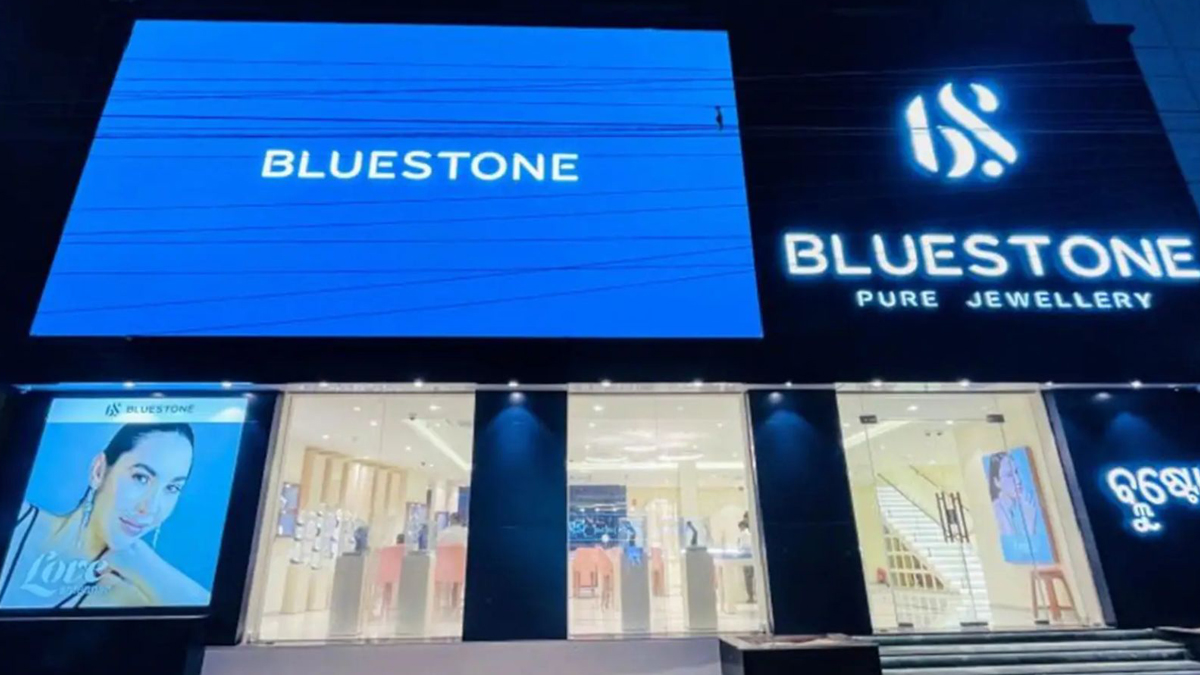
MUMBAI: From sparkle to numbers, Bluestone seems to be polishing more than just jewellery this year. Bluestone Jewellery and Lifestyle Limited reported a sharp turnaround in FY26, with revenue from operations rising to Rs 2,436 crore (Rs 24,364 million), up from Rs 1,770 crore (Rs 17,700 million) in FY25. The company posted a full-year profit of Rs 13 crore (Rs 131.79 million), a significant recovery from a loss of Rs 222 crore (Rs 2,218 million) a year ago.
Total income for the year stood at Rs 2,486 crore (Rs 24,860 million), compared to Rs 1,830 crore (Rs 18,300 million) in the previous year, reflecting both topline growth and improved operational momentum.
The March quarter, however, told a more nuanced story. Revenue from operations came in at Rs 681 crore (Rs 6,814 million), down from Rs 748 crore (Rs 7,486 million) in the year-ago period, though higher than Rs 461 crore (Rs 4,613 million) in the preceding December quarter. Net profit for Q4 stood at Rs 31 crore (Rs 311.81 million), compared to Rs 68 crore (Rs 688 million) a year earlier, but a clear reversal from a loss of Rs 51 crore (Rs 512 million) in Q3.
Margins were shaped by higher input costs, with raw material consumption rising to Rs 2,204 crore (Rs 22,043 million) for the full year, alongside employee benefit expenses of Rs 282 crore (Rs 2,824 million) and finance costs of Rs 210 crore (Rs 2,104 million). Other expenses came in at Rs 371 crore (Rs 3,715 million), slightly lower than Rs 393 crore (Rs 3,938 million) in FY25.
On the balance sheet front, total assets expanded to Rs 4,961 crore (Rs 49,610 million) as of March 31, 2026, from Rs 3,532 crore (Rs 35,322 million) a year earlier, driven largely by a surge in inventories to Rs 2,672 crore (Rs 26,718 million). Equity also strengthened to Rs 1,803 crore (Rs 18,030 million), nearly doubling from Rs 911 crore (Rs 9,107 million).
Cash flows reflected the cost of growth. Net cash used in operating activities stood at Rs 199 crore (Rs 1,990 million), while investing activities saw an outflow of Rs 239 crore (Rs 2,392 million). Financing activities, however, generated Rs 497 crore (Rs 4,971 million), helping the company end the year with cash and cash equivalents of Rs 108 crore (Rs 1,075 million), up from Rs 49 crore (Rs 487 million).
Earnings per share for FY26 came in at Rs 1.10, a sharp improvement from a negative Rs 79.74 in FY25, underlining the shift from losses to profitability.
With revenue scaling up, costs still glittering on the higher side, and profitability finally back in the black, BlueStone’s FY26 performance suggests a business mid-transition less about shine alone, and more about sustaining it.