MAM
DP World becomes the title sponsor of International League T20

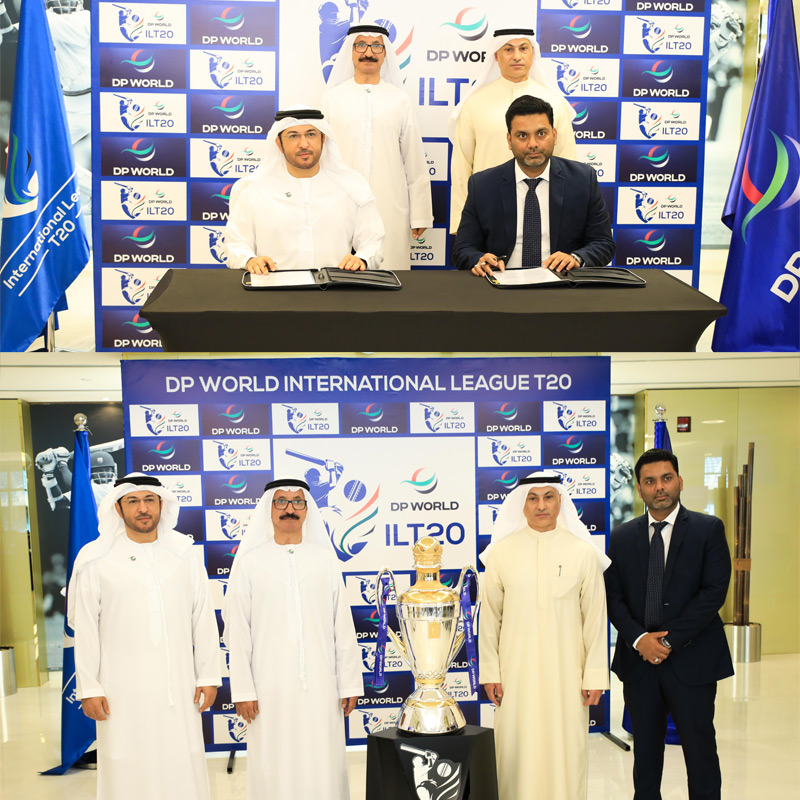
Mumbai: The International League T20 and DP World have announced a joint five-year title sponsorship deal for the upcoming six-team franchise competition.
The agreement involves 84 international cricket stars from across the world. Andre Russell, Shimron Hetmyer, Moeen Ali, Kieron Pollard and Wanindu Hasaranga, a number of shining associate players, including Paul Stirling, Mark Watt and David Wiese, as well as 24 of the UAE’s current and rising talents, look to converge on the UAE and prepare for the inaugural season of the UAE’s home-grown T20 competition. It will be played in Dubai (Dubai International Stadium), Sharjah (Sharjah Cricket Stadium), and Abu Dhabi (Zayed Cricket Stadium) from 13 January to 12 February 2023.
The inaugural DP World International League T20 includes the teams Abu Dhabi Knight Riders, Desert Vipers, Dubai Capitals, Gulf Giants, MI Emirates, and Sharjah Warriors. The teams will play for the magnificent, coveted trophy through a total of 34 matches, all of which will be televised live on the expansive, global Zee Network. The league’s schedule can be found by visiting www.ilt20.ae.

Opening the league is the match between Dubai Capitals and Abu Dhabi Knight Riders on Friday 13 January 2023 at the Dubai International Stadium. The competition will kick off with a spectacular opening ceremony hosted by Indian rapper Badshah and R&B megastar Jason Derulo. The inaugural edition will reach its crescendo with the final played on 12 February 2023, also at the Dubai International Stadium.
Talking about the agreement, International League T20 chairman Khalid Al Zarooni said, “We are exceptionally pleased to enter into this multi-year partnership with DP World as the title sponsor of the International League T20. DP World, a Dubai-based company with strong international recognition and long-standing relationships, is synonymous with high-profile sports and internationally renowned sporting events. This partnership between two UAE-based entities is incredibly gratifying, and we are extremely appreciative of their commitment to supporting a UAE-grown sporting initiative as we launch the inaugural edition of the league across the UAE and on to the international stage next year. We look forward to an extremely beneficial and rewarding relationship.”
DP World UAE and Jafza CEO, managing director Abdulla bin Damithan said, “DP World is delighted to confirm our title partnership for the DP World International League T20 competition. The event, which reflects DP World, Dubai, and the UAE’s spirit of innovation, inclusivity, and community engagement, will help introduce the sport to new audiences in the UAE, leave a legacy, and affirm the region’s unique position as a hub for world-class sports. It will also give us an opportunity to engage with our customers, prospects, and colleagues against the backdrop of what will be a highly enjoyable cricket festival. We cannot wait to watch the action unfold and wish the ILT20 organisers, teams, players, and fans an enjoyable tournament.”
Cricket fans across the world can catch the live telecast of this exciting cricket league on the league’s official media partner Zee’s linear channels, digital platform Zee5, as well as Zee Cinema SD, Zee Cinema HD, Zee Anmol Cinema, &Pictures HD, &Flix SD, &Flix HD, Zee Zest SD, Zee Zest HD, Zee Bangla Cinema, and Zee Thirai.
Headquartered in Dubai, DP World has evolved into a provider of global smart end-to-end supply chain solutions, enabling the flow of trade across the globe. It has a presence in 78 countries across six continents and employs more than 97,000 people.

Brands
GUEST COLUMN: Beyond layoffs, India emerges as creative-tech hub
Shift in hiring and AI-led workflows is reshaping global media and marketing
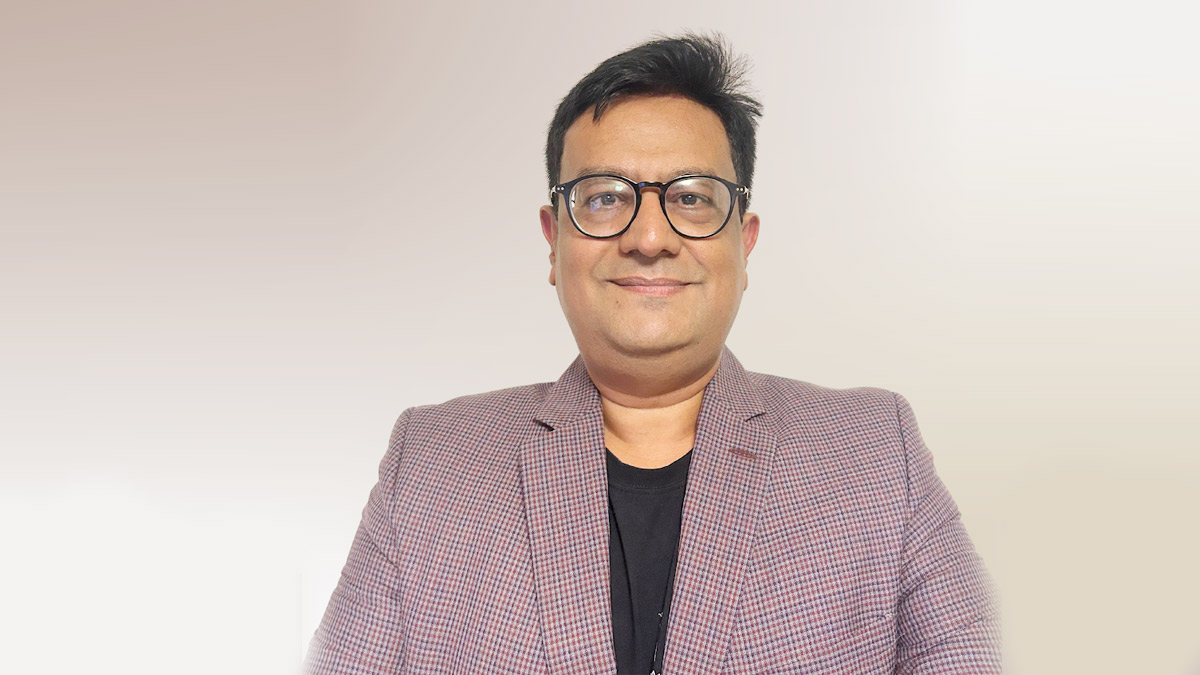
MUMBAI:The global narrative around layoffs in media and technology may suggest contraction, but a deeper transformation is reshaping how creative and tech capabilities are built and deployed. For Sanjil Zaveri, general manager – India at Brandtech+, this shift is less about decline and more about redistribution, one that is positioning India at the centre of a new global operating model. In this piece, Zaveri explores how integrated workflows, AI-powered production, and evolving talent demands are redefining the creative-tech ecosystem, why India is emerging as a strategic hub for global content and innovation, and what this means for the future of media, marketing, and talent.
The global headlines around layoffs in technology and media continue to dominate industry conversations. From platform restructuring to reduced marketing spends, the narrative suggests a slowdown across the creative and digital ecosystem.
But beneath these headlines, a different shift is underway, one that is quietly redefining how creative and technology work is delivered globally.
Hiring is not disappearing; it is being redistributed. And India is increasingly at the centre of this transition.
A structural shift in the creative-tech ecosystem
The media and marketing landscape is undergoing a fundamental reset. Brands today are moving away from fragmented agency models and siloed teams toward more integrated, agile structures.
Creative, technology, and media are no longer operating in isolation. Campaigns are now built through connected workflows, where ideation, production, and optimisation happen simultaneously.
This shift is forcing organisations to rethink where and how teams are built. Increasingly, the focus is on capability, speed, and scalability, rather than geography alone.
India’s emergence as a creative-tech hub
India’s role in this evolving ecosystem has expanded significantly.
Traditionally positioned as a backend execution market, India is now playing a far more central role in global campaign delivery. Teams based here contribute not just to production, but also to strategy, content development, and performance optimisation.
This is particularly relevant in a market where content velocity has increased dramatically. With the rise of digital platforms, OTT, and always-on marketing, brands require high volumes of creative assets without compromising on quality.
Industry insights from Ernst & Young point to India’s growing strength as a global content hub, while NASSCOM continues to highlight the scale and depth of the country’s digital talent pool. Together, these factors create a compelling case for India as a foundation for more efficient, integrated content ecosystems serving global markets.
A global company’s perspective on India
At Brandtech+, this shift is already shaping how we operate.
As a global organisation working across creative, marketing, and technology, our talent strategy is increasingly driven by capability rather than location. India has therefore become a key market for both scale and strategic talent.
In the first quarter of this year, we have significantly accelerated hiring in India across creative, technology, and operations roles, moving well ahead of plan and continuing to build strong momentum. We are actively hiring across multiple functions, with India playing a central role in delivering integrated creativetech solutions for global brands.
These signals reflect a broader change in how global companies view India, not as a delivery centre, but as a hub for connected creative, data, and technology capabilities.
“While much of the global narrative is centred on contraction, what we are seeing in India is a different kind of growth,” says Sanjil Zaveri. “As a global company, we are investing in talent that can work across creative, data, and technology, because that is where the future of marketing is headed.”
AI and the new content economy
Artificial intelligence is playing a critical role in enabling this transformation.
In today’s media environment, the demand for content has scaled exponentially. Brands are expected to create, adapt, and optimise creative assets across multiple platforms in real time. The scale of this demand would be difficult to sustain through traditional production models alone.
AI is helping make this possible.
Rather than replacing roles, AI is streamlining workflows, automating repetitive tasks, accelerating production timelines, and enabling faster experimentation. This allows creative and strategy teams to focus on higher-value outputs.
“AI removes the mundane and elevates the meaningful,” says Zaveri. “It allows teams to focus on ideas and storytelling, while technology drives efficiency.”
For media platforms and advertisers, this is redefining how campaigns are built, moving from linear production cycles to continuous, data-driven content creation.
What this means for media talent
For professionals across media, advertising, and digital, this shift is redefining skill requirements.
The traditional boundaries between creative, media planning, and technology are blurring. Content creators are expected to understand performance metrics. Media professionals are working more closely with data, platforms, and automation. Collaboration across disciplines is becoming a core skill.
This is creating demand for hybrid talent, professionals who can operate across disciplines and adapt to rapidly changing workflows.
India’s talent ecosystem is particularly well suited to this environment. With strong capabilities across content, design, engineering, and analytics, the market offers a unique combination of scale and versatility.
Importantly, global exposure is no longer tied to relocation. Professionals in India are increasingly working on international brands and campaigns, collaborating with teams across markets in real time.
Looking ahead: India at the centre of the reset
What we are witnessing today is not a temporary phase; it is a structural reset in the global creative-tech ecosystem.
Layoffs may continue to shape short-term narratives, but they do not capture where long-term growth is being built. That growth lies in new operating models, integrated workflows, and markets that can deliver both scale and innovation.
India is firmly at the centre of this transformation.
As global media and marketing organisations continue to evolve, India’s role will only become more critical, not as a support market, but as a strategic hub for content, creativity, and technology-led innovation.
The future of creative-tech will be defined by collaboration, speed, and adaptability. And increasingly, it will be shaped from India.
Note: The views expressed in this article are solely the author’s and do not necessarily reflect our own.






