MAM
Mumbai Tech Week 2026 to focus on real-world AI adoption at scale
From pilots to production, event spotlights AI’s growing business impact
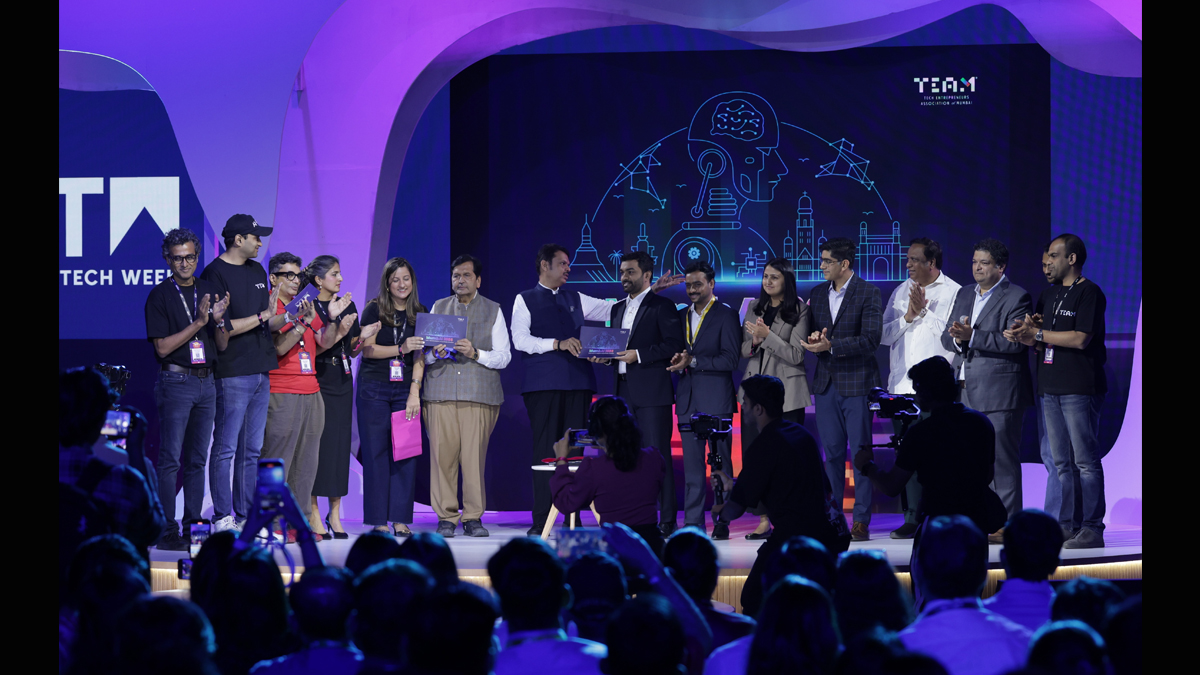
MUMBAI: Mumbai Tech Week 2026 will return for its third edition on 29 and 30 May at the Jio World Convention Centre, with a clear shift in focus from AI experimentation to real-world deployment.
Organised by the Tech Entrepreneurs Association of Mumbai and the Government of Maharashtra, and co-powered by Meta, the event is expected to bring together startups, investors, developers and policymakers to explore how AI is actively reshaping business operations.
This year’s edition places execution front and centre, with curated showcases from Indian unicorns and global technology firms demonstrating practical AI applications across sectors. The emphasis is less on what AI can do and more on what it is already doing.
“The competitive advantage in AI has shifted. It’s no longer about understanding it, it’s about implementing it,” said Tech Entrepreneurs Association of Mumbai co-chair, governing council Harsh Jain. “The companies pulling ahead are the ones moving from pilots to production and embedding AI into how their business runs.”
The backdrop to this shift is significant. AI is projected to contribute up to $500 billion to India’s GDP, while Mumbai’s startup ecosystem could see more than 100 unicorns by 2035. The city is also emerging as a key hub for data centre expansion, fuelled by rising AI workloads and enterprise demand.
The event will feature formats such as AI Excellence Awards, an early-stage startup showcase, and an AI-powered job fair in collaboration with Babblebots.ai. Masterclasses led by Meta, Replit and NPCI are expected to offer hands-on insights into AI adoption.
Speakers from organisations including Anthropic, Google Cloud India and Neysa will share perspectives on scaling AI in production environments, reflecting the event’s blend of global expertise and local innovation.
In the lead-up to the main event, satellite sessions between 25 and 28 May will take place across Mumbai, featuring workshops, hackathons and founder-led meetups designed to deepen ecosystem engagement.
“Mumbai has the ingredients to shape how AI is built and applied,” said Tech Entrepreneurs Association of Mumbai governing council member Naiyya Saggi. “Its strength lies in proximity, where capital, enterprises and consumers are closely connected, allowing ideas to move quickly from concept to adoption.”
As India reaches a defining moment in its AI journey, Mumbai Tech Week 2026 aims to turn momentum into measurable impact, positioning the city as a key driver in the global AI ecosystem.

AD Agencies
Omnicom posts $6.2 bn Q1 revenue, EBITDA margin rises to 14.8 per cent
AI push and cost synergies lift margins in first full quarter post-merger
NEW YORK: Omnicom has reported a robust first quarter following its acquisition of Interpublic Group, signalling early gains from integration, cost efficiencies and a sharper focus on AI-led services.
The results mark the first full quarter with Interpublic’s operations included, offering a clearer view of how the combined entity is shaping up. Revenue from core operations stood at $5.6 billion, up $345 million year on year on a combined basis, while organic growth came in at 3.9 per cent. Adjusted EBITDA margin rose sharply by 240 basis points to 14.8 per cent, reflecting early synergy benefits.
“We’ve seen momentum and cohesive growth across the organisation,” said Omnicom chief executive officer John Wren. “Our results demonstrate the benefits of realigning our portfolio and moving decisively on integration.”
A key part of that realignment involves shedding underperforming assets. Omnicom has identified businesses worth roughly $3.2 billion in annual revenue for disposal, with about $1 billion already exited in the first quarter. The company expects to complete most of the remaining divestments over the coming quarters, sharpening its focus on higher-growth, higher-margin operations.
On the bottom line, adjusted earnings per share rose 11.8 per cent to $1.90, underlining the financial impact of cost discipline and integration. The company is targeting $900 million in cost synergies by 2026, rising to $1.5 billion by mid-2028.
“We are realising significant cost reduction synergies while continuing to invest for growth,” said Omnicom chief financial officer Philip Angelastro.
Beyond the numbers, the strategic pivot is becoming clearer. Omnicom has restructured its business around “core operations”, stripping out assets earmarked for sale to highlight the segments driving future growth. More than half of its revenue now comes from integrated media, which includes data, commerce, CRM and content automation, areas that are growing faster than traditional advertising.
Indeed, integrated media led growth in the quarter with high single-digit gains, while PR and experiential businesses delivered mid-single-digit growth. Healthcare posted modest gains, while traditional advertising lagged, reflecting a broader industry shift towards performance-driven and tech-enabled marketing.
Central to this transformation is Omni, the company’s AI-powered marketing and sales platform. Rolled out across the organisation during the quarter, the system connects data, talent and services while enabling AI-driven workflows.
The platform is already delivering tangible results, improving media performance, speeding up campaign execution and enhancing measurement capabilities. Integration with partners such as Adobe and Amazon is further expanding its reach.
“We’ve put the latest agentic AI tools in the hands of all our employees,” said Wren, highlighting the company’s push towards automation and data-led decision-making.
The shift is also reshaping client relationships. Omnicom reported new business wins with major brands including IBM, GSK and John Deere, while expanding engagements with existing clients such as Unilever and Exxon. Increasingly, clients are opting for consolidated partnerships, relying on a single provider for end-to-end marketing and sales services.
“There’s a clear trend of clients choosing one partner to manage most of their needs,” said John Wren. “Our integrated model makes that easier.”
Geographically, the US remains the largest market, contributing 61 per cent of revenue, followed by Europe and the UK at 21 per cent. Growth was strongest in the US, with other regions posting modest gains.
The balance sheet remains solid despite increased debt following the acquisition. Long-term debt stood at $10.2 billion at the end of the quarter, while liquidity was supported by $4.3 billion in cash and a $3.5 billion revolving credit facility. The company is also returning capital to shareholders, repurchasing $2.8 billion worth of shares in Q1 as part of a planned $5 billion buyback programme.
Looking ahead, Omnicom remains optimistic but cautious. While the company expects double-digit EPS growth for the year, it acknowledged ongoing geopolitical uncertainties, particularly in the Middle East, though the region accounts for less than 2.5 per cent of revenue.
The integration of Interpublic is still in its early stages, but the initial signs point to a business that is not just bigger, but structurally different. With AI at its core, a streamlined portfolio and a growing tilt towards integrated services, Omnicom is betting that scale, simplicity and smart technology will keep it ahead in an increasingly complex marketing landscape.
If the first quarter is anything to go by, that bet is already starting to pay off.