MAM
When Instant Business Loans Are Better Than Working Capital Limits
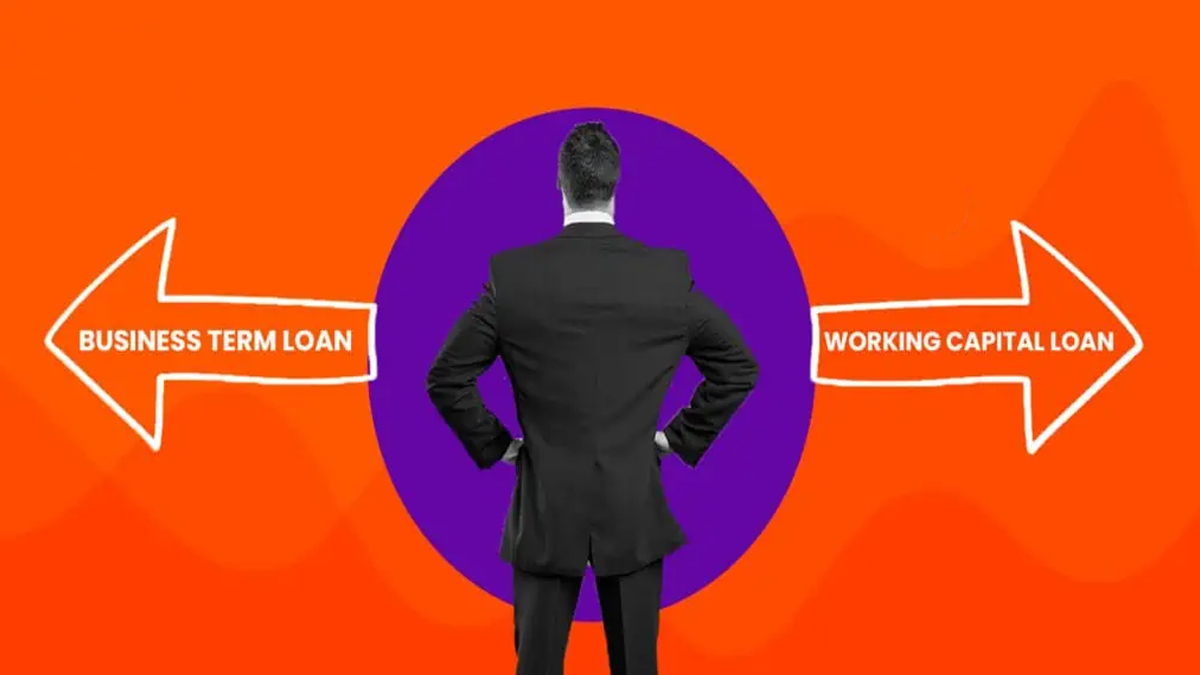
Most business owners treat their working capital limit like a safety net. It sits there, attached to their current account, ready to be drawn on whenever cash gets tight. And for routine operations, that arrangement works fine. But there are specific situations where a lump-sum loan disbursed quickly into your account is the smarter financial move. Knowing when to pick one over the other can save you real money and keep your business from getting stuck.
The Fundamental Difference People Overlook
A working capital limit, often structured as an overdraft or a revolving credit facility, gives you access to funds up to a pre-approved ceiling. You draw what you need, pay interest on what you use, and replenish it as receivables come in. It is designed for short-term, recurring needs like paying suppliers or covering payroll gaps.
A term loan disbursed quickly, on the other hand, drops a fixed amount into your account. You repay it in instalments over a set period, with a clear end date. The interest rate is typically fixed or at least predictable. These two products solve different problems, and treating them as interchangeable is where businesses get into trouble.
When Speed and Certainty Matter More Than Flexibility
Here’s a scenario that plays out constantly. A retailer gets an opportunity to buy inventory at a steep discount, but the supplier wants full payment within 48 hours. The retailer’s working capital limit is already partially drawn. The available balance might cover part of the order, but not all of it. Requesting a limit enhancement takes days, sometimes weeks, because the bank reassesses your financials.
An instant business loan solves this cleanly. You apply, get approval quickly, and the full amount lands in your account. You buy the inventory, sell it at full margin, and repay the loan over the next few months. The cost of interest on that loan is far less than the profit you would have lost by passing on the deal.
This pattern repeats across industries. A logistics company needs to repair a critical vehicle immediately. A restaurant has to replace kitchen equipment before the weekend rush. A manufacturer lands a large order but needs raw materials upfront. In each case, the need is urgent, specific, and finite. A revolving facility wasn’t built for these moments.
The Hidden Cost of Over-Relying on Working Capital Limits
There’s a psychological trap with revolving credit. Because it’s always available, business owners tend to lean on it for everything, including expenses that really should be financed separately. When you use your overdraft to fund a one-time capital purchase, you reduce the buffer available for daily operations. Then, when a genuine cash flow gap appears the following week, you’re scrambling.
Worse, many working capital limits come with annual renewal. If your financials have dipped, the bank can reduce your limit or decline renewal altogether. If you’ve been using the facility for purposes it wasn’t designed for, your utilisation patterns can actually work against you during the review.
A distinct term loan keeps your working capital limit clean. Your revolving facility handles day-to-day operations. Your loan handles the one-off expense. This separation makes your balance sheet easier to read and your banking relationship easier to manage.
Interest Rate Math That Favours Term Loans
Working capital limits often carry floating interest rates pegged to the bank’s benchmark. The rate adjusts, and over time, especially when monetary policy tightens, your cost of borrowing can creep up without you noticing because you’re only looking at the small daily interest debit.
A fixed-rate term loan gives you certainty. You know exactly what each instalment will be, which makes cash flow forecasting more accurate. For a specific expense with a known amount and a defined payback period, this predictability matters. You can map the repayment against the revenue that expense is expected to generate.
A working capital loan structured as a revolving facility makes sense when your borrowing needs fluctuate week to week. But when you know exactly how much you need and roughly how long it will take to pay back, a term product is almost always cheaper in total interest cost. The discipline of fixed repayments also prevents the slow balance creep that plagues overdraft users.
When Your Facility Is Maxed and Opportunity Knocks
Perhaps the most compelling case is the simplest one. Your existing limit is fully utilised. Business is good, money is coming in, but right now the account is stretched. A new opportunity appears. You can either let it pass or find additional funding fast.
Waiting for a limit increase is not a strategy when timing matters. Applying for a separate short-term loan, getting approval the same day or the next, and funding the opportunity directly is a concrete action with a measurable return. You are not adding long-term debt to your balance sheet. You are financing a specific transaction that pays for itself.
The smartest business owners don’t treat all credit as the same. They match the product to the need. Revolving facilities handle rhythm. Term loans handle moments. Getting that distinction right is one of the quieter advantages a well-run business holds over its competitors.

MAM
GUEST COLUMN: What consumers say vs what they do, the marketing blind spot
Why consumer intent doesn’t always translate into action
MUMBAI: In an era where data flows freely and consumer insights are available at unprecedented scale, marketing decisions are still often built on a fragile foundation, what consumers claim they will do. Yet, as markets grow more dynamic and choice becomes more context-driven, a critical disconnect continues to challenge brands: the gap between intention and action. This divergence, subtle yet consequential, has far-reaching implications for product strategy, demand forecasting, and innovation success. For Peshwa Acharya, IIT–IIM alumnus, former Reliance Retail and FMCG leader, and founder & CEO of Think As Consumer, understanding this “say–do gap” is not just an analytical exercise but a strategic imperative. In this piece, Acharya examines why traditional research methods fall short, how behavioural realities reshape consumer decision-making, and why bridging this gap is essential for building sustainable, consumer-centric growth.
Ask a consumer what they intend to buy, how they feel about a category, or which brand they prefer, and the answer is often clear and confident. Observe actual purchase behaviour, and the picture shifts. This disconnect, widely known as the “say–do gap,” sits at the heart of one of marketing’s most persistent blind spots.
At its simplest, the gap reflects the difference between stated intent and real-world action. Consumers articulate preferences in surveys, interviews, or feedback loops, yet behave differently when faced with price, availability, context, or habit. This divergence stems from how decisions are formed under real-world constraints.
The scale of the gap
The magnitude of this disconnect is significant enough to impact business outcomes. A study by DISQO found that 38 per cent of consumers misreport their digital shopping behaviour, highlighting how unreliable recall-based responses can be.
At the same time, marketers are struggling to reconcile different data streams. According to a recent NIQ CMO outlook, 54 per cent of CMOs report difficulty connecting data across sources, indicating that the challenge is not a lack of data but a lack of integration.
The consequences are visible in market performance. Industry estimates suggest that up to 85 per cent of new CPG products fail, often due to misreading consumer needs through incomplete or misleading insights.
The blind spot is clear. Marketing decisions are frequently built on what consumers say, while revenue outcomes are driven by what they actually do.
Where traditional research falls short
The divergence between what consumers say and what they do is often seen as inconsistency. In reality, the gap is between language and meaning. Consumers express decisions in rational, acceptable terms, while behaviour is shaped by trade-offs such as price, context, and social signalling.
This becomes evident in how categories are described. When consumers frame Ariel as a product for “special clothes,” the statement signals appreciation. The behaviour reveals price resistance. What appears as selective usage is, in reality, a constraint. Similarly, buyers of brands like BMW or Audi point to performance and engineering, but the decision is also driven by status and identity. Performance justifies the purchase. Brand perception drives it.
Behavioural science further explains this pattern. Consumers tend to overstate socially desirable behaviours, such as sustainability or health-conscious choices, while underreporting convenience-led or impulsive actions. Recall bias adds distortion, as past behaviour is often reconstructed rather than accurately remembered. As a result, stated preferences reflect aspiration, while actual behaviour reflects prioritisation under constraint.
These dynamics expose a limitation in traditional research. While surveys and focus groups capture attitudes effectively, they are often used to predict behaviour. This creates misalignment. Stated intent reflects assumed actions, whereas behavioural data reflects real decisions. When this distinction is overlooked, product strategy, demand forecasts, and innovation priorities risk drifting away from actual consumer behaviour.
Bridging the Gap: From listening to observing
Bridging this gap requires a shift in focus from data accumulation to data alignment. The objective is not to collect more inputs, but to connect what is already being captured. This means integrating attitudinal insights with behavioural signals across the consumer journey. Survey responses need to be read alongside transactional, digital, and in-market data to understand how intent translates into action. The emphasis moves from isolated interpretation to connected insight.
At the same time, static research models are being replaced with continuous tracking, as organisations move beyond one-time studies to build ongoing visibility into how decisions unfold in real conditions shaped by price, availability, and context. This makes it possible to pinpoint exactly where intent converts and where it collapses, revealing the thresholds that actually govern behaviour. Instead of inferring demand from stated preference, organisations can now see the conditions under which consumers follow through, delay, or switch, turning insight from assumption into observable reality.
The way forward
The say–do gap reflects how decisions are shaped under real-world constraints, but it is not noise, but a signal. Every divergence between intent and action reveals something fundamental, whether it is price sensitivity, the pull of habit over aspiration, or the influence of context at the moment of choice.
For organisations, the implication is structural. Competitive advantage will increasingly depend on the ability to interpret these signals within context, moving beyond stated preference as the primary input for decision-making. Companies that decode this gap gain precision, grounding strategy in observed patterns of action. Those who rely only on what consumers say risk operating on assumptions rather than reality.
In an environment defined by data abundance, the constraint is not access but clarity. Advantage will not come from hearing more, but from seeing clearly what consumers actually do, and using that visibility to drive sharper, more reliable decisions.
Note: The views expressed in this article are solely the author’s and do not necessarily reflect our own.