MAM
Bob Iger joins Thrive Capital as adviser after Disney exit
Former Disney CEO returns to VC firm, stays on as Disney adviser till 2026.
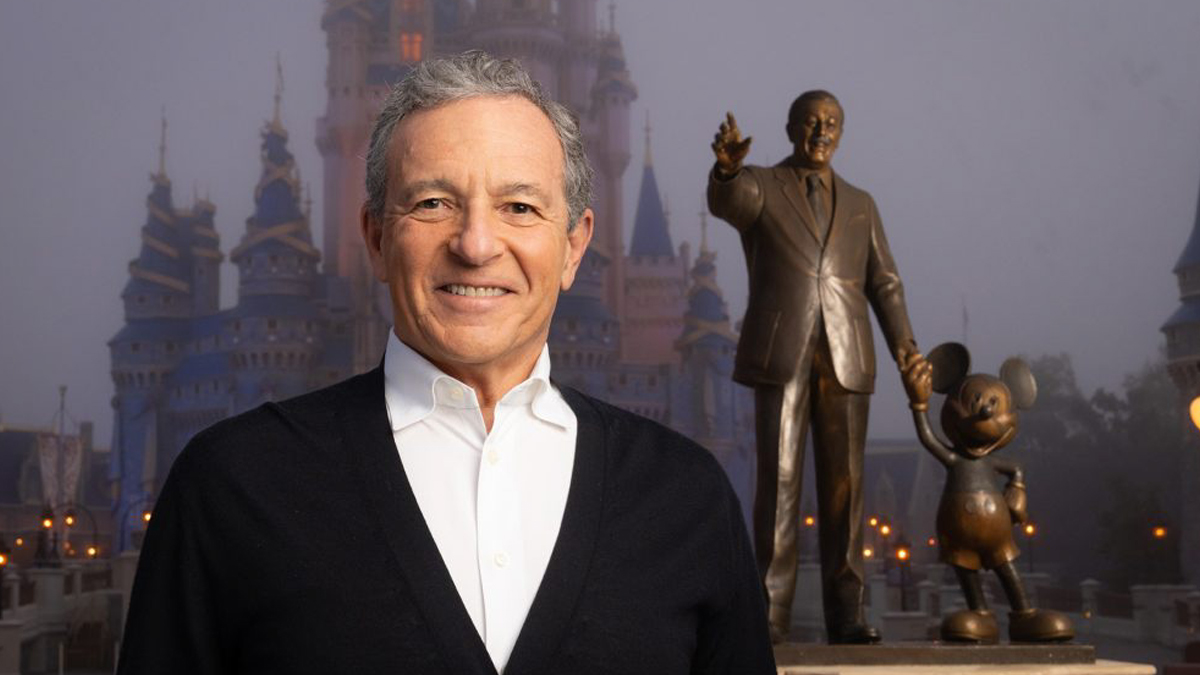
MUMBAI: From castles to capital, Bob Iger isn’t done building just changing the blueprint. Bob Iger has taken on an advisory role at Thrive Capital, marking a return to the New York-based venture firm he briefly joined in 2022. Founded in 2009 by Josh Kushner, Thrive Capital has been positioning itself at the intersection of technology and long-term value creation, an area where Iger’s experience in scaling global entertainment businesses is expected to add weight. Kushner, 40, welcomed Iger back, highlighting his ability to blend technology with human-centric storytelling, particularly in an era increasingly shaped by artificial intelligence.
Iger is no stranger to Thrive. He had earlier joined the firm as a venture partner in September 2022, after stepping down as CEO of The Walt Disney Company and concluding his tenure as executive chairman in 2021. That stint, however, was short-lived. In November 2022, Disney’s board brought him back to steady the ship, replacing Bob Chapek following a turbulent period for the company.
Now, with his latest exit from Disney’s top job last month, Iger appears to be revisiting the venture world, this time with a clearer runway. Still, the Disney chapter isn’t entirely closed. Under his agreement with the company, he will remain until the end of 2026 as a senior adviser to new CEO Josh D’Amaro and will continue to serve on the board for his current term.
The move comes as venture firms increasingly seek operators with deep industry experience to navigate what Kushner described as “the most consequential technology shift” of the era, driven by AI. For Iger, whose career has hinged on blending creativity with scale, the transition from Hollywood to high-growth investing seems less like a pivot and more like a plot twist.

MAM
Paramount set to acquire Warner Bros. Discovery in $81 billion deal
Shareholders back merger, combined entity could reshape streaming and studios.
MUMBAI: Lights, camera… consolidation, Hollywood’s latest blockbuster might be happening off-screen. Shareholders of Warner Bros. Discovery have voted in favour of selling the company to Paramount in a deal valued at $81 billion rising to nearly $111 billion including debt setting the stage for one of the biggest shake-ups in modern media. The proposed merger, still subject to regulatory approvals, would bring together a vast portfolio spanning HBO Max, CNN, and franchises such as Harry Potter under the same umbrella as Paramount’s own heavyweights, including Top Gun and CBS.
At the heart of the deal is streaming scale. Executives have indicated plans to combine HBO Max and Paramount+ into a single platform, potentially creating a stronger challenger to giants like Netflix and Amazon’s Prime Video. Current market data suggests HBO Max holds around 12 per cent of US on-demand subscriptions, compared to Paramount+’s 3 per cent, together still trailing Netflix’s 19 per cent and Disney’s combined 27 per cent via Disney+ and Hulu.
Paramount CEO David Ellison has signalled that while platforms may merge, HBO’s creative identity will remain intact, stating the brand should “stay HBO” even within a broader ecosystem.
Beyond streaming, the deal would redraw the map for film production. Combining two of Hollywood’s oldest studios Paramount Pictures and Warner Bros., the new entity aims to scale output to over 30 films annually, while maintaining a 45-day theatrical window. Warner Bros. currently commands around 21 per cent of the US box office, compared to Paramount’s 6 per cent, underscoring the strategic weight of the acquisition.
But scale comes with scrutiny. Critics warn that fewer players could mean reduced consumer choice, rising subscription costs, and potential job cuts as the combined company looks to streamline overlapping operations while managing billions in debt.
The news business, too, faces a reset. CNN would join forces at least structurally with Paramount-owned CBS, raising questions about editorial independence and positioning. The merger has already drawn political attention in the United States, particularly given perceived ties between the Ellison family and Donald Trump, though the company maintains that newsroom autonomy will be preserved.
If approved, the deal would mark another milestone in Hollywood’s consolidation wave shrinking the industry’s traditional “big six” studios to a “big four”, with Paramount joining Disney, Universal, and Sony at the top table.
In an industry built on storytelling, this merger may well become its most consequential plot twist yet.