I&B Ministry
India’s telecom market grows to 1.33 billion, up 0.70 per cent monthly
Broadband subscriptions surge as Reliance Jio and Bharti Airtel lead the 1.33 billion connection charge

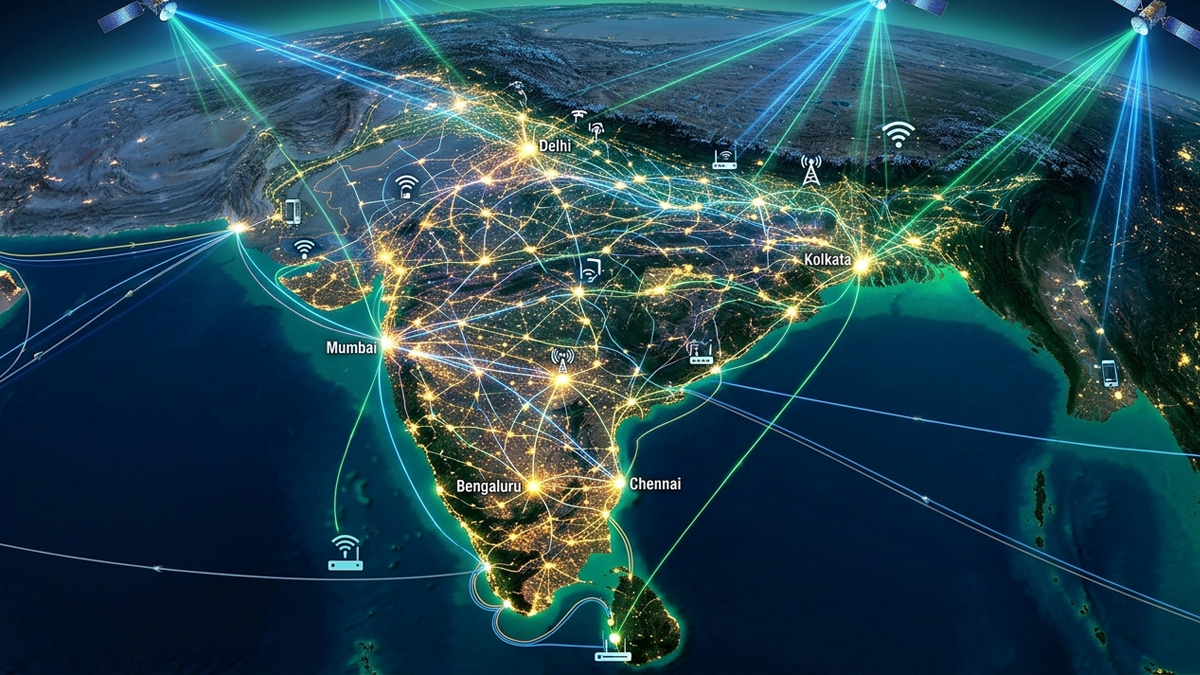
NEW DELHI: India’s digital landscape is ringing with success as the latest data from the Ministry of Communications shows a nation more connected than ever. By the end of March 2026, the total telephone subscriber base climbed to 1,330.58 million, marking a steady monthly growth of 0.70 per cent from February’s 1,321.31 million.
Data consumption continues its upward march, with total broadband subscribers, across both wired and wireless connections, reaching 1,065.88 million. The segment grew by 0.65 per cent in March alone, supported by 1,520 reporting operators.
The market remains firmly led by a familiar duo. Reliance Jio Infocomm Ltd. tops the chart with 523.44 million broadband users, commanding a 49.11 per cent market share. Bharti Airtel Ltd. follows with 368.84 million subscribers and a 34.60 per cent share. Meanwhile, Vodafone Idea Ltd. and Bharat Sanchar Nigam Limited account for 12.09 per cent and 2.57 per cent respectively.

India’s wireless subscriber base reached 1,282.33 million in March. Urban areas continue to dominate with 735.73 million users, though rural connectivity is steadily catching up at 546.60 million.
Growth momentum was particularly strong for Bharti Airtel Ltd., which added 5.09 million wireless subscribers during the month. Reliance Jio Infocomm Ltd. followed with an addition of 3.22 million users.
The wireline segment also edged up, reaching 48.25 million subscribers. Reliance Jio Infocomm Ltd. led the gains with 188,698 net additions, while Mahanagar Telephone Nigam Limited saw a decline of 129,276 subscribers.
Consumer churn remains active, with around 14.63 million users submitting Mobile Number Portability requests in March to switch operators.
Tele-density, which measures connections per 100 people, stood at 93.26 per cent nationwide. Regional disparities, however, remain pronounced. Delhi leads with a tele-density of 361.50 per cent, while Bihar trails at 63.54 per cent. Rural tele-density stands at 60.46 per cent, compared with urban levels of 151.47 per cent.
Connectivity is increasingly extending beyond individuals. Machine-to-Machine cellular connections, a backbone for the Internet of Things, reached 123.88 million. Bharti Airtel Ltd. dominates this segment with a 62.15 per cent share, followed by Reliance Jio Infocomm Ltd. at 18.76 per cent.
As 5G fixed wireless access gathers pace, now touching 12.32 million subscribers, India’s telecom story shows no signs of dropping the call anytime soon.






I&B Ministry
India rolls out Rs 203 crore TDIP scheme to boost 6G push
Revised policy widens access for startups, boosts global telecom standards play
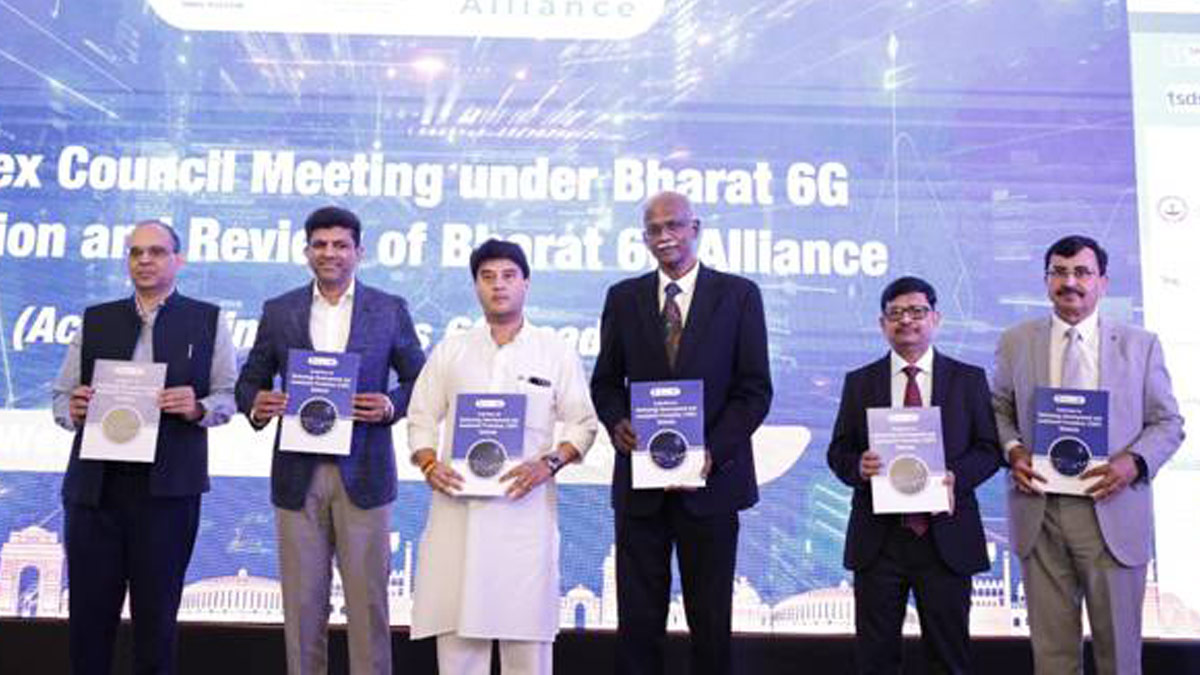
NEW DELHI: India is doubling down on its telecom ambitions with a revamped Technology Development and Investment Promotion scheme, designed to help the country move from participant to power player in global standards.
The Ministry of Communications on Tuesday unveiled revised guidelines for the TDIP scheme, committing Rs 203 crore for the 2026 to 2031 period. The move aims to strengthen India’s presence in international telecom forums while accelerating homegrown innovation in next-generation technologies, including 5G Advanced and 6G.
At the launch, Ministry of Communications union minister for communications and development of north eastern region Jyotiraditya M. Scindia said the updated framework is intended to give Indian players a stronger voice in shaping global telecom rules.
The scheme focuses heavily on increasing participation in key global bodies such as the International Telecommunication Union, 3GPP and oneM2M. Financial support will be provided for attending international meetings, submitting technical proposals, taking leadership roles, and even hosting global events in India.
The idea is straightforward. If India helps write the rules, its technologies stand a better chance of going global.
Beyond policy rooms and conference tables, the revised scheme casts a wider net across the ecosystem. Startups, MSMEs, academia and research institutions are now explicitly included, opening the door for broader collaboration and faster innovation cycles. Pilot projects, proof-of-concept initiatives and real-world demonstrations will also receive support, helping ideas move from lab to market.
Supporting the rollout will be institutions such as Telecommunications Standards Development Society India, Telecom Centres of Excellence India and Telecommunications Consultants India Limited. These bodies will coordinate efforts, build capacity and ensure industry participation aligns with global opportunities.
The initiative ties in with broader efforts by the Department of Telecommunications, including programmes like the Telecom Technology Development Fund and the Bharat 6G Mission, forming a more cohesive push towards future-ready networks.
Also present at the event were Ministry of Communications minister of state for communications and rural development Chandra Sekhar Pemmasani and Department of Telecommunications secretary (telecommunications) and chairman digital communications commission Amit Agrawal.
With this update, India is not just looking to keep pace with global telecom trends. It is aiming to help define them.