MAM
Events with purpose: Mudit Jain’s blueprint for lasting brand impact
Mudit Jain has spent a decade making events that do more than look good, and he has opinions about your acrylic booth.

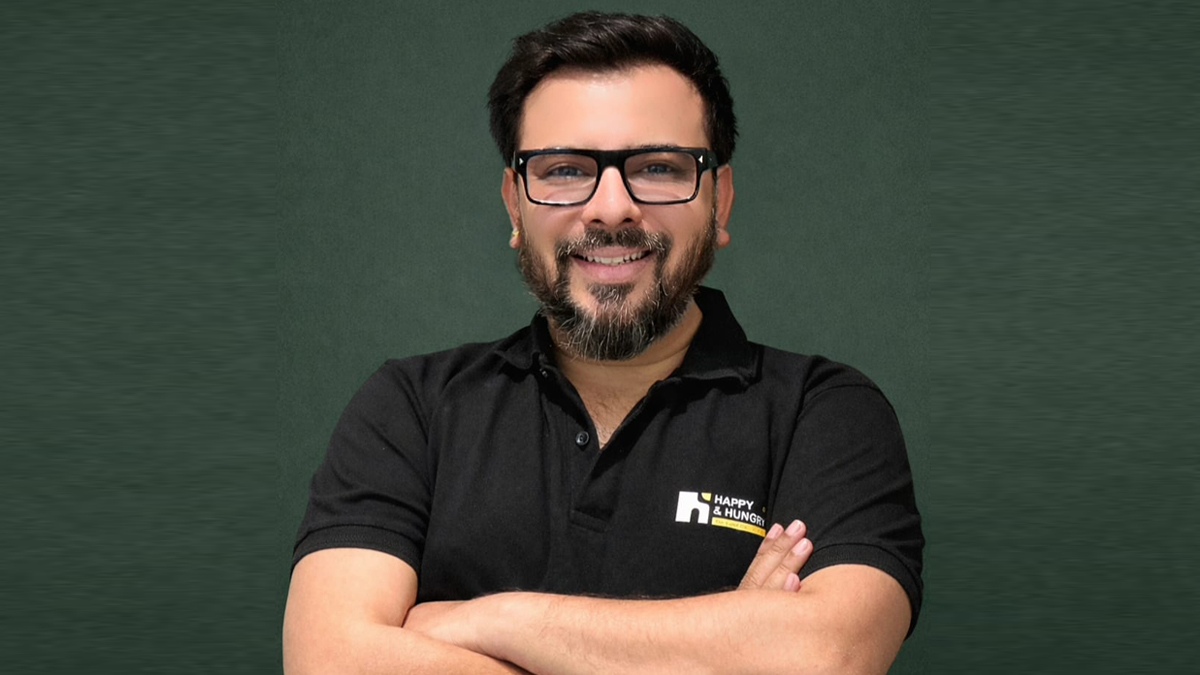
MUMBAI: There is a particular kind of event that Mudit Jain has seen too many times. The venue is stunning. The production is flawless. The lighting is exactly right. And then the doors close, the guests go home, and the brand has nothing to show for it except a very expensive set of photographs nobody will look at twice. “A beautiful event without measurable impact,” he says, with the weariness of someone who has watched this happen more often than he should have, “is just an expensive photo opportunity.”
Jain is the founder of Happy & Hungry – The Event Co., and he has spent the better part of a decade thinking about what live experiences are actually for. Not how they look, but what they do. It is a distinction that sounds obvious until you are standing in front of a client who wants something “never seen before” by next Tuesday on a tight budget. At that point, he notes, he tends to drink an extra coffee.
“The most effective activations are the ones where tech feels intuitive and enhances the story rather than competing with it.”
The world of experiential marketing has, in recent years, developed something of a technology obsession. AR, AI, immersive screens, interactive installations. Jain is not against any of it; far from it. But he is acutely alert to the difference between technology that serves a story and technology that simply shows up and expects to be applauded. “The real opportunity now is to use technology more meaningfully,” he says, “not just for novelty, but to deepen engagement.” When it works, it is invisible in the best possible way, and the audience is too absorbed in the experience to notice the mechanism behind it. When it does not, it competes with the very story it was meant to tell.
And then, sometimes, it simply stops working ten minutes before the gates open.
This, for Jain, is not a hypothetical. Live events are, by their nature, unforgiving environments. “Technology has elevated live events significantly, but in our industry, preparedness is everything,” he says. His philosophy is not to shy away from ambitious tech; it is to build resilience around it. Strong pre-testing, backup systems, and a team that can pivot under pressure without the audience ever knowing something went sideways. The experience, he insists, must remain seamless regardless of what is happening behind the curtain.
“If the physical experience lacks depth, the engagement feels superficial.”
For all the screens, sensors, and smart activations, Jain believes there is one thing no amount of technology has ever successfully replaced: the physical space itself. “Spatial storytelling through physical design,” he says without hesitation. The way a booth flows, how materials are layered, and the path a guest naturally takes through a room without being told to. “You can add screens, AR, or interactive layers, but if the physical experience lacks depth, the engagement feels superficial.” A well-crafted space, he argues, guides behaviour. It creates pauses, builds curiosity, and shapes how a brand is remembered long after the event is over. That is not something a projection can do on its own.
It is also why he cares so much about what the space is made of. Sustainability, in the events industry, tends to get treated as a brief to the client rather than a value built into the work, and Jain has spent considerable energy trying to change that. The conversations, he admits, are not always easy. “The toughest part is often convincing clients that sustainability does not mean turning their event into a school science project.” The perception that eco-friendly means dull, basic, or less premium dies hard, especially when the client has their heart set on glossy acrylic and single-use builds that catch the light beautifully and end up in a skip by midnight.
Once he shows them what reusable modular structures and smart material choices can actually look like, the resistance usually fades. But getting there takes patience and a certain willingness to hold the line.
“The goal should be progress over perfection.”
True zero-waste events, he will tell you plainly, are not yet a reality in India. But significant waste reduction is absolutely possible, if the intent is there. “With better planning, reusable setups, digital communication, waste segregation, and responsible vendor choices, we can drastically reduce event waste,” he says. “The industry just needs stronger intent and accountability.” At Happy & Hungry, that intent has been formalised into something called the ROOT framework: Reduce, Optimize, Offset, and Transform. It is designed to make sustainable choices a starting point in the design process rather than an afterthought bolted on at the end.
The biggest obstacle, he says, is not technology or budget. It is coordination. “The fragmented vendor ecosystem” is his answer when asked what most reliably derails a genuinely sustainable event. One link in the chain falls out of alignment, whether it is last-minute printing, poor waste collection, or a venue that simply does not share the brief, and the whole thing unravels. It is a mindset problem as much as a logistics one. And mindset, as anyone in this industry will tell you, is the hardest thing to change.
Assuming you have the space right, the materials right, the technology working, and the vendors aligned, you still face the hardest challenge of all: keeping someone’s attention for more than sixty seconds in an age engineered for distraction. Jain is pragmatic about this. “Today’s audiences are quick to scroll, but they still value experiences that feel personal and immersive.” The answer, for him, is not to fight the scroll; it is to design something worth stopping for. Visual impact combined with genuine interaction, sensory elements, and storytelling touchpoints that invite people to explore rather than simply observe. The goal is not the first impression. It is everything that happens after it.
“The most successful campaigns today balance innovation with authenticity.”
Ten years in, Jain has watched enough trends arrive, peak, and overstay their welcome to have developed a fine-tuned sense of when something is serving brands and when brands are merely serving something else. The current fashion for designing experiences purely for social media moments, the perfectly lit installation that looks extraordinary in a reel and evaporates from memory forty-eight hours later, is something he would quietly like to see the industry outgrow. “The most successful campaigns today are the ones that balance innovation with authenticity and create genuine, lasting engagement,” he says. Not the kind that photographs well, but the kind that stays with you.
The high-tech immersive screen or the beautifully handcrafted giveaway? We ask him to choose. He refuses, cheerfully. “It always comes down to the brand objective and audience.” Technology creates scale and impact; physical touchpoints create lasting recall. The smartest approach is understanding which combination creates the strongest connection for that particular brand in that particular moment. It is not a hedge; it is the answer of someone who has thought about this long enough to know that the question itself is the wrong one.
What Mudit Jain is really after, in the end, is not the beautiful event. It is the one that works, one that moves people through a space, leaves something behind, and gives the client something worth measuring. Everything else, however spectacular, is just an expensive photo opportunity.






