MAM
Auto retail hits record February with 24.09 lakh units
Overall sales surge 25.62 per cent YoY, 2W, PV, CV, 3W and tractors set new February highs.

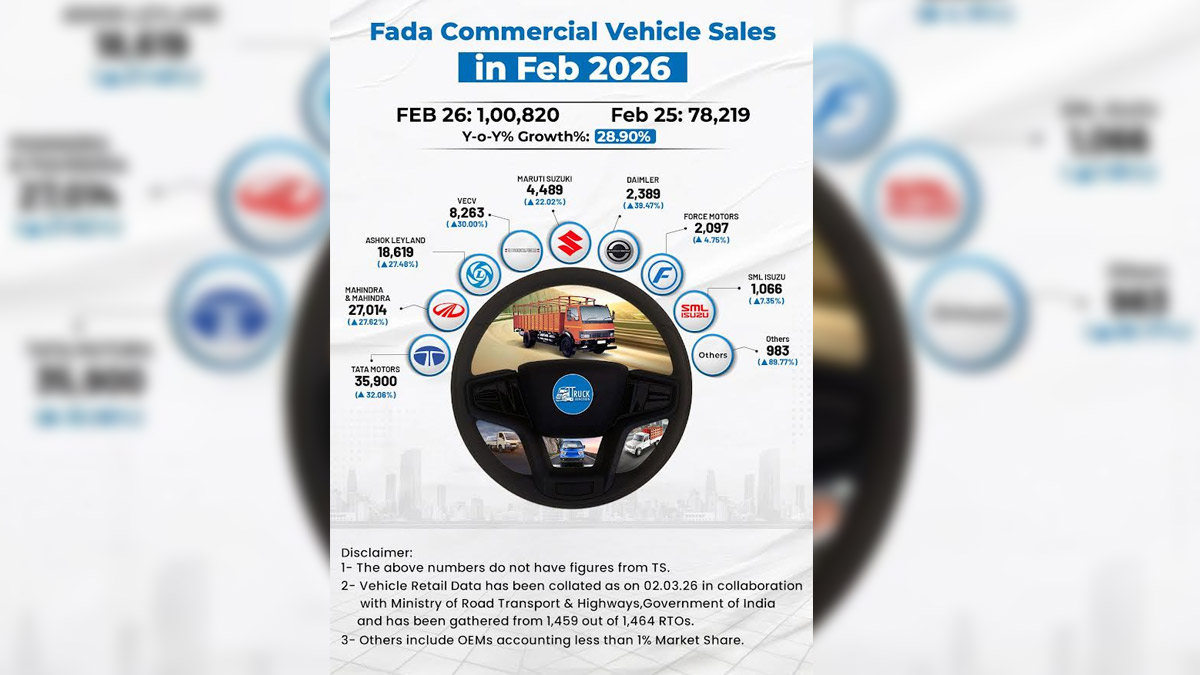
MUMBAI: February 2026 just floored the accelerator because when auto retail clocks its best-ever month, even the showroom floors feel the need for speed. The Federation of Automobile Dealers Associations (FADA) released February 2026 retail data on 5 March, revealing a landmark performance across segments. Total vehicle retails reached 24,09,362 units, up 25.62 per cent year-on-year, marking the strongest February on record for overall retail, two-wheelers (17,00,505 units, +25.02 per cent), passenger vehicles (3,94,768 units, +26.12 per cent), commercial vehicles (1,00,820 units, +28.89 per cent), three-wheelers (1,17,130 units, +24.39 per cent) and tractors (89,418 units, +36.35 per cent). Construction equipment was the lone exception, dipping 1.22% YoY to 6,721 units.
FADA president C S Vigneshwar said, “Feb’26 has turned out to be a landmark month for the Indian auto retail sector, further strengthening the positive momentum seen after the GST 2.0 announcement. Despite being a shorter month, the industry delivered an exceptional performance.”
Growth was broad-based. Two-wheelers saw urban markets rise 28.96 per cent YoY and rural 22.16 per cent YoY, driven by improved rural liquidity, attractive schemes and the marriage season. Passenger vehicles showed rural growth (34.21 per cent YoY) outpacing urban (21.12 per cent YoY), supporting small-car demand alongside continued SUV strength. Commercial vehicles benefited from freight availability, e-commerce activity and infrastructure push.

Inventory signals improved significantly in passenger vehicles, with levels dropping to 27–29 days closer to FADA’s recommended 21-day benchmark indicating healthier wholesale-retail alignment.
Looking ahead, dealer sentiment remains positive. For March 2026, 75.51 per cent of dealers expect growth, 19.90 per cent foresee stability and only 4.59 per cent anticipate decline, supported by festivals (Navratri, Ramzan, Ugadi, Gudi Padwa, Eid) and financial year-end buying. Over the next three months (March–May 2026), 67.35 per cent expect growth (down from earlier optimism), 27.55 per cent flat and 5.10 per cent de-growth, pointing to a shift from sharp rebound to more stable expansion.
In a market where every segment is revving up, February 2026 didn’t just break records, it proved that when policy tailwinds meet rural recovery and retail discipline, the Indian auto story accelerates into overdrive.


AD Agencies
Abhay Duggal joins JioStar as director of Hindi GEC ad sales
The streaming giant brings in a seasoned revenue hand as the battle for Hindi television advertising heats up
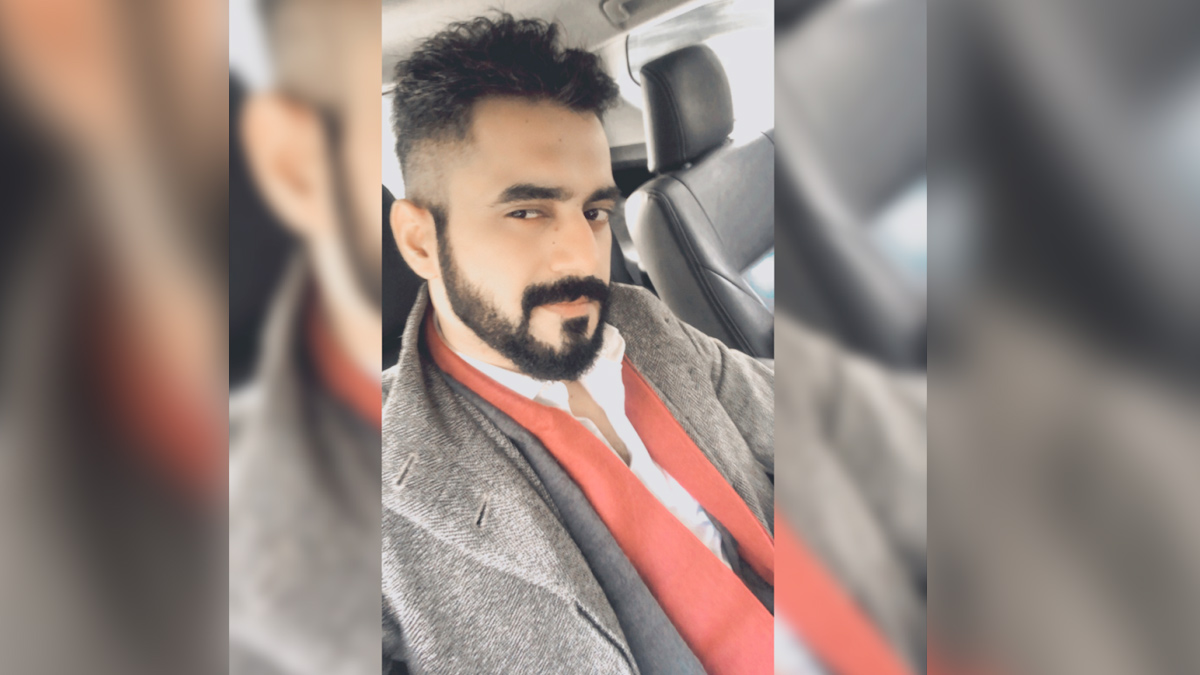
MUMBAI: Abhay Duggal has a new desk, and JioStar has a new weapon. The media and entertainment veteran has joined JioStar as director of entertainment ad sales for Hindi general entertainment channels, adding 17 years of hard-won revenue experience to one of India’s most powerful broadcasting operations.
Duggal is no stranger to big portfolios or bruising markets. Before joining JioStar, he spent a brief stint at Republic World as deputy general manager and north regional head for ad sales. Before that, he put in three years at Enterr10 Television, where he ran the north region for Dangal TV and Dangal 2, two of India’s leading free-to-air Hindi channels. The north alone accounted for more than 50 per cent of total channel revenue on his watch, a number that tends to get attention in any sales meeting.
His longest stint was at Zee Entertainment Enterprises, where he spent over six years rising to associate director of sales. There he commanded the Hindi movies cluster across seven channels, owned more than half of north India’s revenue across flagship properties including Zee TV and &TV, and closed marquee sponsorships across the Indian Premier League, Zee Rishtey Awards and Dance India Dance. He also handled monetisation for the English movies and entertainment cluster and the global news channel WION, a portfolio that would stretch most sales teams twice his size.
Earlier in his career Duggal closed what was then a Rs 3 crore single deal at Reliance Broadcast Network, one of the largest in Indian radio at the time, before that he helped launch and monetise JAINHITS, India’s first HITS-based cable and satellite platform.
His edge, by his own account, lies in marrying data and instinct: translating audience trends, inventory signals and client demands into long-term partnerships built on cost-per-rating-point discipline rather than short-term deal chasing. In a media landscape being reshaped by streaming, fragmented attention and AI-driven advertising, that kind of rigour is increasingly rare and increasingly valuable.
JioStar, which blends the scale of Reliance’s Jio platform with the content firepower of Star, is doubling down on its advertising business at precisely the moment the Hindi GEC market is getting more competitive. Bringing in someone who has spent nearly two decades doing exactly this, across some of India’s most watched channels, is a pointed statement of intent. Duggal has spent his career turning audiences into revenue. JioStar is clearly betting he can do it again, and bigger.