Brands
G-Shock launches Origami-inspired DW-5600RGM and DW-6900RGM series
New models blend Japanese paper-folding art with shock-resistant toughness, priced at Rs 11,995 in India.
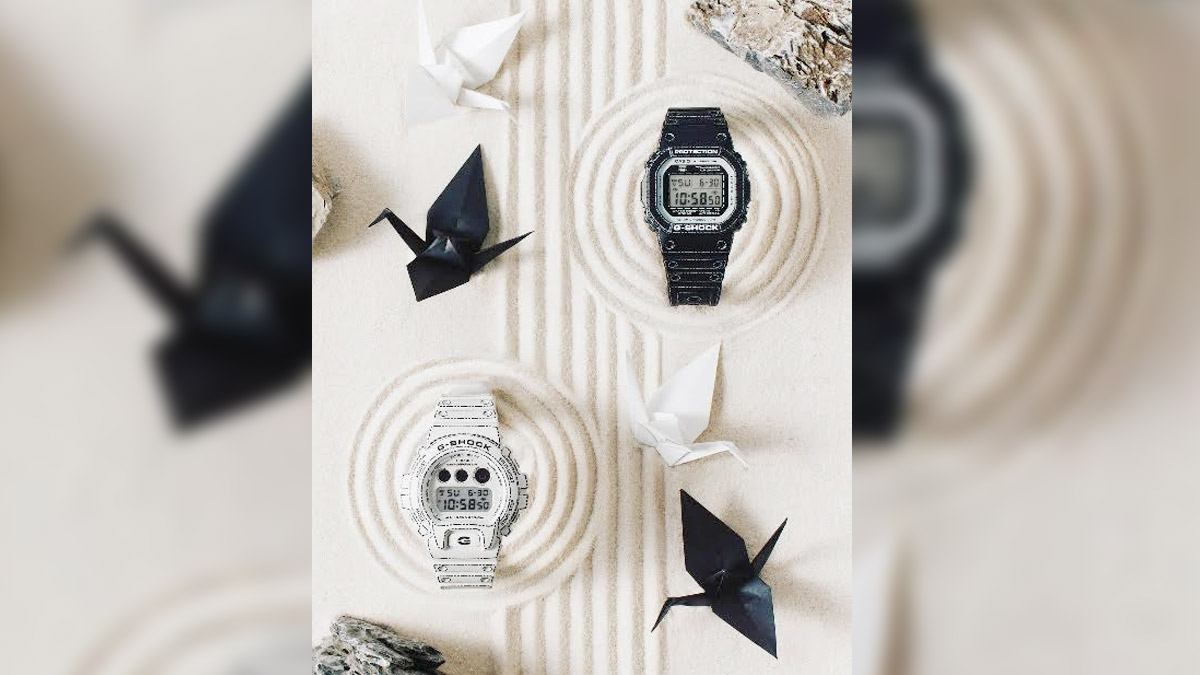
MUMBAI: G-Shock just folded time into art because when your watch draws from origami, even the seconds look ready to unfold into something unbreakable. Casio’s legendary toughness brand has dropped its latest statement pieces in India, the DW-5600RGM and DW-6900RGM series, inspired by the ancient Japanese art of paper folding. Launched on 23 February 2026, the collection fuses origami’s precision, creativity, and transformation with G-Shock’s signature shock resistance turning a watch into a wearable nod to both heritage and hard knocks.
The designs feature crisp fold-pattern motifs across the bezel and band, textured to mimic traditional washi paper, plus subtle dotted lines that echo valley and mountain creases. A crane engraving graces the back case and LED backlight, a timeless origami symbol of longevity, hope, and limitless potential. Both models stay true to their Japanese roots with “Made in Japan” production and specially themed packaging.
Offered in two colourways deep black (DW-5600RGM-1DR) for the classic square-face silhouette and warm off-white (DW-6900RGM-5DR) for the bolder round-face look, the watches keep G-Shock’s core toughness intact, shock-resistant structure, 200-metre water resistance, Super Illuminator LED backlight, 1/100-second stopwatch, countdown timer, multi-function alarm, and full auto-calendar through 2099. A long-life battery lasts approximately five years.
In a nod to sustainability, the bezel and band use bio-based resin from renewable sources, cutting environmental impact without sacrificing durability or performance.
Priced at Rs 11,995 (inclusive of all taxes), the series is now available at Casio India outlets, G-Shock exclusive stores, and online. For anyone who wants a timepiece that’s equal parts cultural whisper and street-ready resilience, these origami-infused G-Shocks fold elegance and toughness into one very wearable package proving that sometimes the strongest things start as a single sheet of inspiration.

Brands
Maharashtra panel orders Lodha to refund Rs 5 crore to homebuyers
Consumer court flags unfair practices in long-running property dispute case
MUMBAI: In a sharp rebuke to one of India’s biggest real estate players, the Maharashtra State Consumer Disputes Redressal Commission has directed Macrotech Developers to refund nearly Rs 5 crore to a senior citizen couple, Uttam and Anindita Chatterjee. The ruling, delivered on March 13, 2026, calls out the developer for “deficiency in service” and “unfair trade practices”, bringing closure to a dispute that has stretched over a decade.
The case traces back to 2015, when the couple booked a 3-BHK flat at World Towers in Lower Parel for Rs 12.22 crore, with possession promised within a year. What followed was a series of changes that complicated matters. After deciding to exit the project, they were persuaded to shift to a 4-BHK in another development priced at Rs 8 crore, with delivery scheduled for 2018. However, within months, the price was allegedly increased to Rs 10 crore. After demonetisation reshaped the market, similar flats were reportedly being offered at lower prices, but the couple were not given the benefit.
Despite paying over Rs 2.83 crore, the couple neither received possession nor clarity. Instead, in 2018, the developer unilaterally cancelled the booking, retained part of the amount as earnest money, and argued that the buyers were investors rather than consumers. The commission rejected this claim, observing that casual references to “investment” do not take away consumer rights when the purchase intent is residential.
The bench also held that the developer could not penalise buyers for payment delays while failing to meet its own delivery commitments. It noted the lack of formal documentation for revised terms and termed the prolonged retention of funds without delivering a home as exploitative.
As part of its order, the commission directed the developer to refund Rs 2.83 crore paid by the couple, along with interest at 10 per cent per annum, amounting to around Rs 2.12 crore. In addition, Rs 1 lakh has been awarded for mental agony and Rs 50,000 towards litigation costs, taking the total payout to over Rs 5 crore. The developer has been asked to comply within two months.
For now, the ruling serves as a reminder that in real estate, shifting terms and delayed promises can carry a significant cost.