MAM
Coca-Cola turns plastic waste into Mela structures
Maidaan Saaf brings recycled rooms towers and 25000 liners to 8 crore pilgrims.

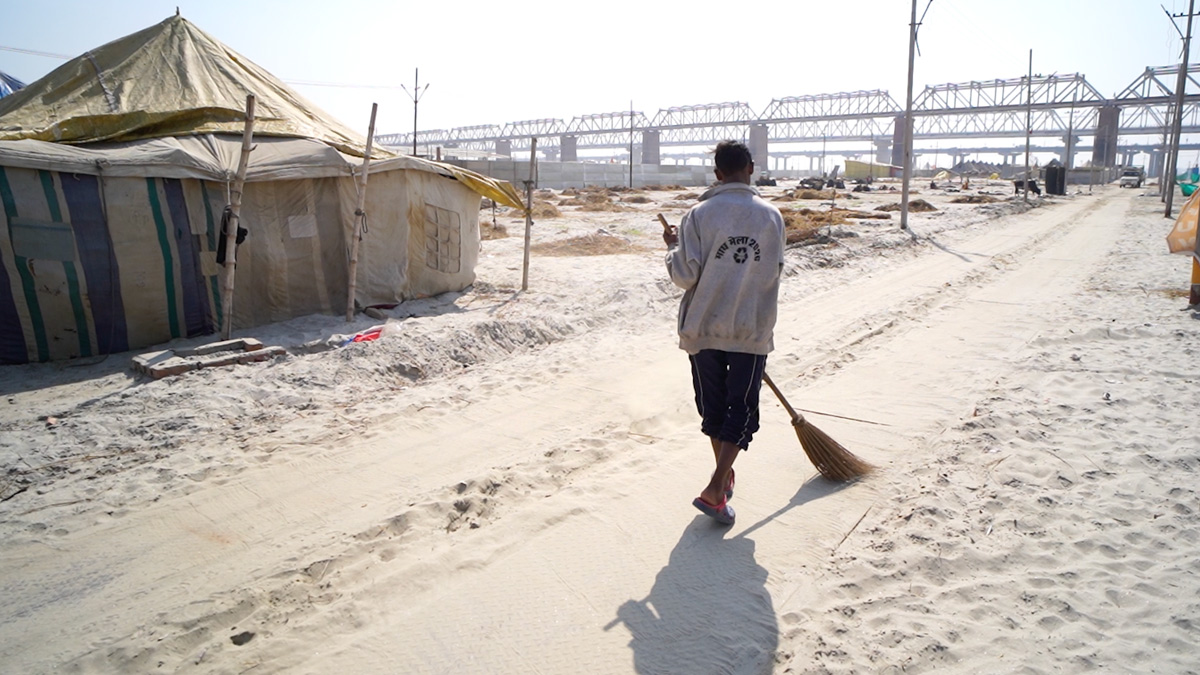
MUMBAI: At a gathering where faith flows as freely as the Ganga, sustainability has quietly taken root underfoot.
At Magh Mela 2026 in Prayagraj, one of India’s largest annual congregations, recycled plastic waste is no longer a problem to be managed but a resource reshaped into public infrastructure. The effort comes under the Maidaan Saaf campaign led by Anandana – The Coca-Cola India Foundation, in collaboration with implementation partner Econscious.
Held from 3 January to 15 February 2026, the 44 day congregation is expected to draw nearly 8 crore visitors. For that duration, the ghats transform into a sprawling temporary city, complete with bathing areas, walkways and service hubs that must withstand relentless footfall, shifting weather and round the clock use.

This year, part of that city has been built from what was once discarded. Across the Mela grounds, 20 changing rooms, four police watch towers, public benches and 25000 dustbin liners manufactured from recycled plastic waste have been installed. Positioned strategically along bathing zones and key pathways, the structures are designed to support crowd movement while reinforcing organised waste collection at source.
The idea is not merely to place bins, but to make responsible disposal visible and intuitive. Econscious co-founder Vaibhav Verma said the intention was to integrate waste management into spaces that pilgrims already use throughout the Mela. Visible infrastructure, he noted, can act as behavioural cues, nudging people towards cleaner practices over time.
For Coca-Cola India, the focus is on embedding waste handling into the daily rhythm of the event rather than treating it as an afterthought. Coca-Cola India vice president of public affairs, communications and sustainability for Southwest Asia Devyani R L Rana described Magh Mela as a unique cultural congregation that operates like a full-fledged city for several weeks. Given its scale, she said, the priority is to ensure that waste systems are practical, relevant to local conditions and consistently maintained.
The initiative draws from operational learnings at earlier large-scale gatherings, including Maha Kumbh 2025, where coordination mechanisms were developed to ensure that facilities remained functional under sustained pressure.
In a place where millions gather for spiritual renewal, the presence of recycled plastic changing rooms and watch towers may not be the headline attraction. Yet, in a congregation of nearly 8 crore people, small shifts in infrastructure can create significant impact.
At Magh Mela 2026, the message is subtle but clear, what was once waste can, quite literally, support the weight of a city.

MAM
DGTOOHL partners Magnite to scale programmatic DOOH in India
Tie-up aims to boost transparency and real-time access in outdoor ads
NEW DELHI: DGTOOHL, a product of Mobiyoung, has entered into a strategic partnership with Magnite to expand programmatic digital out-of-home advertising capabilities in India, as the sector looks to modernise and align more closely with digital media standards.
The collaboration is aimed at addressing long-standing inefficiencies in the outdoor advertising ecosystem, where manual processes and limited transparency have often made campaign execution difficult to track and measure. By introducing programmatic integration, the partnership seeks to bring real-time visibility, improved accountability and data-led decision-making to the medium.
Outdoor advertising in India has traditionally lagged behind digital channels in terms of measurement and optimisation. The move towards programmatic DOOH is expected to change that, enabling advertisers to monitor, audit and refine campaigns with greater precision.
Under the partnership, Magnite will provide the infrastructure to connect DOOH inventory with global demand-side platforms, allowing advertisers to plan and activate outdoor campaigns programmatically, much like they do across mobile, web and connected TV.
“Programmatic DOOH is bringing a much-needed shift in how outdoor advertising is planned and executed,” said DGTOOHL co-founder and CTO Mayank Sharma. “By introducing transparency and real-time capabilities, we are enabling advertisers to move beyond traditional limitations and adopt a more measurable, data-led approach.”
DGTOOHL will focus on aggregating and streamlining access to DOOH media inventory, while Magnite will handle real-time transactions and demand integration, creating a more seamless buying experience for brands and agencies.
The timing reflects a broader industry shift. As programmatic buying becomes standard across digital formats, DOOH is increasingly being seen as the next frontier, allowing brands to extend digital strategies into physical environments. This integration enables more cohesive, cross-channel campaigns, where outdoor advertising complements online and CTV efforts to boost reach and recall.
“As advertisers look for unified and measurable media solutions, programmatic DOOH offers a strong opportunity to extend digital strategies into the physical world,” said Magnite senior account manager Jerit Kunjumon.
Industries such as FMCG, real estate, automotive and retail, traditionally heavy users of outdoor media, are expected to be among the early adopters of programmatic DOOH in India.
The partnership also promises operational benefits, including near real-time campaign activation, reduced reliance on intermediaries and improved monitoring of campaign performance.
As digital and physical media ecosystems continue to converge, the collaboration between DGTOOHL and Magnite signals a step towards making outdoor advertising more accountable, scalable and aligned with the expectations of modern marketers.