Brands
Tata Steel posts strong Q3 growth as India drives record profits

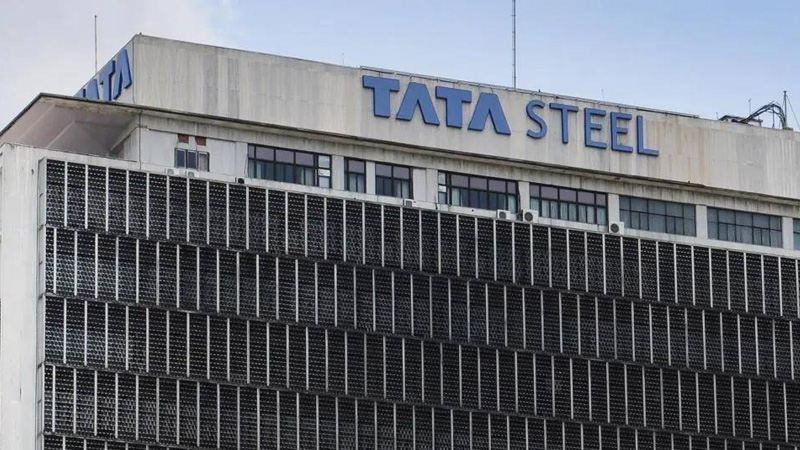
MUMBAI: While the rest of the world’s steel markets were feeling a bit rusty, Tata Steel proved it has a backbone of iron. The company’s latest financial results show it is well and truly metalling with success, reporting a consolidated Ebitda of Rs 8,309 crores for the October to December 2025 quarter. This performance helped the group’s nine-month earnings reach a staggering Rs 24,894 crores, marking a 31 per cent year-on-year improvement despite a global environment that remains, quite literally, under pressure.
The star of the show remains the Indian business, which carried the heavy lifting for the group. For the first time in its history, Tata Steel India surpassed the 6-million-ton delivery mark in a single quarter. Crude steel production in the region rose 12 per cent to 6.34 million tons, while deliveries grew even faster at 14 per cent year-on-year.
This surge in volume translated into revenues of Rs 35,725 crores for the quarter, with an Ebitda margin of 23 per cent. The company’s automotive segment saw a 20 per cent jump in volumes, and its digital platforms, Aashiyana and DigECA, recorded a Gross Merchandise Value of Rs 2,380 crores, up 68 per cent compared to the previous year.
While India is firing on all cylinders, the European operations present a more tempered picture. In the Netherlands, revenues hit Rs 11,572 crores for the quarter, with Ebitda nearly tripling over the nine-month period to Rs 1,800 crores.
Across the English Channel, the UK operations are still cooling down. Tata Steel UK reported a quarterly Ebitda loss of Rs 730 crores on revenues of Rs 5,665 crores. Deliveries in the UK stood at 0.52 million tons, hampered by what the company described as “subdued demand and steady imports”.
To keep the balance sheet as stainless as its products, Tata Steel has been on a rigorous cost-transformation diet. The program delivered savings of roughly Rs 3,000 crores this quarter alone, bringing the nine-month total to Rs 8,600 crores.
This fiscal discipline is paying dividends elsewhere. The group’s net debt declined by Rs 5,206 crores during the quarter to finish at Rs 81,834 crores. Total group liquidity remains robust at Rs 44,062 crores.
The company isn’t just resting on its girders; it is actively expanding. Capital expenditure for the quarter hit Rs 3,291 crores, with major projects including the 4.8 MTPA expansion at Neelachal Ispat Nigam Limited (NINL) and a new 0.75 MTPA electric arc furnace in Ludhiana.
“Our global operating environment continues to be shaped by tariffs and geopolitical shifts,” noted CEO and managing director T. V. Narendran. Despite the flood of Chinese exports hitting a record 119 million tons, Tata Steel appears to have found the right alloy of cost control and domestic growth to keep its momentum rolling.