Brands
Reliance Consumer takes majority stake in Australia’s Goodness Group
MUMBAI: The FMCG arm of Reliance Industries has acquired a majority stake in Australia-based Goodness Group Global, marking its entry into the country’s consumer goods market and extending its ambitions well beyond India and its neighbourhood.
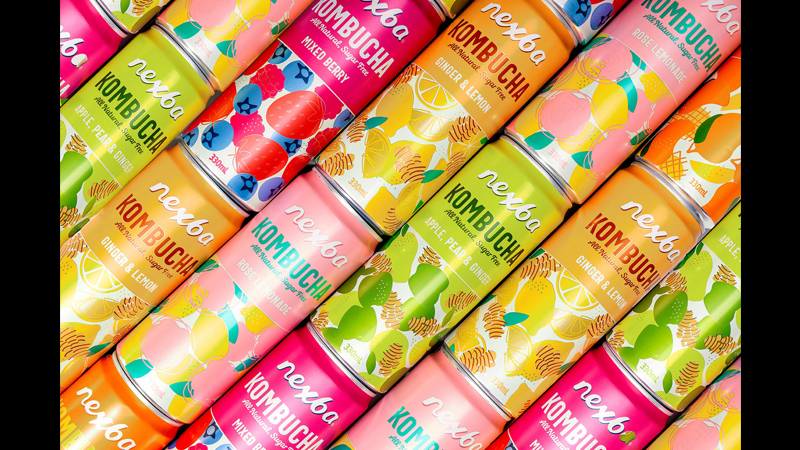
The deal hands Reliance Consumer Products Limited control of a business best known for Nexba, a “better-for-you” beverage brand built around gut health, and Pace, a hydration drink co-created with Australian cricket captain Pat Cummins. Financial terms were not disclosed.
The acquisition adds Australia to a growing list of overseas markets for Reliance Consumer, which has already expanded into the UAE, Qatar, Oman, Bahrain, Nepal and Sri Lanka. With Goodness Group under its wing, the company plans to push Nexba and Pace into new markets, including India, using its distribution scale and supply-chain heft.
For Reliance Consumer, the move sharpens its focus on health-led beverages, a segment it has been quietly building through brands such as Raskik and Sun Crush juices, zero-sugar carbonated soft drinks, and the herbal-natural line Shunya. The company is positioning itself as a challenger FMCG player offering global formats at mass-market prices.
Reliance Consumer Products director T Krishnakumar, said the partnership was aimed at building a global FMCG business from India, with healthier beverage brands playing a central role. He added that Reliance’s distribution network would be used to widen Goodness Group’s reach and availability, particularly in the Indian market.
Goodness Group founder Troy Douglas said the tie-up would accelerate the company’s international expansion, with plans to enter up to 50 western markets over the next five years. He described Reliance Consumer as a “strong and sophisticated” partner capable of scaling the brands globally.
Founded in Sydney, Goodness Group Global operates across Australia and 21 international markets, pitching itself at consumers seeking lower-sugar, plant-based alternatives. Its flagship brand Nexba is sweetened using Goodsweet, a proprietary, plant-derived, zero-calorie sweetener. Other brands include Bison, a protein-based beverage, and Good Brekkie, a liquid breakfast offering.

Brands
Lotus Chocolate FY26 profit drops sharply, Q4 slips into loss
Revenue steady at Rs 579.55 crore, Q4 loss at Rs 4.47 crore
MUMBAI: Sweet on the top line, slightly bitter on the bottom Lotus Chocolate’s FY26 numbers tell a story that’s more dark cocoa than milk. The company managed to hold its revenue steady for the year, but profitability took a visible hit, capped by a loss-making fourth quarter. Lotus Chocolate Company Limited reported revenue from operations of Rs 579.55 crore for the year ended March 31, 2026, marginally up from Rs 573.75 crore in FY25. Total income rose to Rs 615.61 crore, compared with Rs 574.56 crore in the previous year, supported by a sharp jump in other income to Rs 36.06 crore from just Rs 0.81 crore.
However, the gains at the top did little to cushion profitability. Net profit for FY26 fell dramatically to Rs 0.10 crore, down from Rs 17.23 crore in FY25, reflecting significant cost pressures across the business.
The March quarter proved particularly challenging. The company reported a net loss of Rs 4.47 crore in Q4 FY26, compared with a profit of Rs 0.14 crore in the previous quarter and Rs 1.42 crore in the same quarter last year. Total income for the quarter stood at Rs 138.01 crore, down from Rs 150.21 crore in Q3 FY26 and Rs 157.52 crore in Q4 FY25.
Expenses remained elevated throughout the year. Total expenses rose to Rs 614.44 crore in FY26 from Rs 551.50 crore in FY25, eating into margins. A key swing factor was the cost of materials consumed, which stood at Rs 304.44 crore, while changes in inventories also reflected volatility, with a negative impact of Rs 62.44 crore in the previous year reversing to a positive Rs 52.93 crore this year.
Employee benefit expenses nearly doubled to Rs 34.00 crore from Rs 17.98 crore, while finance costs surged to Rs 16.31 crore from Rs 7.11 crore, indicating higher borrowing and funding costs. Depreciation and amortisation expenses also increased to Rs 3.92 crore from Rs 1.81 crore, reflecting ongoing investments.
On the balance sheet front, total assets stood at Rs 275.96 crore as of March 31, 2026, slightly higher than Rs 270.34 crore a year earlier. Borrowings remained significant, with current borrowings at Rs 89.00 crore, highlighting continued reliance on external funding.
Cash flow dynamics showed improvement in operations, with net cash generated from operating activities at Rs 93.23 crore, compared with a negative Rs 129.60 crore in FY25. However, financing outflows remained high at Rs 74.90 crore, driven largely by repayment of borrowings and interest costs.
Despite stable revenue, the sharp drop in profitability underscores the pressure of rising input costs, higher finance expenses and operational adjustments. The contrast between steady sales and squeezed margins leaves Lotus Chocolate at a crossroads proving that in business, as in confectionery, the real test isn’t just in the sweetness of sales, but in the richness of returns.